The U.S. Department of Justice has modified a recent public statement regarding alleged cyber intrusions by a Chinese-linked hacking group known as QTFY (also referred to as QT or QTCyber). Previously, the DOJ had asserted that several key government agencies had been “victims” of QTFY’s computer intrusion activity. The updated version clarifies that those agencies were instead “targets” of the group, rather than confirmed to have been breached. This change was made to align the press release with details in an actual affidavit supporting domain seizures related to QTFY.
Who is QTFY and Why It Matters
QTFY operates on behalf of a private company based in China called Nanjing Xinjiuwei Network Technology Co. Evidence in the file indicates that the Chinese Ministry of State Security has provided payments to this company for its cyber operations. The group’s activities stretch back to at least 2018 and span across numerous sectors including U.S. federal agencies, hospitals, telecoms, financial firms, power utilities, and firms involved in defense contracting. Key tools in their covert toolkit include “QScan,” a platform for scanning and exploiting vulnerabilities, and “QTRouter,” which enables obfuscated routing of their online operations.
Scale, Techniques, and FBI Disruption Efforts
Among QTFY’s attributed incidents is an attempt, dating back to 2019, to exploit a critical Pulse Secure VPN flaw (CVE-2019-11510) in an effort to infiltrate NASA systems. While the group is said to have “targeted” many organizations, the DOJ’s refined statement signals that proof of successful intrusions is only established in some cases—not all those originally listed. This distinction has significant legal and public perception implications.
In related actions, the FBI has dismantled domain infrastructure linked to QTFY’s malicious operations—domains used by QScan and QTRouter (like qtproxy[.]xyz, qt-proxy[.]org, qt-team[.]com) have been seized to disrupt the group’s ability to execute their malware and routing activities. Additional findings from threat intelligence firm Lumen Black Lotus Labs highlight that QTFY has established relay-node networks using compromised IoT devices and rented servers. These nodes form part of an operational framework named ORB networks, which help hide the origin of malicious traffic.
What This Correction Signifies
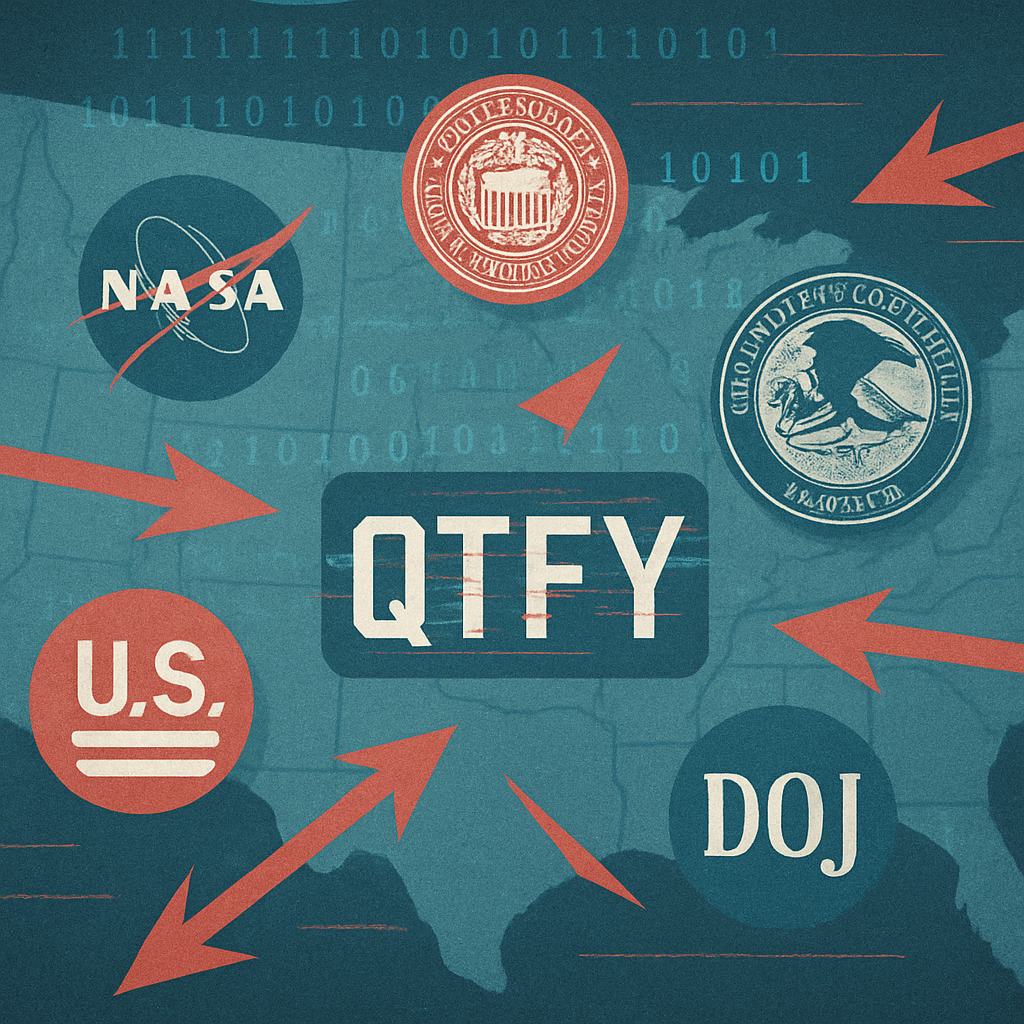
The revision in the DOJ’s statement underscores a subtle but crucial difference between being “targeted” and being “victimized.” It shapes how agencies must respond, what legal or retaliatory steps are appropriate, and how digital threats are communicated publicly. The agencies initially listed—NASA, the Federal Reserve, Department of Energy, Department of Justice, Health and Human Services, National Institutes of Health, and the U.S. Senate—are now classified as targets rather than confirmed breach victims.
What to Watch Next: Observers will be looking for more detailed findings in ongoing investigations, especially evidence showing which targets were actually compromised and how. The effectiveness of the FBI’s confiscation of QTFY-linked domains could set a precedent in countering similar operations. Meanwhile, agencies across sectors should re-examine their defensive postures against sophisticated reconnaissance, obfuscation technology, and botnet abuse.
Analysis: This clarification may seem semantic, but it matters deeply in cyber diplomacy and national security. As governments navigate making attribution claims and balancing transparency with intelligence integrity, how intrusion allegations are phrased can affect international relations, legal options, and public trust. For agencies, the focus must shift toward detecting subtle signs of compromise, as “targeted” often turns into “compromised” without clear warning.