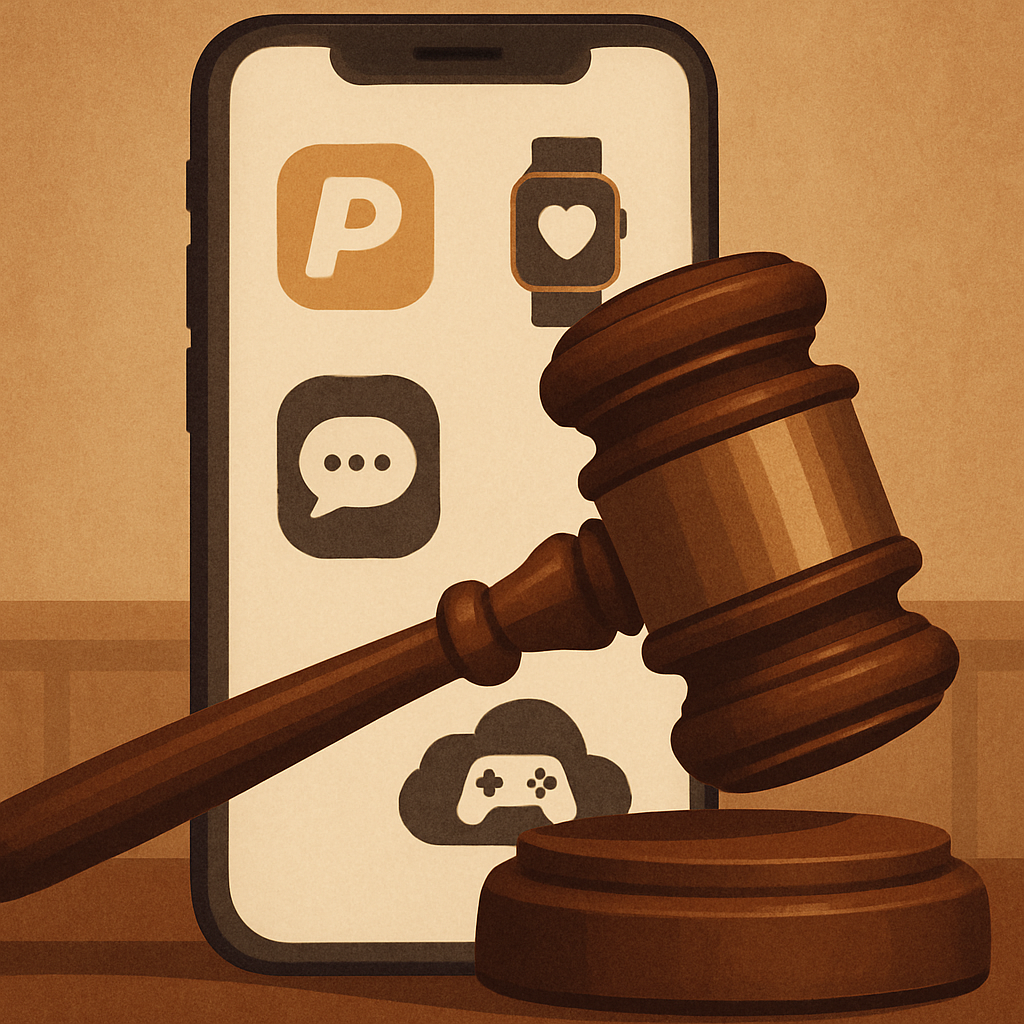
Some companies are expressing concern that a possible settlement with the U.S. Department of Justice (DOJ) may not significantly loosen Apple’s grip over the iPhone platform, especially when it comes to third-party integration, payments, and accessories.
Where Interoperability Fits In
Since the DOJ filed its antitrust lawsuit in March 2024, it has claimed Apple imposes unfair restrictions spanning apps, messaging, smartwatches, wallets, and more that protect its stronghold in smartphones. Apple has pushed back, warning that major changes could compromise its tightly integrated hardware and software approach.
Over the past year, some restrictions have eased. Apple added RCS (Rich Communication Services) support in iOS 18 to improve cross-platform messaging, and opened up more NFC access for third-party contactless payments with iOS 18.1.
Developer Concerns Over Proposed Deal
Livelihoods and market opportunities are on the line for companies like PayPal and Epic Games, both of which have raised concerns with the DOJ. They say Apple still limits what competing accessories and payment systems can do—even when permissions have been granted. For instance, rival smartwatches still can’t integrate as deeply with iPhone features as Apple’s own Watch, and payment apps face ongoing disadvantages despite access to NFC.
There’s unease that any settlement might not force Apple to make broad enough changes. Developers suggest that even the improvements Apple has floated during negotiations so far—such as greater interoperability—fall short of what’s needed. One company, Proton, has openly said it doubts Apple will agree to terms developers would see as satisfactorily transformative. And while Apple reportedly offered some concessions during earlier rounds of negotiation, several firms believe those would still leave them with major limitations.
What’s At Stake
If the DOJ and Apple reach an agreement, what’s decided now could redefine the rules for accessories, payments, and even app features. This affects businesses that rely on fair access and compatibility with the iPhone ecosystem. A weak or narrow deal may leave Apple’s restrictive policies largely intact, undermining competitive balance.
Even with promising shifts like expanded NFC and RCS support, many developers are calling for clearer, binding changes that ensure true parity—not just minimal compliance. What counts most to them is whether Apple must maintain deep integration for rivals, and whether the settlement mandates functional access—not symbolic access—to technologies like NFC, messaging APIs, and peripherals.
Apple’s defense remains consistent: major reforms may harm its integrated products. For now, the discussions are ongoing. What we know—and what’s still uncertain—is what concessions will survive negotiation and whether the final deal will deliver meaningful change.
Analysis: This moment isn’t just about a lawsuit—it’s a referendum on how open the iPhone platform will become. Developers aren’t asking only for access; they’re pushing for equal footing. What to watch: the final details of any agreement—whether concessions are narrowly scoped or broad enough to shift power toward competition. If the settlement fails to mandate strong enforcement, Apple’s control may change little despite its concessions. Otherwise, this could redefine how the iPhone ecosystem operates for years.