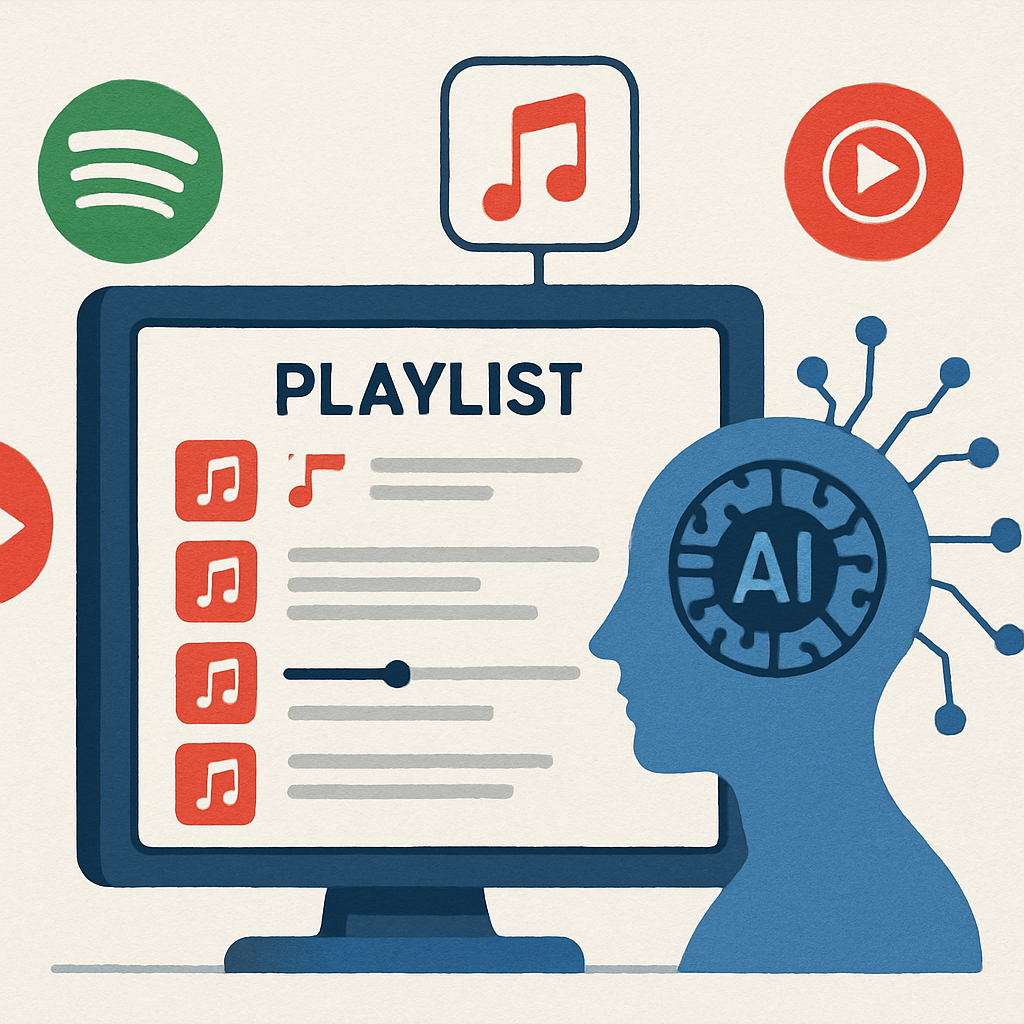
Deezer has unveiled a free online tool that scans playlists from various streaming services to identify AI-generated tracks. This initiative aims to address the growing presence of synthetic music and promote transparency in the industry.
Users can access the tool on Deezer’s website, select their preferred streaming service, and grant permission to analyze their playlists. The tool supports 27 languages and is compatible with 20 major platforms, including Spotify, Apple Music, SoundCloud, and YouTube Music. Upon scanning, it notifies users of any AI-generated content and offers the option to share the findings.
Deezer’s CEO, Alexis Lanternier, emphasized the company’s commitment to transparency, stating, “By detecting and tagging AI-generated music over the past year and a half, Deezer has been at the forefront of transparency in music streaming. No other company has followed our lead yet, so we decided to make it possible for everyone to check if their playlists include synthetic music, no matter which streaming platform they use.”
In April 2026, Deezer reported that 44% of all new music uploaded to its platform was AI-generated, amounting to nearly 75,000 tracks daily. Despite this influx, AI-generated music accounted for only 1-3% of total streams, with 85% of these streams identified as fraudulent and subsequently demonetized.
While competitors like Apple Music and Spotify have implemented tagging systems to label AI-generated content, Deezer has taken a more proactive approach by removing such tracks from recommendations and editorial playlists. Additionally, Deezer has made its AI detection technology available to other platforms, aiming to set a standard for transparency and fairness in the music streaming industry.
As AI-generated music continues to proliferate, tools like Deezer’s are essential for maintaining the integrity of streaming platforms and ensuring that human artists receive appropriate recognition and compensation. This move may encourage other services to adopt similar measures, fostering a more transparent and equitable music ecosystem.
Source: TechCrunch