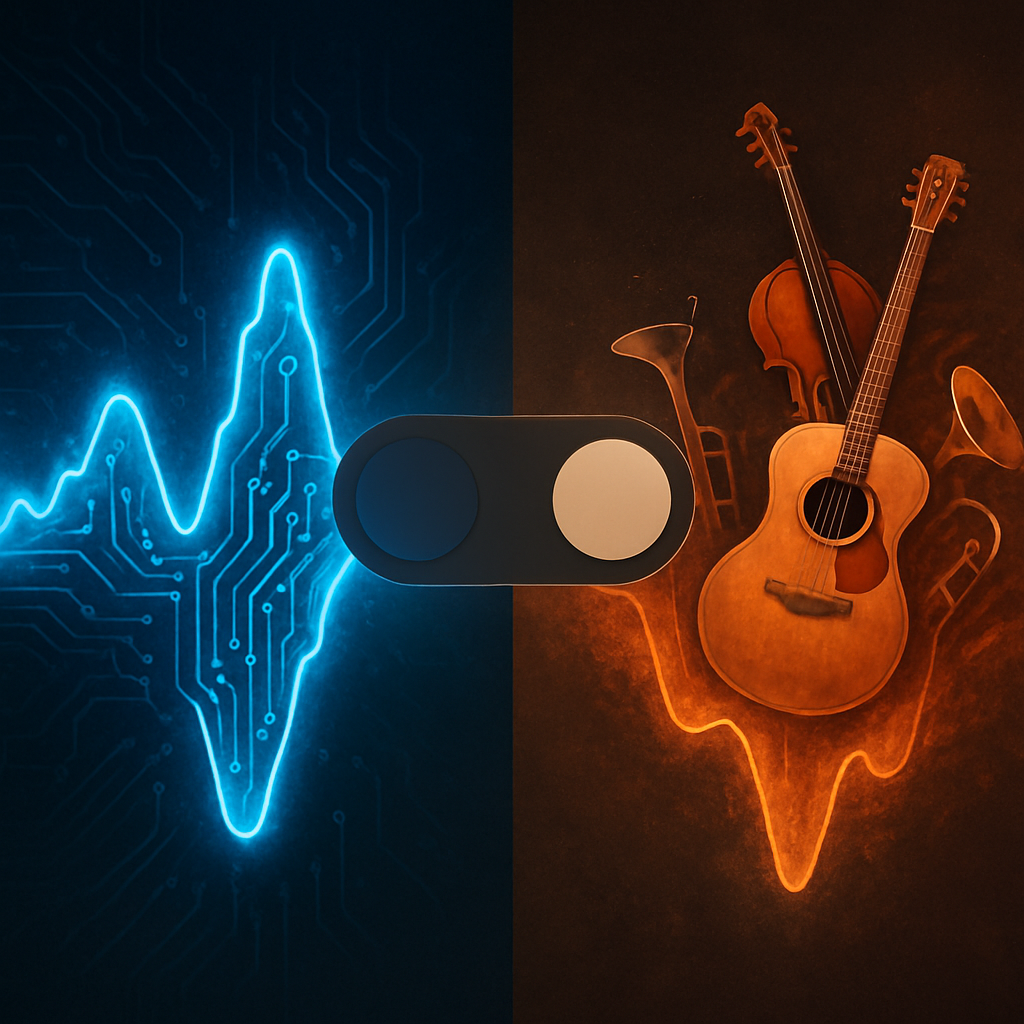
Deezer is rolling out a new feature to give listeners more control over their streaming experience: a toggle to filter out AI-generated music. This setting, expected before the end of 2026, will let users block AI-created tracks, albums, and related artists from search results so they only see works by human creators if that’s their preference.
This move responds to growing demand: a past survey revealed that about 45% of Deezer’s users want an option to remove AI-produced music from their feeds. To support this, Deezer had already integrated AI detection tools earlier this year and has been monitoring how often AI-crafted content is uploaded. Initially, AI tracks made up 10% of daily uploads, but by July, over half of all uploads were reportedly generated by AI—averaging 90,000 tracks per day.
Industry reaction and peer approaches
Deezer isn’t the only streaming service wrestling with AI music and how to visibly label or control it. For example, Bandcamp has taken a hard line, banning AI-generated tracks entirely. Tidal decided AI uploads can’t monetize via its platform. Spotify went with transparency first, giving users clear labels for AI tracks and artists. A reported effort is also underway at Apple Music to label AI music before the end of the year.
The rise of AI content in streaming is raising broader questions—not just about detection, but about how platforms balance innovation with transparency, copyright, and creator rights. Many listeners are uneasy about AI music, citing concerns over authenticity and the potential dilution of human artistry.
What to expect and how this could evolve
When this toggle feature goes live, listeners can opt out of seeing AI music entirely, which may reshape how people discover new music—and how artists are promoted. For creators using AI in their workflow, it could also mean reduced exposure. On the backend, Deezer’s detection tools will need to be fast and accurate to avoid false positives or negatives, especially as AI music tools grow more sophisticated.
Platforms will need to continue refining policies around labeling, monetization, and transparency. As AI tools become more accessible and powerful, services must adapt to maintain trust with artists and consumers alike.
Why this matters: This change reflects a larger cultural moment where audiences are pushing back against uncredited artificial creation. For streaming platforms, it’s no longer enough to accommodate AI; there’s pressure to give users choice. If Deezer’s toggle succeeds, others may follow—not just tagging AI content, but offering ways to exclude it entirely.