Cyclops Blink—once targeting WatchGuard devices—has resurfaced in August 2026 as a more powerful, portable threat, now infecting Cisco Firewall Management Center (FMC) appliances. The upgraded implant runs on x86-64 Linux rather than PowerPC, adopts standard SysV init scripts for persistence, and gains expanded reconnaissance, network-scanning and packet capture capabilities. What was once firmware-specific malware has evolved into a framework that could compromise a broad spectrum of network edge and management platforms.
From Designed Malware to Generalized Threat
Previous variants of Cyclops Blink had focused on WatchGuard Firebox devices, where malware achieved persistence by patching vendor firmware. The new implant, identified as a Linux ELF executable dubbed “timezone_check,” operates on generic 64-bit x86-64 Linux environments—shifting the threat model dramatically. It achieves persistence by copying itself to /lib/tz/timezone_check, creating SysV init scripts under /etc/init.d/timezone_check, and establishing standard runlevel startup links from rc2.d to rc5.d, bypassing firmware dependencies entirely.
Deeper Internal Visibility & Modular Design
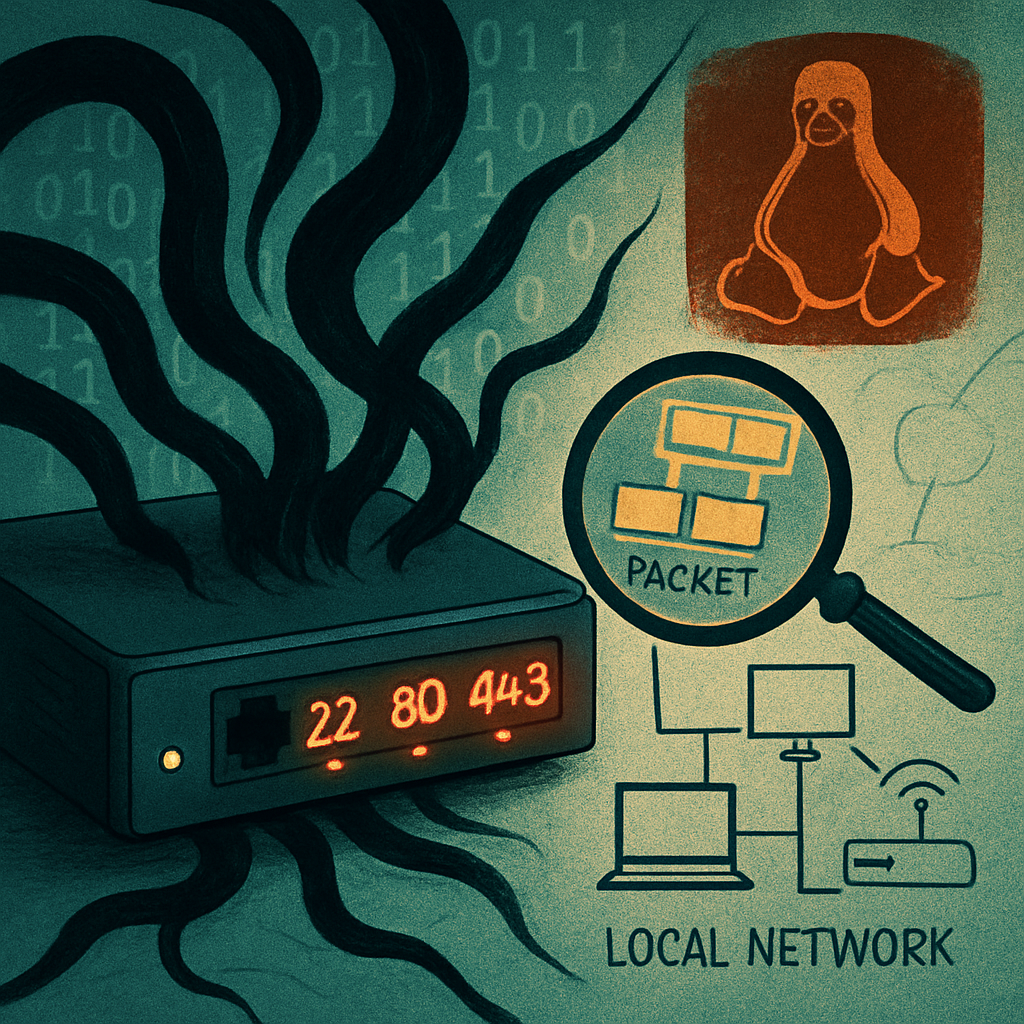
The implant follows a modular design with a parent controller overseeing five worker modules. This structure preserves functionality if parts fail, while carrying out multiple tasks in parallel. Key modules include host profiling (including OS details, users, accounts, storage, processes, network setup, and—if privileges allow—password hashes from /etc/shadow), file and payload management, internal network scanning of connected IPv4 address spaces, and selective packet capture using raw Ethernet traffic sockets. The scanning module probes both built-in and operator-specified ports tied to SSH, SMB, VPN management, VMware tools, web applications, and directory services, among others.
The packet capture module filters traffic based on rules for terms like authentication tokens, credentials, or cookies—rather than collecting everything. C2 communications happen over TLS with a custom protocol; samples observed beacon hourly to IP 89.34.96.56 on ports 43856 or 49172. The controller process disguises itself as a standard Linux worker thread named [kworker/0:1] to remain inconspicuous in process listings.
Why the FMC Vector Is Especially Dangerous
Cisco Firewall Management Center appliances are deeply trusted in many environments: they centrally configure firewalls, route policies, and often sit in the internal perimeter. An implant there doesn’t just open a way in—it becomes a central pivot for mapping internal networks, monitoring privileged traffic, collecting credentials, and staging follow-on attacks. The new version also integrates with other FMC vulnerabilities—such as an authentication bypass and static-credential flaws—to facilitate initial access or privilege escalation.
Defenders should monitor DNS-over-HTTPS (DoH) usage (such as to 8.8.8.8 via port 443), unexpected iptables rules (especially accepting outbound traffic over the ports listed above), presence of files like /lib/tz/timezone_check, init scripts under /etc/init.d, unusual process names like kworker01, and anomalous network or TLS beacons. FMC devices—and other x86-based network or management appliances—should be reviewed immediately for signs of compromise.
While attribution is still cautious, researchers believe the 2026 implant is likely linked to the IRON VIKING threat group, also known as Sandworm or Seashell Blizzard. The shift in architecture and persistence suggests this version is built to invade widespread edge and management platforms once limited to a specific hardware class.
Analytically, this evolution marks a turning point: malware families once constrained by vendor firmware hacks are now embracing portable deployment. The move to generic SysV persistence and expanded scanning/packet capture increases the cyber-kill chain’s reach inside enterprises. For defenders, the priority must shift from reacting to firmware attacks to auditing all Linux-based network appliances—and stopping adversaries that no longer need to target only specific vendors or hardware.