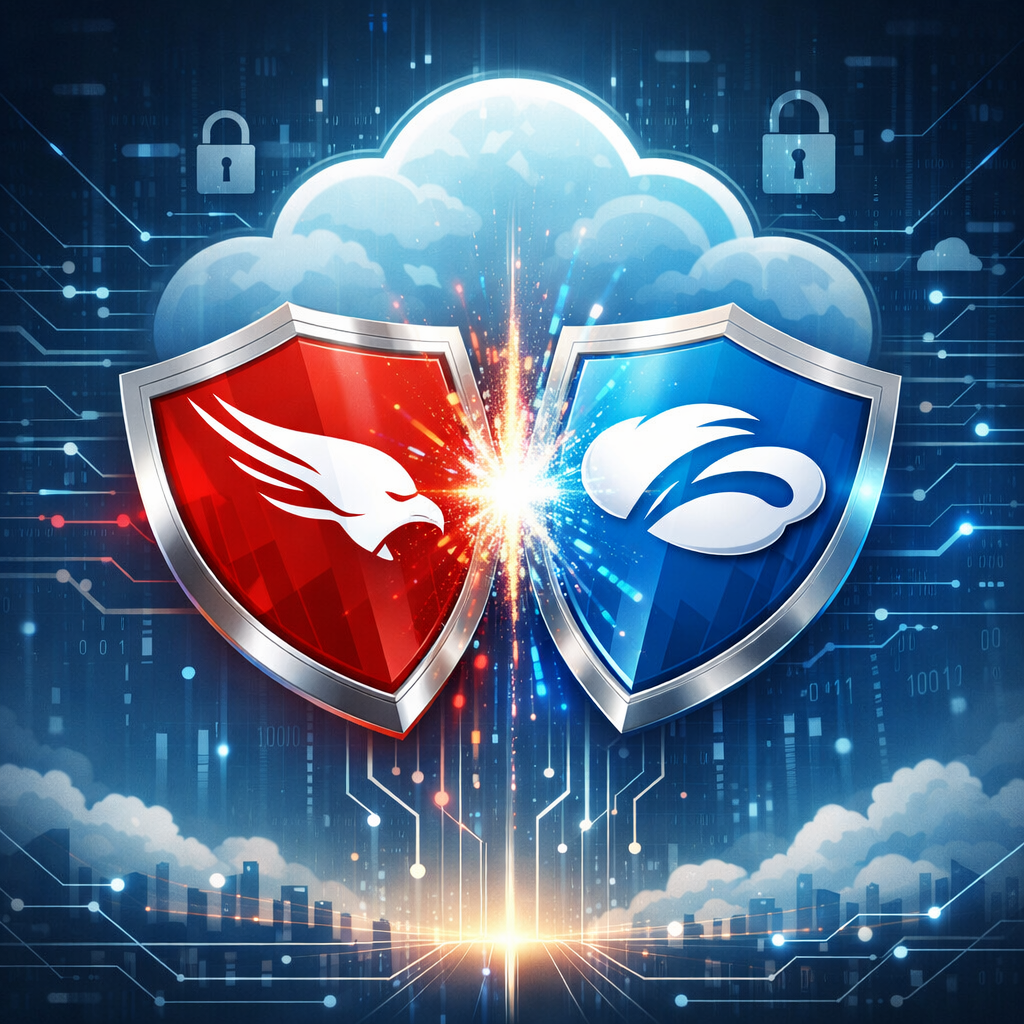
CrowdStrike is reportedly in advanced discussions to acquire fellow cybersecurity firm Zscaler, in what could become one of the largest deals in the industry’s history. Though no agreement has been finalized and price details haven’t been disclosed, the talks reflect a major consolidation trend among cloud and security-focused companies.
What’s Driving the Deal
Zscaler, currently valued by the market at about $32 billion, saw its share price jump nearly 18% in after-hours trade in response to the acquisition rumors. Meanwhile, CrowdStrike’s share value fell over 8% under the same conditions. The valuation comes from recent trading and does not represent an official offer price nor confirm what CrowdStrike would ultimately pay.
Technical Fit: Why Zscaler Makes Sense
CrowdStrike is best known for its Falcon platform, which focuses on detecting threats across endpoints like laptops, servers, and cloud workloads. Zscaler’s strength lies in Zero Trust security – its Zero Trust Exchange evaluates identity and risk before granting access to applications or internet services. Together, they cover complementary aspects of security: one for detection and the other for controlling access.
Prior to the acquisition talks, the two companies had already begun integrating their systems. For instance, changes in user risk flagged by Falcon could dynamically inform Zscaler’s Adaptive Access Engine, tightening access permissions even after login. This builds on a partnership expansion announced in September.
Broader Market Context
This potential acquisition follows similar large-scale deals in cloud and identity security. Earlier in 2026, Google completed its $32 billion takeover of Wiz to enhance its cloud security offerings, and Palo Alto Networks wrapped up a $25 billion purchase of CyberArk to strengthen its privilege management tools.
What’s Unclear — and Why It Matters
There are still many unknowns. It’s uncertain whether the deal will close, how the combined companies would integrate products, or what the impact would be on pricing, support, and vendor relationships. Customers will likely want clarity on whether tools will continue supporting third-party integrations, especially since many depend on systems from other vendors.
The appeal of this proposed acquisition lies in unifying threat detection (Falcon) and access control (Zero Trust) under one roof. If successful, CrowdStrike would not just widen its security portfolio, but shift closer to offering an end-to-end platform for protecting users, devices, applications, and network paths.
For customers, this could simplify workflows—alerts triggering restrictive access without switching tools. But it also raises questions: will pricing change? Will existing contracts be honored? Will vendor-neutral integrations survive? The outcome will shape expectations for how cyber defenders demand better coordination between detection and prevention tools.