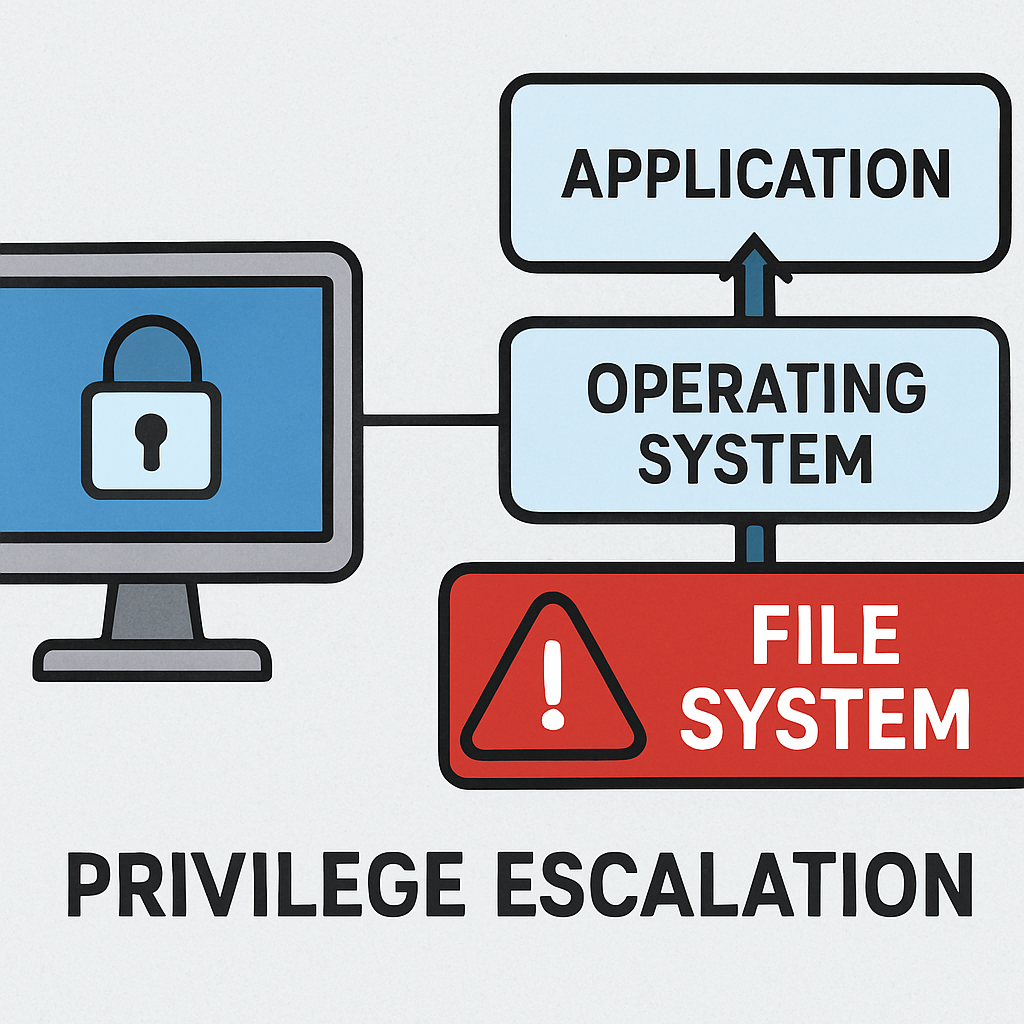
Microsoft has addressed a significant security flaw in its Brokering File System (BFS) driver, identified as CVE-2026-50458. This vulnerability, present in Windows 11 and Windows Server 2025, allows local attackers to escalate their privileges, potentially compromising entire systems.
The BFS driver, known as bfs.sys, is integral to managing file, pipe, and registry operations for sandboxed applications, such as those utilizing AppContainer and Universal Windows Platform (UWP) frameworks. Its primary function is to enforce strict isolation between these applications and the core operating system.
Details of the Vulnerability
The root cause of CVE-2026-50458 lies in a use-after-free condition triggered by a race condition within BFS’s internal directory handling mechanisms. When concurrent operations target the same directory path, there’s a risk of kernel objects being freed while still in use, leading to memory corruption and potential privilege escalation.
To exploit this vulnerability, an attacker needs local authenticated access, typically as a low-privileged user or through code execution within a sandboxed environment. By crafting specific IOCTL requests to the BFS device and manipulating the policy-setting interface, an attacker can orchestrate multiple threads to exploit the vulnerable path, ultimately gaining SYSTEM-level privileges.
Affected Systems and Mitigation
The vulnerability impacts the following systems:
- Windows 11 versions 24H2, 25H2, and 26H1 on both x64 and ARM64 architectures.
- Windows Server 2025, including Server Core installations.
Specifically, systems running builds earlier than 26100.8875 for Windows 11 24H2, 26200.8875 for Windows 11 25H2, 28000.2269 for Windows 11 26H1, and 26100.33158 for Windows Server 2025 are vulnerable.
Microsoft has released patches to address this issue in the July 14, 2026 Patch Tuesday update. The cumulative update KB5101650 is available for Windows 11 versions 24H2 and 25H2, with corresponding updates for 26H1 and Windows Server 2025.
Organizations are strongly advised to:
- Assess their systems to determine if they fall within the vulnerable build ranges.
- Apply the July 2026 cumulative updates promptly to mitigate the risk.
- Monitor systems for any unusual activity that may indicate exploitation attempts.
While there have been no confirmed instances of this vulnerability being exploited in the wild, its potential impact on system security makes immediate remediation essential.
This incident underscores the critical importance of timely patch management and continuous monitoring of system components, especially those integral to application isolation and security. Organizations should remain vigilant and proactive in addressing such vulnerabilities to maintain robust security postures.