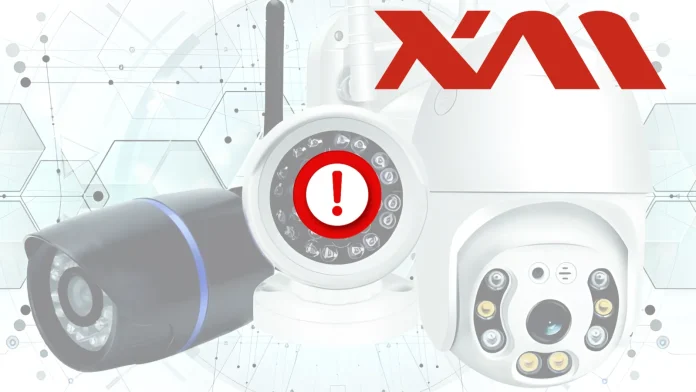
Critical Vulnerability in Xiongmai IP Cameras Exposes Networks to Unauthorized Access
Security cameras are essential for safeguarding commercial facilities, yet a recently disclosed critical vulnerability in Hangzhou Xiongmai Technology’s XM530 IP Cameras poses a significant risk to network security. This flaw, identified as CVE-2025-65856 and detailed in alert ICSA-26-113-05, enables cybercriminals to bypass authentication mechanisms entirely.
On April 23, 2026, the U.S. Cybersecurity and Infrastructure Security Agency (CISA) issued an urgent alert, cautioning organizations globally about the severe threat of unauthorized remote access stemming from this vulnerability.
Technical Details of the Vulnerability
The root cause of this security flaw lies in the camera’s firmware, which lacks proper authentication checks for critical functions. Specifically, the device software fails to verify user credentials before granting administrative access. Consequently, this oversight has been assigned a maximum Common Vulnerability Scoring System (CVSS) v3 score of 9.8 out of 10, categorizing it as a critical security threat.
The affected firmware version is XM530V200_X6-WEQ_8M V5.00.R02.000807D8.10010.346624.S.ONVIF_21.06. If exploited, an unauthenticated attacker on the network can bypass login screens to view live video feeds, manipulate camera settings, or extract sensitive data directly from the device.
Availability of Exploit Code
Security researcher Luis Miranda Acebedo has developed and published a Proof of Concept (PoC) exploit for this vulnerability. CISA discovered this public code and promptly reported it to MITRE for official tracking. Although there have been no reported active cyberattacks targeting this specific flaw, the public availability of a PoC significantly elevates the threat level by providing a blueprint for potential attackers.
Implications for Organizations
Xiongmai IP cameras are widely deployed across commercial facilities worldwide, potentially exposing thousands of businesses to unauthorized surveillance. Given that these Internet of Things (IoT) devices are often installed in sensitive areas, organizations must take immediate action to prevent potential breaches.
Recommended Mitigation Measures
CISA recommends that network administrators implement the following protective measures to secure their environments:
– Disconnect Devices from Public Internet: Minimize network exposure by ensuring that control system devices are not accessible from the public internet.
– Implement Strict Firewalls: Place camera networks and remote devices behind robust firewalls to isolate them from internal business networks.
– Utilize Secure VPNs: Use Virtual Private Networks (VPNs) for remote access to the cameras, ensuring that all VPN software is updated to the latest versions to prevent secondary intrusion tactics.
– Conduct Risk Assessments: Perform thorough impact analyses and risk assessments before deploying any new defensive network measures.
– Educate Staff: Train staff to recognize and avoid clicking on suspicious web links or email attachments to prevent related social engineering attacks.
Conclusion
The discovery of this critical vulnerability in Xiongmai IP cameras underscores the importance of robust security measures for IoT devices. Organizations must act swiftly to implement the recommended mitigations to protect their networks from potential unauthorized access and data breaches.