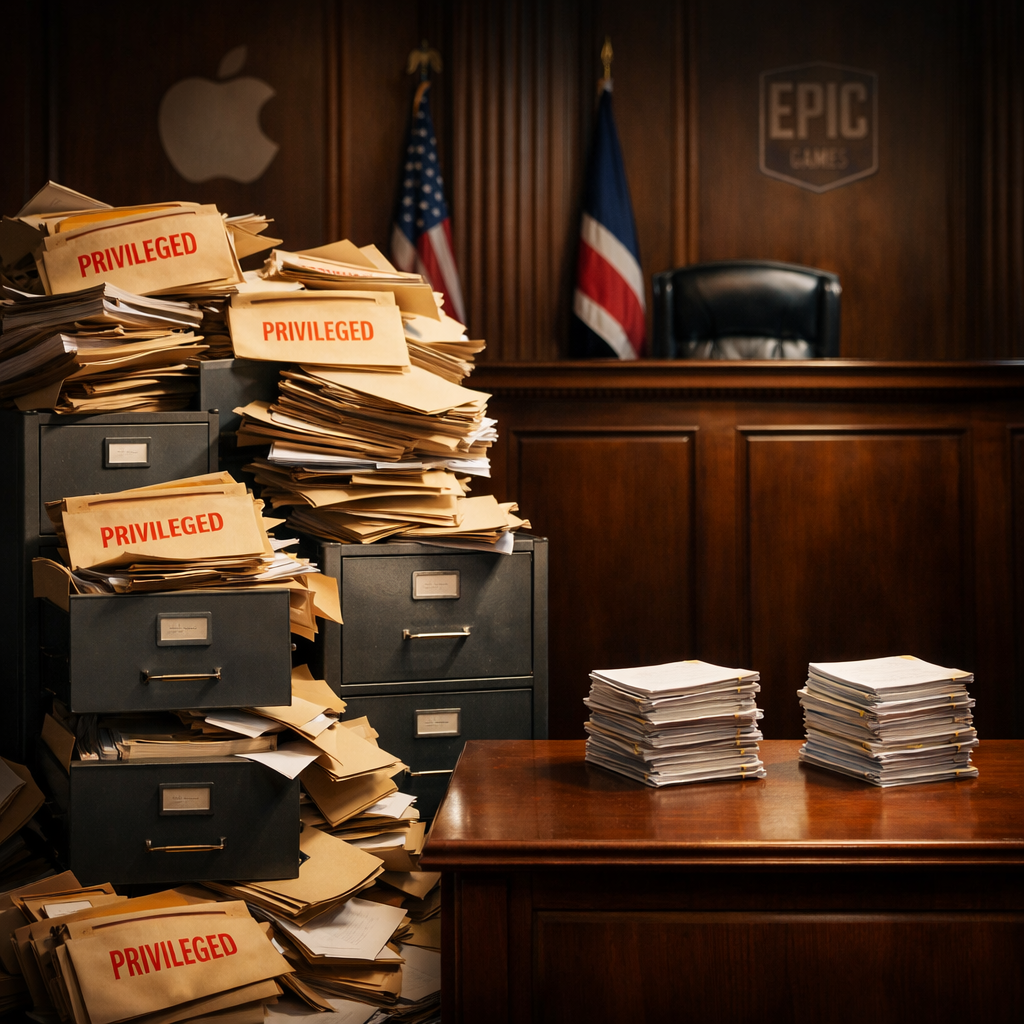
The legal battle between Apple and Epic Games has taken a contentious turn: Apple has produced less than 1 percent of the non-privileged documents it was ordered to hand over in the App Store fee dispute. The issue emerged in a November 23 filing in U.S. District Court for the Northern District of California, where Epic contends that Apple is failing to adhere to agreed-upon discovery obligations.
What Was Ordered vs. What Apple Delivered
Under the schedule set earlier in the case, Apple was required to provide Epic with all non-privileged materials and a “privilege log” showing which documents it was withholding. These documents should relate to Apple’s internal decision-making when crafting its proposal for App Store fees, particularly changes to commissions on outbound links.
Apple’s search terms identified 122,884 documents among seven initial custodians, but the company has withheld more than 122,000 of them on “responsiveness” grounds—meaning the firm asserts those documents do not sufficiently match the search parameters or content of the request. That leaves fewer than 1 percent of the documents actually turned over. Another 20 custodians still have time (until November 25) to complete their productions.
Epic Pushes Back, Court Grows Concerned
Epic describes Apple’s compliance as a “massive failure,” expressing skepticism that nearly all responsive material could be legitimately withheld. Epic has asked the court to order Apple to produce the non-privileged documents by December 2, “without regard for responsiveness,” meaning purely based on whether the documents are non-privileged, not whether Apple considers them relevant under its responsiveness criteria.
Apple argues that the search terms are overbroad—flushing up content that’s irrelevant or sensitive, including employee medical info, passwords, performance reviews, and other material it claims should not be disclosed. To demonstrate its concerns, Apple proposes giving the court a statistically significant random sample of those withheld documents to review via a Special Master, rather than releasing the entire set.
Court’s Take and Next Steps
The court has flagged Apple’s low responsiveness rate as alarming, suggesting it’s hard to believe it’s acting in good faith. Given Apple’s prior issues related to misuse of attorney-client privilege, judges are skeptical. One remedy under consideration: a random sampling of the documents Apple withheld to verify whether many that were marked “non-responsive” should have been made available. The court has rejected—or at least expressed hesitancy about—using a Special Master for this task, noting such officers have already been used in related matters and may not have the necessary knowledge deep into this specific dispute.
A hearing scheduled for November 24 will settle how large a sample is needed and how much time Epic should get to review it. Meanwhile, the document-production schedule originally agreed upon in May—meant to resolve certain evidence issues in roughly a 150-day timeline—is now lagging significantly.
Previous timeline commitments required that Apple hand over non-privileged documents soon after filing its 30-page proffer proposal regarding outbound link fee changes. Under that schedule, there were deadlines for producing documents, objections, responses, and a court conference, all intended to keep the case progressing. Apple has already secured limited delays, but the latest document dispute threatens to derail the timetable even further.
What this means: The discovery dispute intensifies scrutiny of how transparent Apple must be in its internal deliberations over App Store policies. The court’s pushback suggests it won’t let responsiveness criteria become a blanket excuse for withholding relevant evidence.