In the rapidly evolving landscape of artificial intelligence, the integration of AI agents into applications has become a focal point for enhancing user experiences. Traditional methods often rely on embedding chatbots within apps, where users input commands, and the AI responds accordingly. However, this text-based interaction can be cumbersome, especially when users must sift through extensive textual information to accomplish tasks.
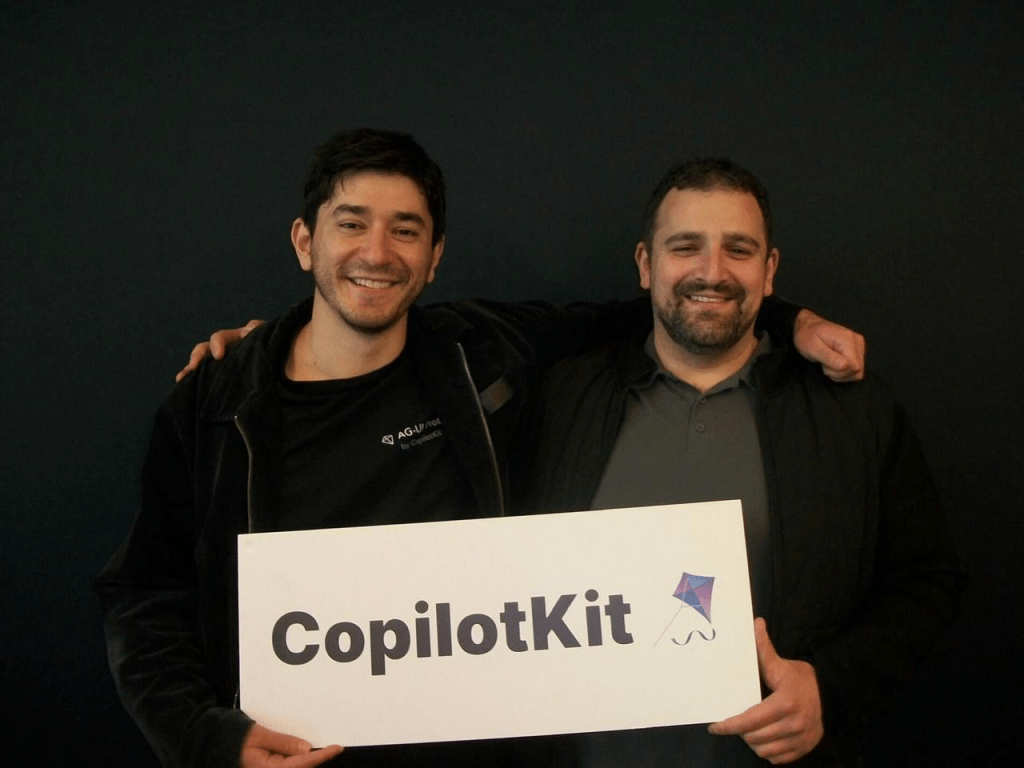
CopilotKit, a Seattle-based startup, is pioneering a transformative approach to this challenge. Founded by Atai Barkai and Uli Barkai, the company advocates for AI agents that are deeply embedded within applications, enabling them to comprehend user activities, execute tasks, and present intuitive interfaces beyond mere text responses.
Central to CopilotKit’s innovation is the AG-UI protocol, an open-source standard that streamlines the connection and communication between AI agents and user interfaces, such as web browsers and applications. AG-UI offers features like streaming chat, front-end tool calls, and state sharing, facilitating seamless human-in-the-loop interactions. This protocol equips developers with the necessary framework and tools to integrate AI agents directly into their applications.
Building upon AG-UI, CopilotKit is developing an enterprise toolkit that includes support services, self-hosted deployment options, and other essential features for businesses aiming to incorporate AI agents into their products. To advance this initiative, the startup has secured $27 million in a Series A funding round led by Glilot Capital, NFX, and SignalFire.
A standout feature of CopilotKit’s offering is its adaptable user interface. CEO Atai Barkai explains that developers can utilize the company’s framework to define specifications and components for dynamic user interfaces. Consequently, AI agents can generate context-specific UIs. For instance, if a user requests a revenue breakdown by category, instead of receiving a lengthy text explanation, they would be presented with an interactive pie chart designed by the company, enhancing user engagement and comprehension.
Moreover, CopilotKit’s toolkit grants developers complete control over the extent to which AI agents can modify the UI. Developers can opt for a pixel-perfect interface or provide general components that the AI can assemble as needed, offering flexibility in design and functionality.
The adoption of AG-UI and CopilotKit’s tools has been robust. The protocol is supported by major AI infrastructure providers, including Google, Microsoft, Amazon, and Oracle, as well as popular frameworks like LangChain, Mastra, PydanticAI, and Agno. According to Atai Barkai, CopilotKit and AG-UI experience millions of installations weekly, with a significant portion of Fortune 500 companies utilizing the protocol and tools in their operations. Notable enterprise clients include Deutsche Telekom, Docusign, Cisco, and S&P Global.
To cater to the growing demand, CopilotKit is launching CopilotKit Enterprise Intelligence, a self-hostable solution that encompasses various infrastructure features for fully deploying AI agents within applications.
The market for enterprise AI agent tools is competitive, with players like Vercel’s open-source AI SDK and assistant-ui offering similar capabilities. OpenAI’s Apps SDK also provides options for building richer interfaces, albeit limited to ChatGPT. However, CopilotKit differentiates itself by adopting a horizontal, enterprise-friendly approach. Instead of offering a full-stack AI platform, CopilotKit aims to support existing agent frameworks, cloud providers, and back-end systems that enterprises already use.
Atai Barkai emphasizes that enterprises seek optionality and self-hosting capabilities, which are not always available in other stacks. By maintaining AG-UI as a fully open protocol and offering a commercial product that enhances the open-source stack for enterprises, CopilotKit ensures that its technology remains a neutral standard while building a sustainable business model.
Currently, CopilotKit employs approximately 25 individuals and plans to utilize the new funding to expand its team, further solidifying its position in the AI integration landscape.
In summary, CopilotKit’s innovative approach to embedding AI agents within applications, coupled with its commitment to open-source standards and enterprise flexibility, positions it as a significant player in the AI integration domain.