Anthropic has unveiled Claude Opus 5, the latest iteration of its large language model (LLM), designed to advance software engineering and complex knowledge tasks while implementing stringent controls on offensive cybersecurity capabilities.
Serving as the default model on Claude Max and a premier option on Claude Pro, Opus 5 offers a cost-effective solution that rivals the advanced intelligence of Claude Fable 5 at approximately half the expense.
Performance Enhancements and Benchmark Achievements
Opus 5 demonstrates state-of-the-art performance across various coding and knowledge benchmarks, including Frontier-Bench and GDPval-AA. Notably, it surpasses its predecessor, Opus 4.8, in several key areas:
- Frontier-Bench v0.1: More than doubles the performance at a reduced cost per task.
- CursorBench: Achieves near parity with Fable 5 while operating at roughly half the cost.
- Knowledge & Automation: Excels in assessments such as ARC-AGI, OSWorld 2.0, and workflow automation suites, making it particularly appealing for enterprise code generation.
Security-Focused Design: Vulnerability Detection vs. Exploit Generation
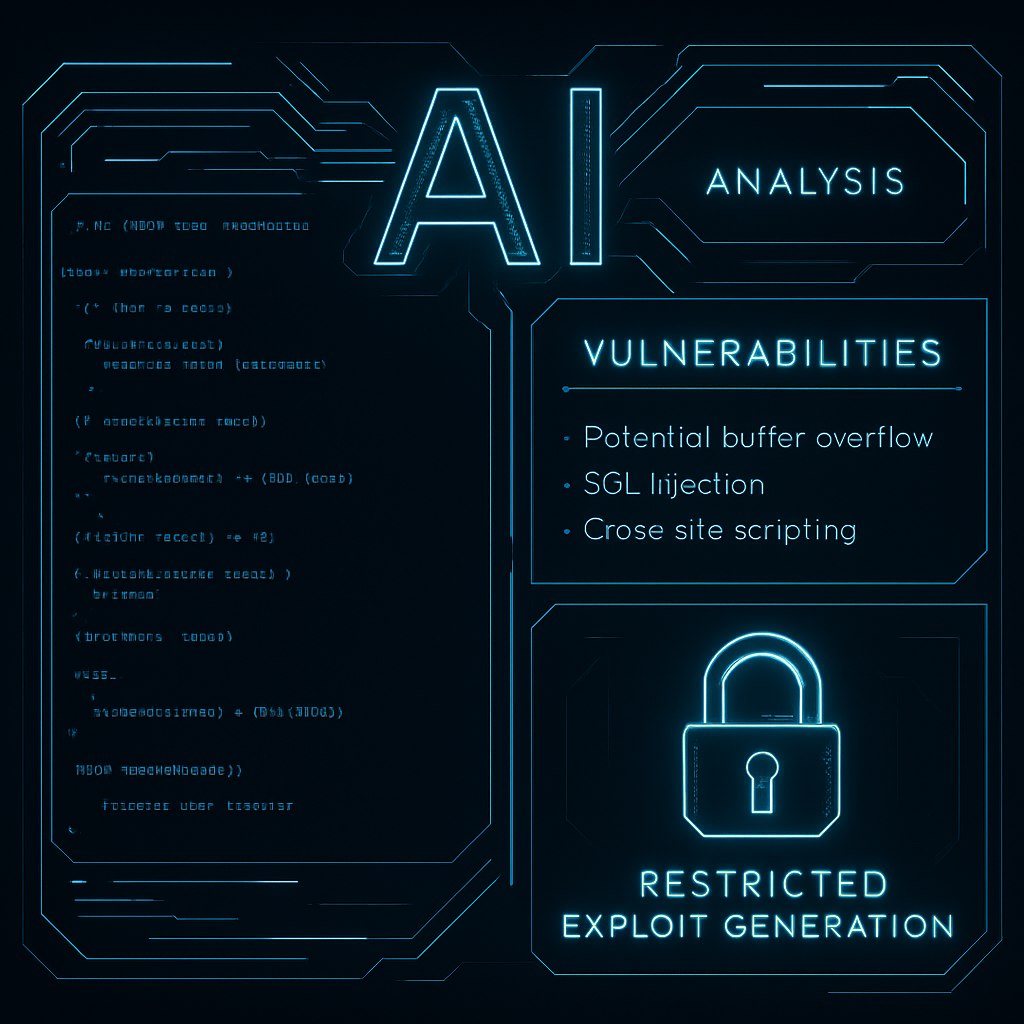
A significant advancement in Opus 5 is its approach to cybersecurity tasks. The model exhibits proficiency in identifying software vulnerabilities, performing comparably to specialized models like Mythos 5 in this domain. However, it intentionally underperforms in generating exploits for these vulnerabilities, a deliberate design choice to prevent the development of potentially harmful capabilities.
This strategic limitation allows security teams to utilize Opus 5 for automated vulnerability discovery in source code and systems, while encountering substantial barriers when attempting to convert these findings into functional attack payloads.
Implementation of Cybersecurity Guardrails
To enforce this distinction, Anthropic has integrated dedicated cyber classifiers within Opus 5. The model supports source-code-level vulnerability discovery but restricts activities such as binary-based scanning, penetration testing, and exploit generation by default. When user requests trigger these security boundaries within platforms like Claude.ai, Claude Code, or Claude Cowork, the system automatically reverts to Opus 4.8 to handle the task.
For organizations requiring more comprehensive capabilities, Anthropic offers the Cyber Verification Program. This initiative provides an authorized configuration of Opus 5 with reduced restrictions, supporting high-value defensive use cases without exposing offensive tools.
Implications for Enterprise Security
Claude Opus 5 sets a new standard for AI-assisted security by delivering high-throughput code analysis and vulnerability identification while restricting automated exploit development. This balance empowers security teams to accelerate patch cycles and uncover latent code flaws before they can be exploited by malicious actors.
By integrating Opus 5 into static analysis pipelines, fuzzing workflows, and secure software development life cycle (SDLC) tools, organizations can enhance their defensive strategies, leveraging AI to stay ahead in the ever-evolving cybersecurity landscape.
As AI models like Claude Opus 5 continue to evolve, their role in cybersecurity becomes increasingly pivotal. The deliberate design choices in Opus 5 reflect a growing emphasis on responsible AI development, ensuring that advancements in technology serve to bolster security defenses without inadvertently facilitating offensive capabilities. This approach not only enhances trust in AI systems but also sets a precedent for future developments in the field.