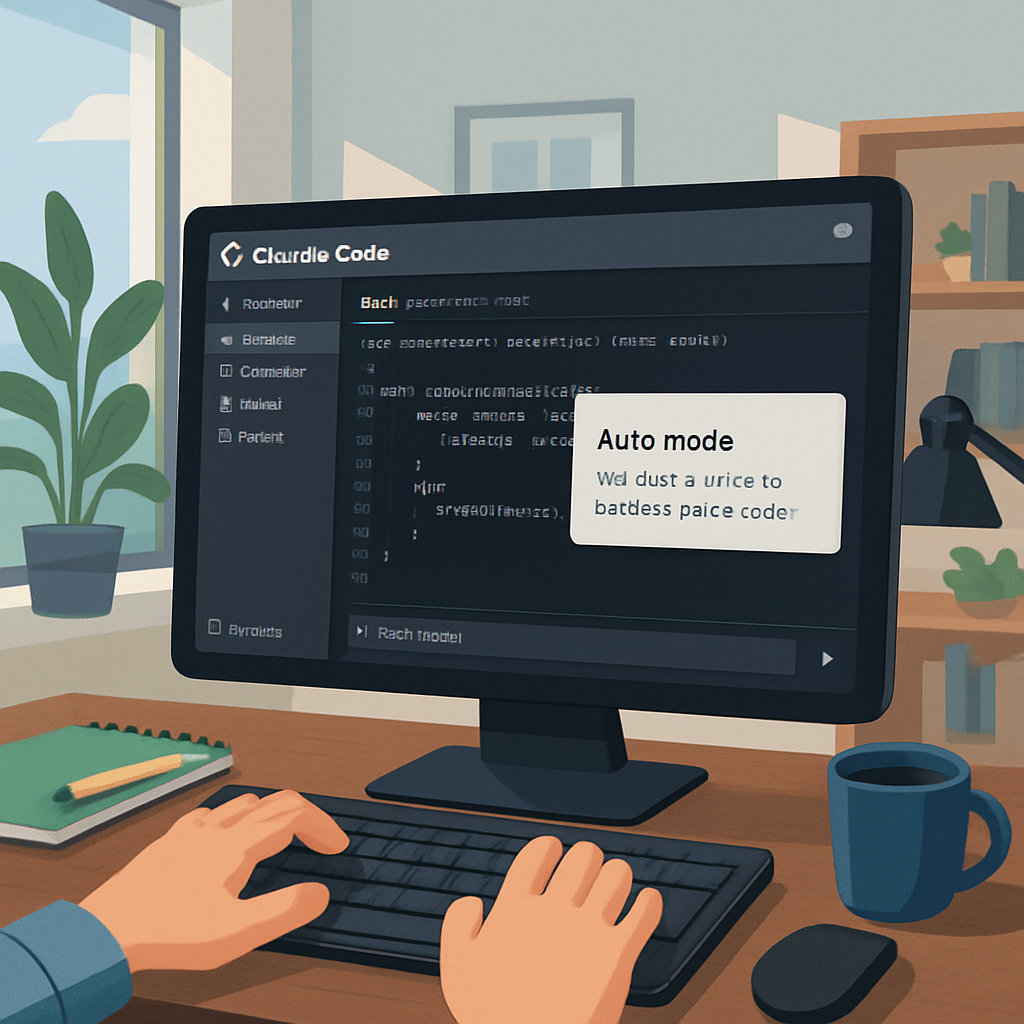
Anthropic has announced that, beginning August 14, 2026, ‘auto mode’ will become the default permission setting in Claude Code for Pro, Max, and Team users. This change aims to streamline the development process by reducing the need for manual approval prompts during coding sessions.
Auto mode functions by employing a classifier that evaluates each tool call for potentially harmful actions, such as irreversible changes or operations beyond predefined boundaries. If a risky action is detected, the classifier blocks it, prompting Claude to either attempt a safer alternative or request explicit user permission. Should multiple blocks occur, the session reverts to manual approval to ensure safety.
In conjunction with this update, Anthropic will eliminate the additional charges previously associated with the extra tokens consumed per tool call by the auto mode classifier. This move is expected to make the feature more accessible and cost-effective for users.
Anthropic’s internal study involving 1,053 paid testers revealed that human reviewers identified 13.6% of dangerous commands, whereas auto mode successfully detected 89%. Notably, human detection rates declined to approximately 5% after 50 prompts, highlighting the efficiency and consistency of the automated system. Despite these findings, Anthropic advises that classifiers cannot entirely eliminate risk and recommends human oversight for production-level changes.
This transition to auto mode as the default setting is anticipated to enhance the practicality of Claude Code’s long-running tasks. Previous enhancements, such as the introduction of routines, voice mode, and an in-app Mac browser, have already contributed to increased productivity. According to Anthropic, teams utilizing auto mode have observed a 25% increase in pull requests, indicating a significant boost in development output.
While the adoption of auto mode as the default setting offers substantial benefits in terms of efficiency and reduced manual intervention, it is crucial for developers to establish trust with coding agents before fully relying on automated systems. Ensuring a balance between automation and human oversight will be key to maintaining code quality and security.