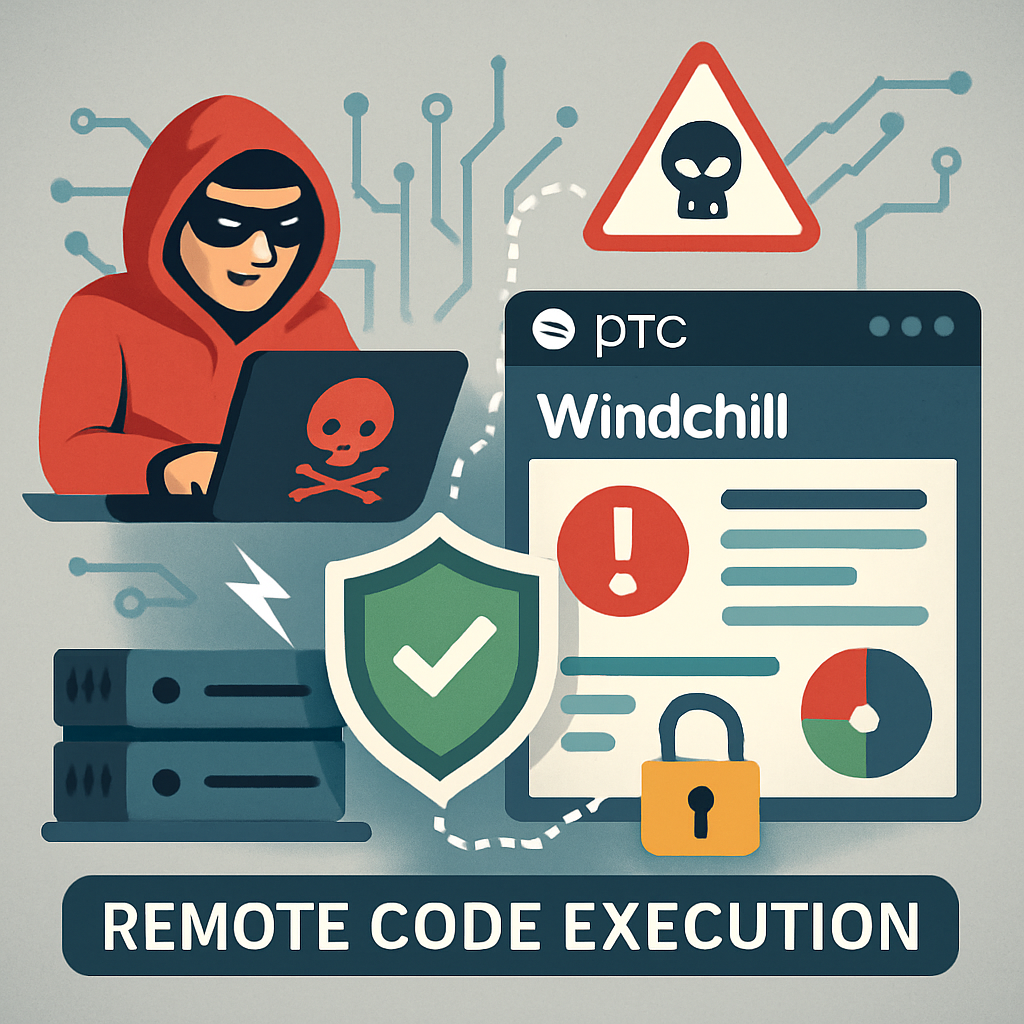
The U.S. Cybersecurity and Infrastructure Security Agency (CISA) has recently added a critical remote code execution (RCE) vulnerability affecting PTC’s Windchill PDMlink and FlexPLM software to its Known Exploited Vulnerabilities (KEV) catalog. This move comes in response to evidence of active exploitation of the flaw, identified as CVE-2026-12569, which carries a CVSS score of 9.3.
PTC’s Windchill and FlexPLM are enterprise solutions widely used for Product Data Management (PDM) and Product Lifecycle Management (PLM). These platforms are integral to managing product development processes, making them attractive targets for cyber attackers seeking to disrupt operations or steal sensitive data.
The vulnerability stems from improper input validation, allowing unauthenticated remote attackers to execute arbitrary code by sending specially crafted network requests. Specifically, the flaw involves the deserialization of untrusted data, a common vector for RCE attacks. PTC released patches addressing this issue last week; however, reports indicate that threat actors continue to exploit unpatched systems by deploying JSP web shells, which can provide persistent unauthorized access.
To assist organizations in identifying potential compromises, PTC has provided several indicators of compromise (IoCs), including specific IP addresses and file patterns associated with the attacks. Notably, web shell files have been observed following the naming pattern /Windchill/login/[0-9a-f]{16}.jsp. Additionally, the presence of a file named flst.txt in the /tmp directory or the Windchill working directory may indicate attacker activity.
Organizations are urged to take immediate action to mitigate the risk posed by this vulnerability. Recommended steps include:
- Blocking the IP address
5.180.41.35at the perimeter firewall. - Reviewing HTTP access logs for any POST requests to
/Windchill/login/*.jsp. - Scanning the filesystem for JSP files matching the 16-character hexadecimal pattern.
- Verifying the integrity of JSP files by checking their hashes against known malicious signatures.
- Implementing web application firewall (WAF) or intrusion detection system (IDS) rules to block requests containing the header
X-windchill-req:. - Restricting internet exposure of the Windchill login endpoint where operationally feasible.
This incident underscores the critical importance of promptly applying security patches and maintaining vigilant monitoring of enterprise systems. The rapid exploitation of CVE-2026-12569 highlights the evolving tactics of threat actors who swiftly leverage newly disclosed vulnerabilities. Organizations must prioritize patch management and adopt proactive security measures to safeguard their infrastructure against such threats.