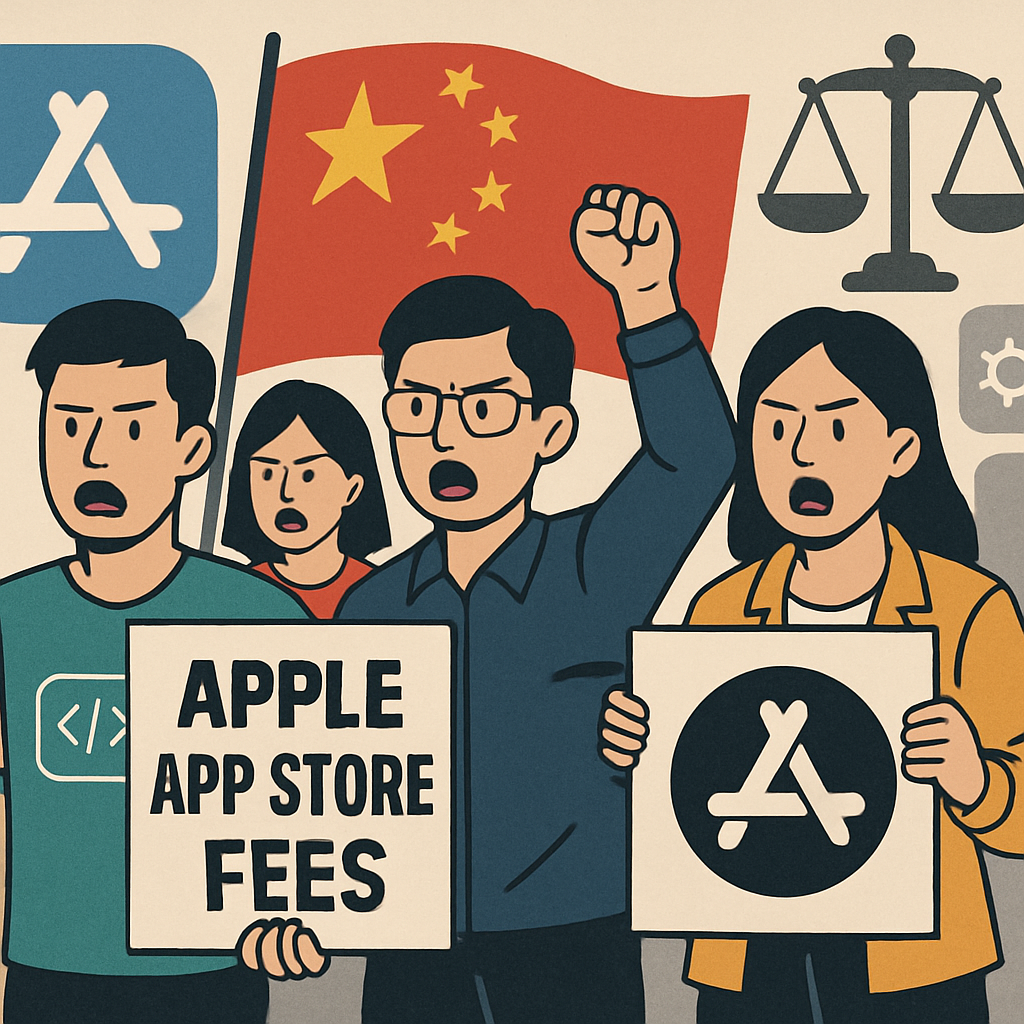
In a renewed challenge to Apple’s App Store policies, a coalition of 48 Chinese developers has lodged an antitrust complaint with China’s State Administration for Market Regulation (SAMR). This action underscores ongoing tensions over the commission fees Apple imposes on app sales and in-app purchases within its ecosystem.
The developers’ open letter to SAMR alleges that Apple has not fulfilled its commitment to offer the lowest commission rates in China. They argue that the current fees are both unfair and excessively high, constituting an abuse of Apple’s dominant market position. Presently, Apple charges a 25% commission on paid apps and in-app purchases, a reduction from the previous 30% following a fee adjustment in March 2026. Additionally, the commission on subscription renewals was decreased from 15% to 12% at that time.
This complaint is the latest in a series of legal actions by Chinese developers against Apple’s App Store practices, dating back nearly a decade. Notably, a similar lawsuit was filed in 2017, and in 2021, App Store fees were again contested. Despite these efforts, previous cases have not resulted in significant changes to Apple’s fee structure in China.
The developers point to Apple’s recent policy changes in other regions as evidence that lower fees are feasible. For instance, in Brazil, Apple reduced its commission rates to between 10% and 21%, plus a 5% processing fee, and permitted third-party app stores. The Chinese developers argue that if similar third-party app stores were allowed in China, Apple’s commission could be reduced to as low as 5%, aligning with rates in certain European Union markets.
As of now, neither SAMR nor Apple has publicly responded to the complaint. The outcome of this latest challenge could have significant implications for the app development landscape in China and may influence Apple’s global App Store policies.
Apple’s App Store fees have been a contentious issue worldwide, with developers and regulators calling for more equitable revenue-sharing models. The outcome of this complaint could set a precedent for how tech giants engage with developers in major markets like China. Observers will be keenly watching whether this action prompts Apple to further adjust its fee structures or policies to accommodate developer concerns.