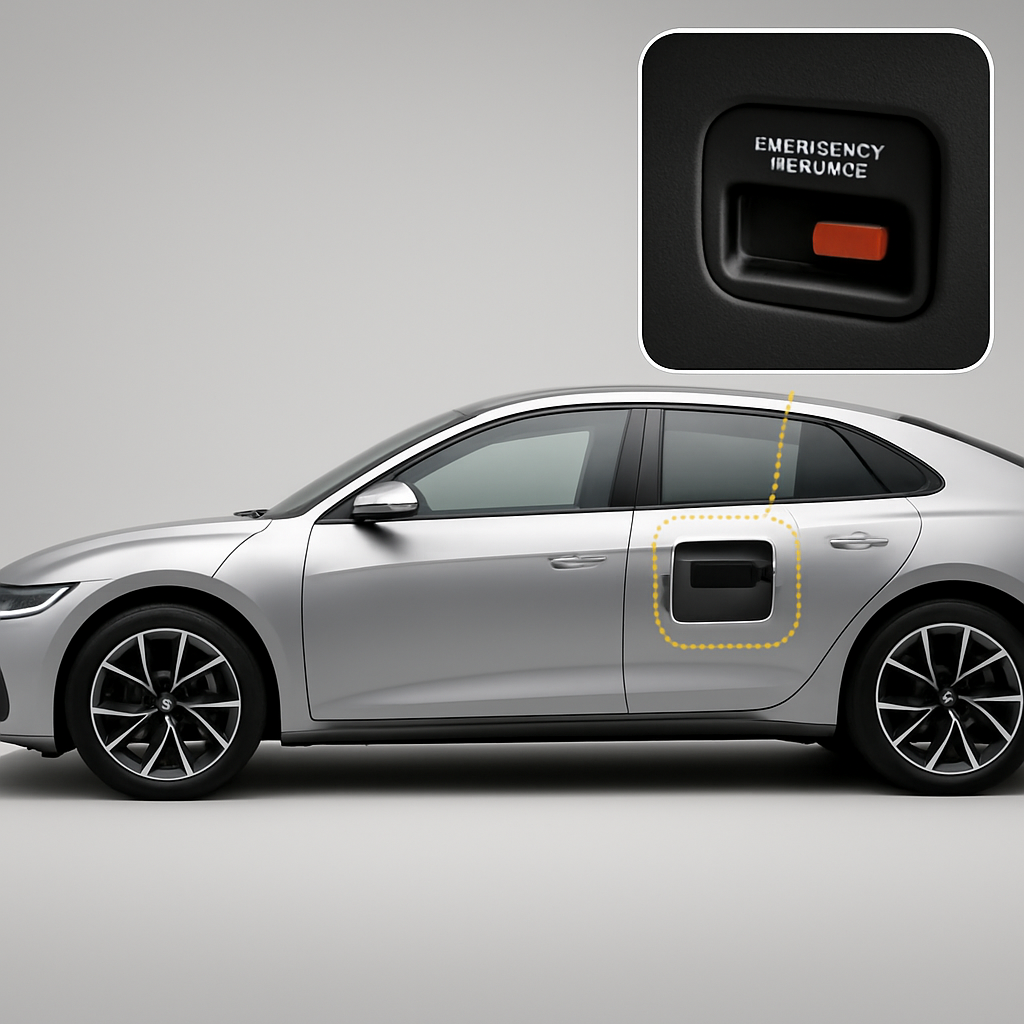
Tesla is recalling nearly 3 million vehicles in China after national regulators demanded changes to emergency door handles that have been concealed or hard to access. The move is part of a broader mandate applying to 11 automakers to improve safety by ensuring manual release mechanisms are clearly labeled and accessible in electric vehicles (EVs). ([techcrunch.com](https://techcrunch.com/2026/08/21/tesla-recalls-3-million-cars-as-part-of-china-wide-push-to-stop-hidden-door-handles/))
Why the Recall?
Modern EVs often replace traditional mechanical door handles with electronic latches—operable via smartphone, NFC cards, or other digital triggers—for sleeker design and convenience. But when power is lost or in crash situations, these outfitted housings require manual overrides. Regulators found those handles are frequently hidden behind panels or tucked away in nonintuitive spots, leaving vehicle occupants trapped during emergencies. ([techcrunch.com](https://techcrunch.com/2026/08/21/tesla-recalls-3-million-cars-as-part-of-china-wide-push-to-stop-hidden-door-handles/))
China first raised this issue early in 2026, after a two-year review. In February, authorities announced a ban on hidden, electronically actuated exterior handles starting in 2027, seeking to prevent dangerous lag during evacuations. ([techcrunch.com](https://techcrunch.com/2026/08/21/tesla-recalls-3-million-cars-as-part-of-china-wide-push-to-stop-hidden-door-handles/))
Scope and Industry Response
Alongside Tesla, brands like Xiaomi, Xpeng, Zeekr, Geely’s Lynk & Co., among others, are involved. All 11 affected companies must roll out warning labels pointing to emergency manual releases and push over-the-air or similar software updates. ([techcrunch.com](https://techcrunch.com/2026/08/21/tesla-recalls-3-million-cars-as-part-of-china-wide-push-to-stop-hidden-door-handles/))
In Tesla’s case, this recall adds pressure to redesign exterior handles entirely. The company, an early adopter of flush-mounted and electronically controlled latches, has acknowledged the need to re-engineer its door handle design in upcoming models. ([techcrunch.com](https://techcrunch.com/2026/08/21/tesla-recalls-3-million-cars-as-part-of-china-wide-push-to-stop-hidden-door-handles/))
Outside China, regulators are also stepping up. In the U.S., the National Highway Traffic Safety Administration has launched an investigation into Tesla’s door-latching systems, following media reports. Proposals are in motion to make emergency release handles “intuitive” and “readily accessible,” pushing automakers to rethink electronic latch backups altogether. ([techcrunch.com](https://techcrunch.com/2026/08/21/tesla-recalls-3-million-cars-as-part-of-china-wide-push-to-stop-hidden-door-handles/))
What This Means for Tesla and EVs
As EVs proliferate, design choices for safety-critical elements like door handles are receiving renewed regulatory scrutiny. Tesla’s previous innovations—hidden handles and electronic access—are now under pressure to balance form with functional safety. ([techcrunch.com](https://techcrunch.com/2026/08/21/tesla-recalls-3-million-cars-as-part-of-china-wide-push-to-stop-hidden-door-handles/))
This recall isn’t just about Tesla. It reflects shifting norms in global automotive safety: regulators want assurance that, in a malfunction or crash, occupants can exit without delay. Manufacturers who delayed attention to manual release systems now face stricter rules. ([techcrunch.com](https://techcrunch.com/2026/08/21/tesla-recalls-3-million-cars-as-part-of-china-wide-push-to-stop-hidden-door-handles/))
Regulators in China and elsewhere are sending a clear message: design elegance won’t excuse inaccessible safety features. For Tesla, it means rethinking door handle engineering. For consumers, this could translate into safer exits during emergencies. Observers should watch for how other automakers adjust—hidden handles may become relics sooner than expected.