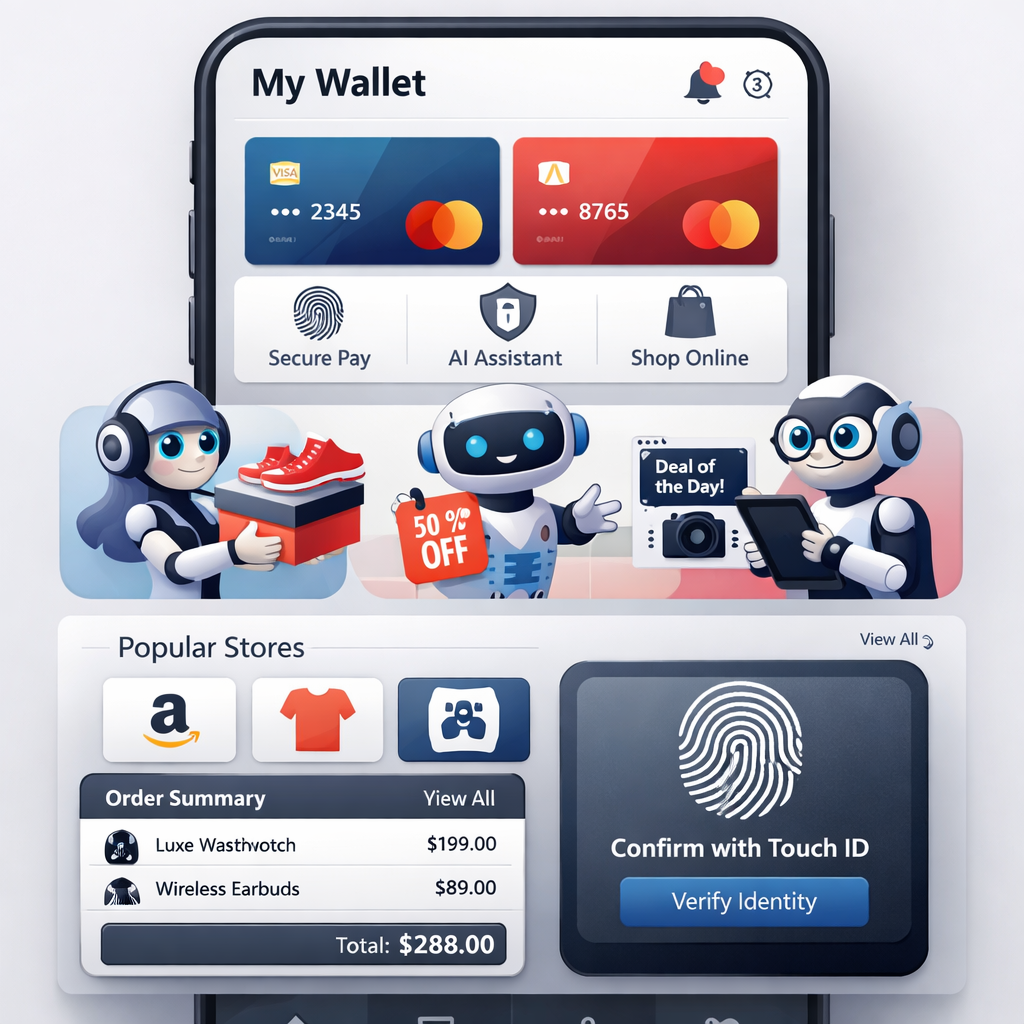
OpenAI has rolled out a new Wallet feature in ChatGPT enabling its AI agents—referred to as dots—to not just suggest items but finish purchasing them for you. This functionality is live for select U.S.-based ChatGPT Pro users 18 or older, and accepts payments via U.S.-issued Visa, Mastercard, or American Express.
How the Shopping Wallet Works
To use this feature, users link their eligible payment card to the ChatGPT Wallet once. When interacting with a dot, the AI agent can propose items based on your request, present a summary including the item list, total cost, and which card will be charged. Confirming a purchase triggers a security check—such as Face ID or fingerprint authentication—before finalizing the transaction.
Instead of sharing your real card number with the dot or the merchant, the system uses a payment token. Only the merchant receives necessary order information like shipping address and contact details. Importantly, users retain their usual credit card perks including rewards and purchase protections like dispute resolution.
Where the Wallet Feature Shines—and What’s Coming
The Wallet is currently in limited rollout to test and fine-tune. OpenAI has told users that future updates will include setting spending limits or configuring purchase categories and time periods. Additionally, broader retail support is expected, enabling dots to transact across more merchants.
One obstacle in this expansion is that many retailers are choosing to block AI agents from placing orders—most conspicuously, Amazon. As a countermeasure, OpenAI has published a Commerce Partner Playbook to offer guidance and tools so retail sites can better support purchases made through agents.
Why This Matters
This development reflects broader efforts to bring AI agents into daily life—not just as idea generators, but as active doers. Shopping is one of the most practical and frequently requested tasks from consumers using personal agents. Prior examples include Meta’s Muse, where AI-assisted shopping is among its most used features, and services like Uber and DoorDash seeing early signs of AI engagement.
Blending decision-support with actual purchase execution raises both convenience and privacy stakes. How securely user data is handled, how control is maintained (with authentication and tokens), and whether this model spreads widely or stays niche are all critical to watch.
By embedding an agentic checkout option into ChatGPT, OpenAI is pushing the envelope on what it means for AI to not just assist but act. As rollout expands, the signal here is clear: smart agents may soon handle more of your running errands—or at least your online shopping. Expect growing attention on security, retailer adoption, and where control lies in this evolving dynamic.