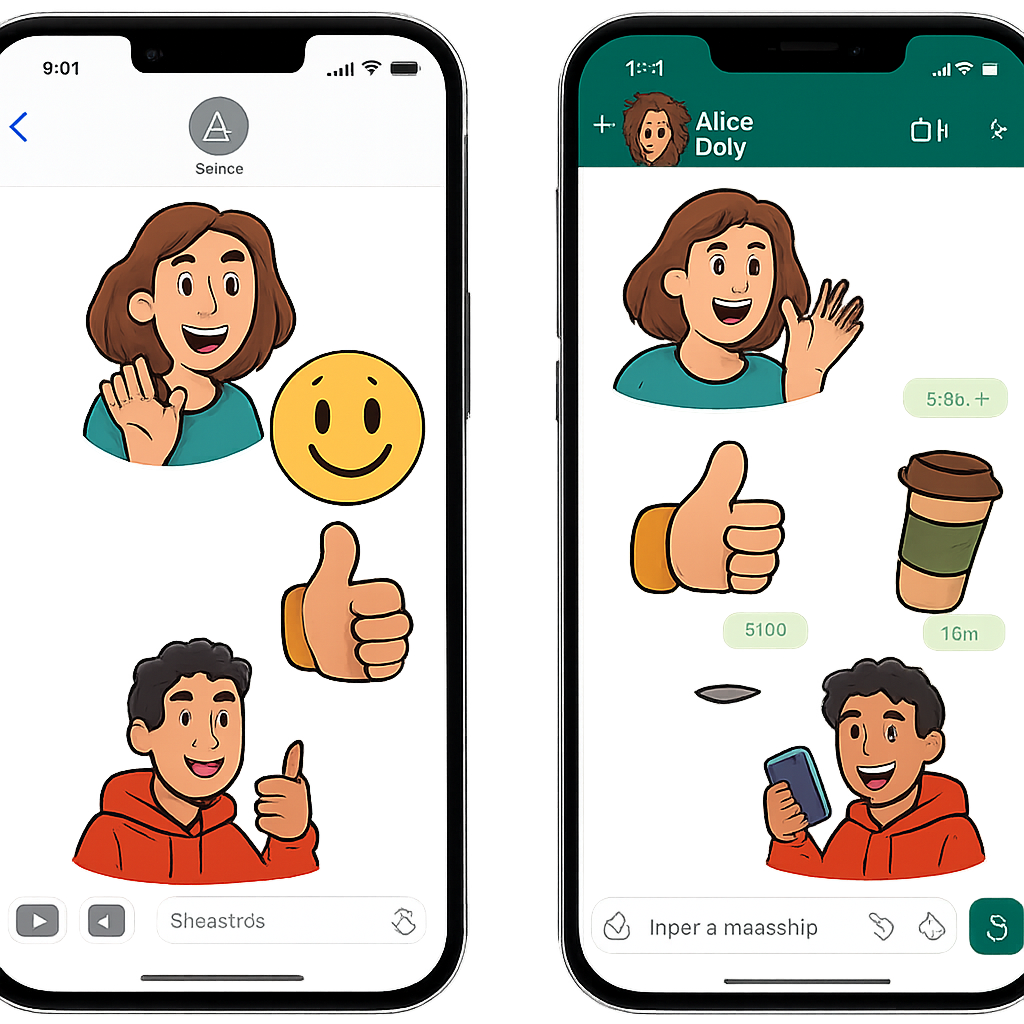
ChatGPT has rolled out a new creative feature that enables users to turn any photo—or even a concept—into a personalized sticker pack for iMessage and WhatsApp, with support for transparent backgrounds. This expands the app’s expressive tools and offers a smoother path from custom artwork to messaging use.
How the new stickers work
When using ChatGPT, you’ll now find a “Stickers” option under the Images section in the sidebar. From there, you can upload one or several images from your device and request that they be transformed into stickers. You have control over editing: add or remove elements, copy a visual style from another image, or simply describe the aesthetic you’d like.
Once you’re happy with a sticker or a full pack, there’s an “Add to chat apps” button that offers three destinations: iMessage, WhatsApp (when exporting three or more stickers), or saving to photos. The three-sticker minimum for WhatsApp is enforced by WhatsApp’s requirements—not ChatGPT’s. Uploading a single image and asking for an iMessage sticker often results in a transparent-background design, and the tool may even recover missing parts—e.g. restoring the top of a subject’s head if it had been cropped originally.
What it changes for users (and chat apps)
After exporting, choosing iMessage makes the sticker available in a dedicated ChatGPT section inside the iMessage stickers carousel. For WhatsApp, you’ll need a pack of at least three stickers. Saving to photos gives flexibility beyond chat—that image file can be applied anywhere.
Also notable: users can leverage styles from their other images—or prompt ChatGPT with a verbal description of style—to generate a look that’s uniquely theirs. Collage of customization, style transfer, and editing make the tool more versatile than a simple sticker generator.
This release follows earlier hints in the app’s code that pointed toward such a sticker-exporting feature, specifically for WhatsApp. Users and developers had spotted those references just days ago, and now the capability is live. Alongside WhatsApp support, iMessage has been confirmed as compatible as well. Transparent backgrounds are now possible, too.
This expansion of ChatGPT’s outputs—blending user-uploaded content with AI-generated edits—builds on previous image-generating functionality, but this is one of the most tightly integrated sticker workflows to date. Including chat-app export is a significant step beyond simply creating images or stickers for local use.
One caveat: for WhatsApp, the requirement to export at least three stickers could limit ad hoc sticker sharing (if you only want one). But exporting to photos gives a workaround if you don’t need full pack exports.
Overall, this feature makes custom, expressive content more accessible, especially for people who use both iMessage and WhatsApp regularly.
Why this matters: as messaging tools compete not just on speed or reliability but on how expressive and unique your conversations look, offering integrated, customizable stickers is a solid differentiator. Going forward, watch how users shape the demand—will style prompts produce consistent results? Will platform limitations, like WhatsApp’s sticker minimum, be loosened? These will affect adoption and satisfaction.