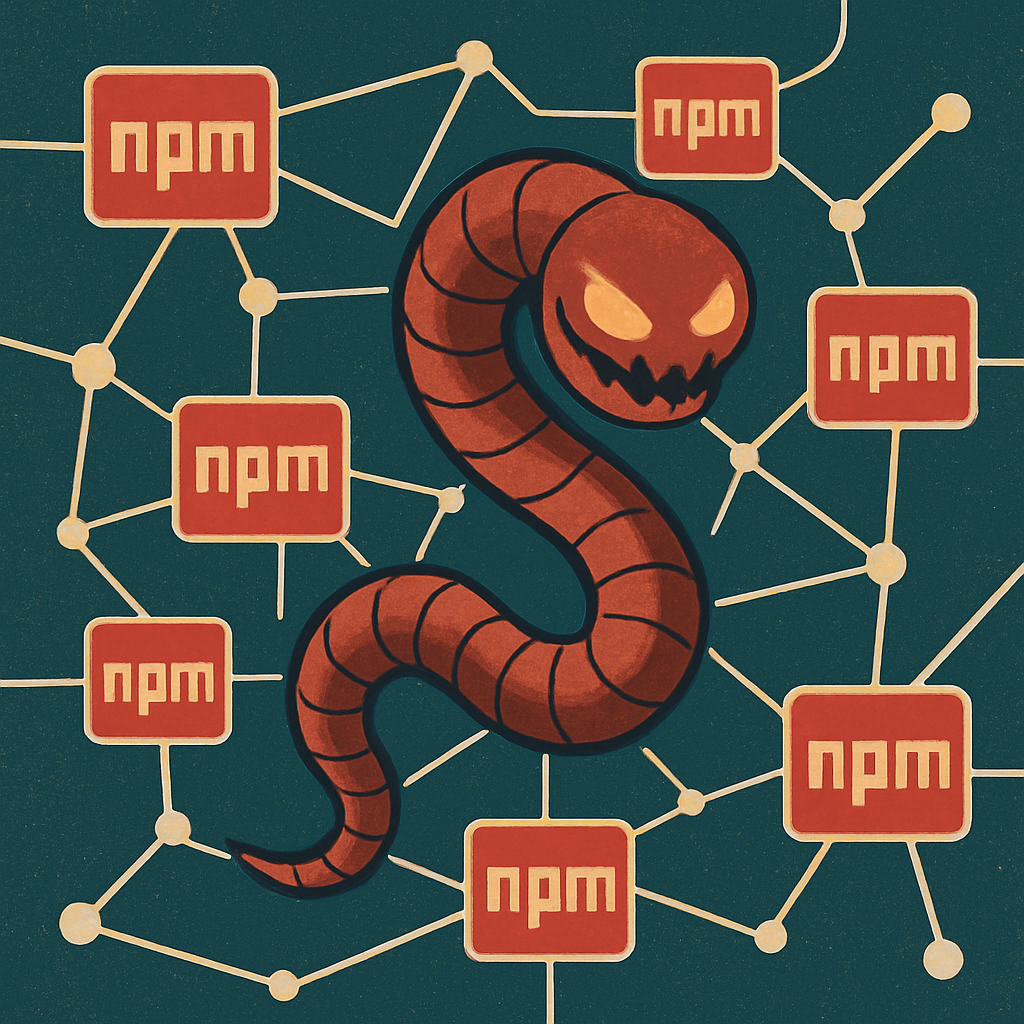
A new self-propagating malware, dubbed ChainDrop, has infiltrated over 400 npm packages, posing a significant threat to developers and organizations worldwide. This sophisticated worm targets developer credentials, including GitHub tokens and cloud service keys, by embedding itself into widely used JavaScript packages.
ChainDrop operates by compromising trusted npm publishing accounts. Once a developer installs an infected package, the malware activates during the installation process. It scans the system for sensitive information such as npm and GitHub tokens, cloud credentials, SSH keys, and environment configuration files. Notably, it also targets temporary secrets stored in GitHub Actions runner memory, accessing data that might not be saved as regular files.
After harvesting these credentials, ChainDrop utilizes the stolen npm tokens to identify other packages the compromised account can access. It then injects its malicious code into these packages, increments the version number, and republishes them. This automated cycle enables the worm to spread rapidly across the npm ecosystem, affecting numerous downstream users without immediate detection.
Security researchers from Unit 42 have identified 453 public repositories across five accounts exhibiting patterns consistent with ChainDrop’s data-theft behavior. These accounts are potential, though not confirmed, victims of the campaign. The widespread nature of this attack underscores the growing threat of software supply chain vulnerabilities, where attackers exploit the inherent trust in package registries and open-source dependencies.
To mitigate the risks associated with ChainDrop, developers and organizations should take the following steps:
- Review and remove any affected package versions from their projects.
- Conduct thorough investigations of developer machines and continuous integration (CI) runners to identify and eliminate any malware persistence mechanisms.
- Rotate all potentially exposed credentials, including npm, GitHub, cloud service, SSH, and automation secrets.
- Monitor for unexpected npm publishing activities and repository changes, especially following dependency updates or unusual automated releases.
Implementing these measures is crucial to prevent further exploitation and to safeguard the integrity of development environments.
The emergence of ChainDrop highlights the critical need for enhanced vigilance in managing software dependencies. Developers should exercise caution when updating or adding new packages, ensuring they originate from verified and trustworthy sources. Additionally, organizations must adopt robust security practices, such as regular audits of dependencies, implementation of multi-factor authentication, and continuous monitoring for anomalous activities. As supply chain attacks become more sophisticated, proactive defense strategies are essential to protect sensitive information and maintain the security of software ecosystems.