Apple has built a reputation for leading in corporate environmental responsibility—achieving 100% renewable energy for its own operations, removing plastic from all packaging, and setting a goal for its entire manufacturing supply chain to hit carbon neutrality by 2030—95% of the way there. But with Siri’s AI on the rise, powered in part by external generative models, that ambitious 2030 target is facing serious pressure. What happens when power-hungry AI systems require vast new data center infrastructure? Can Apple balance carbon goals with the push for smarter Siri?
Environmental MVP turned mission-critical target
In recent years, Apple has made visible, verifiable progress on environmental fronts: its global operations run entirely on renewable energy; all Apple facilities—including data centers and stores—are powered without fossil fuels. It has eliminated plastic packaging as of earlier this year, and its supply chain is steadily closing in on carbon neutrality, with the company stating it was 95% of the way there back in 2024.
The AI power problem
The growing demands of artificial intelligence—particularly generative systems—put enormous strain on energy and sustainability goals. Both Google and Meta have acknowledged that their AI workloads complicate hitting their own 2030 carbon-free or net-zero targets, citing the huge electricity consumption of data centers running large models. Siri is not exempt: Apple’s advanced AI features rely heavily on Google’s Gemini models, which means that even Apple’s energy footprint depends in part on external AI infrastructure.
Apple’s outlook and safeguards
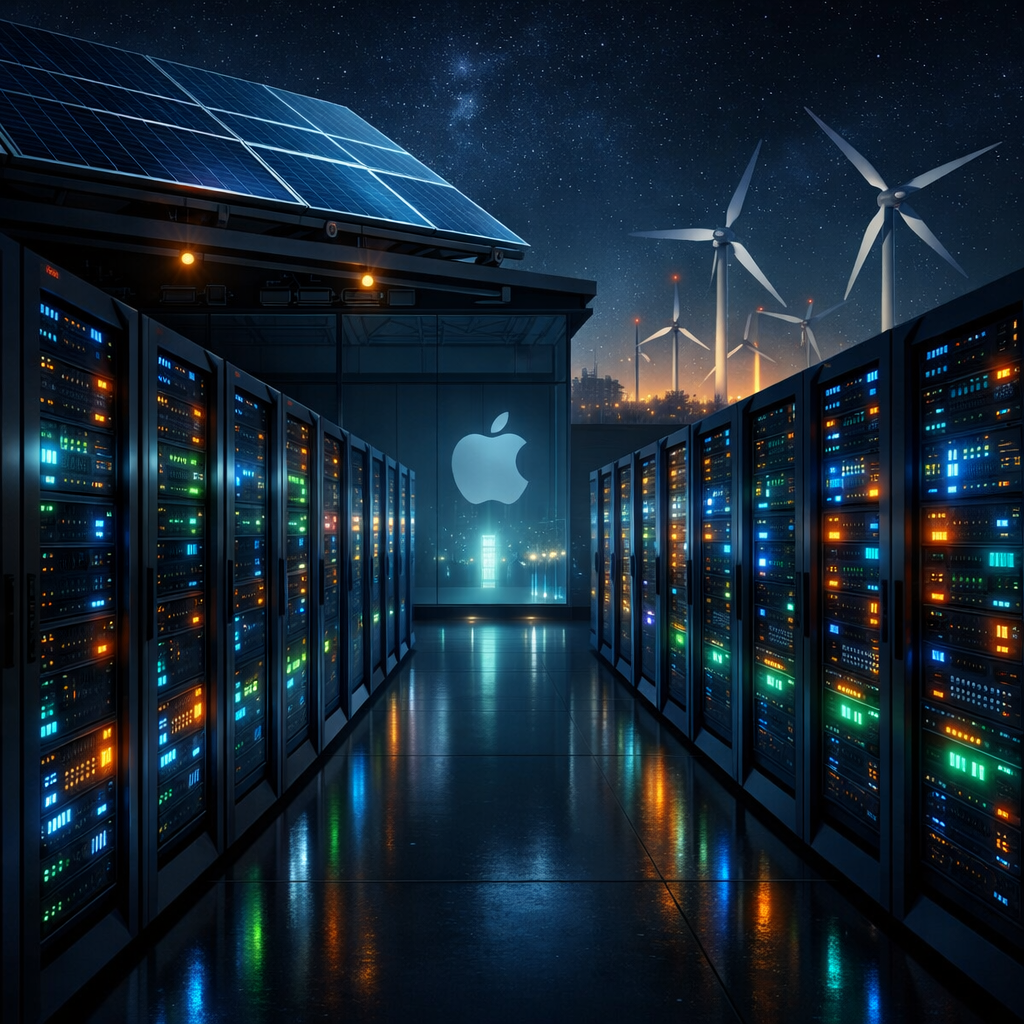
Apple remains publicly committed to its 2030 goals, insisting that its use of renewable energy sources keeps pace with any increases in data center demand. Its latest environmental report claims all electricity powering its data centers comes from clean sources—solar, wind, low-impact hydropower—and highlights innovations in water usage for cooling. Apple’s newest data center designs forego water-cooled systems in favor of high-efficiency air-cooling, achieving zero water use in cooling for several facilities.
The real test ahead
The physical infrastructure isn’t yet stretched to the breaking point—Apple is not yet operating AI at the scale that Google or Meta are—making its 2030 target still look achievable in theory. But future plans to expand Siri’s capabilities, especially toward more agentic AI, will demand significantly more power and likely more data centers. Environmental groups like Greenpeace have voiced concerns, calling AI a defining test of Apple’s climate promises, and are urging transparency over actual emission reductions, extra investment in renewables, and continued focus on product longevity.
Apple’s environmental track record gives it a strong foundation, but meeting its 2030 goals won’t be a given if Siri becomes a centerpiece of its AI strategy. The risk lies not in whether Apple wants sustainability—it clearly does—but whether it can scale AI growth while investing enough to offset new emissions and energy use. The world will be watching to see if Apple maintains its renewable energy dominance and carbon-neutral supply chain, or if Siri’s rise forces a revision of its timelines.