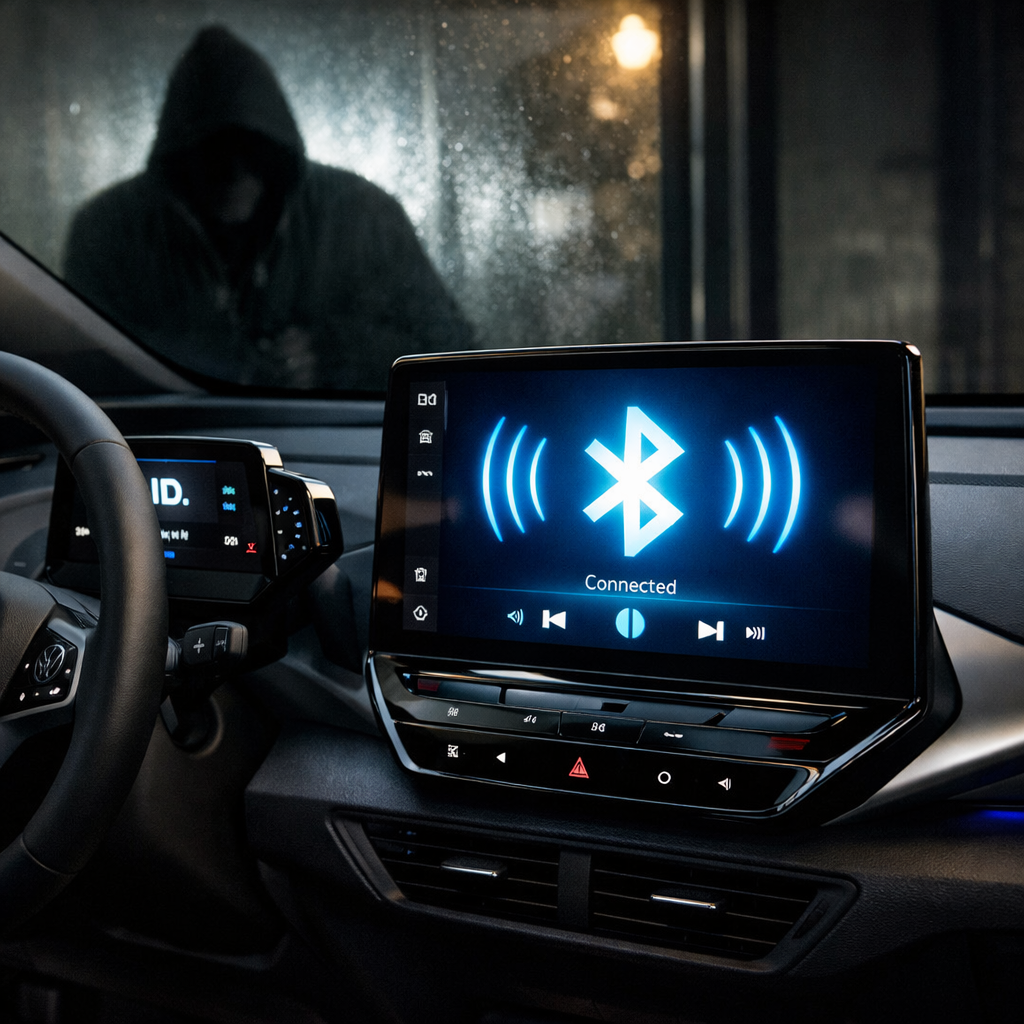
A fresh Bluetooth vulnerability dubbed “PerfektBlue” has put many Volkswagen vehicles at risk. Researchers have shown how this flaw in OpenSynergy’s BlueSDK software lets attackers eavesdrop on cabin conversations, track GPS positions, and manipulate features like wipers, sunroofs, and HVAC systems—all through the vehicle’s infotainment system. The discovery stems from a live demo on a Volkswagen ID.4 in Budapest.
What PerfektBlue Let Attackers Do
The exploit chain exposes multiple serious risks. Once a user accepts a Bluetooth pairing request—notably a requirement for launching the attack—the attacker gains control over the hands-free microphone, accessing private conversations. Other functions under threat include GPS tracking, operation of cabin climate controls, windshield wipers, and even the sunroof. The software in question, BlueSDK from OpenSynergy, handles wireless and Bluetooth connections inside infotainment platforms, opening the door to remote code execution on vulnerable systems.
How Many Cars Affected & What’s Being Done
While precise numbers remain unverified, researchers estimate that several hundred thousand Volkswagen vehicles may be exposed. Vehicles running infotainment software older than version 4.0 are impacted. Volkswagen has developed patch version 3.9.1, which can be delivered over Wi-Fi or cellular for many vehicles that are parked. Newer software branches are said to be more resilient, but some older models continue to require a dealer visit for repairs. Cars with software version 5.6 or above are not affected.
The company has made it clear that critical driving controls—such as braking, steering, or acceleration—remain out of reach for attackers via this flaw. Nonetheless, microphone access and GPS compromise pose serious threats to privacy—allowing exposure of one’s location history and private conversations.
Volkswagen advises owners to avoid accepting pairing requests from unfamiliar Bluetooth devices, verify software versions, follow official update instructions, and reach out to dealerships if there’s uncertainty over patch availability. No official recall has been issued.
Beyond this specific case, similar vulnerabilities affecting Volkswagen and its sister brand Skoda had appeared earlier in vehicle data and infotainment systems—though those are not part of the PerfektBlue chain.
Analysis: The PerfektBlue incident is a stark reminder that connected vehicle software is as much a cybersecurity frontier as IoT devices. The fact that drivers must still manually accept Bluetooth pairing acts as a protective barrier, but it also highlights a design tension between usability and security. These flaws don’t threaten your brakes—but they can still compromise what many drivers consider sacrosanct: privacy. The upcoming challenge will be ensuring rollouts of fixes keep pace with threats, especially for older vehicles that rely on dealership service. Watch closely to see how Volkswagen handles patch deployment, customer communication, and whether regulation steps in to demand more consistent over-the-air updates for all models.