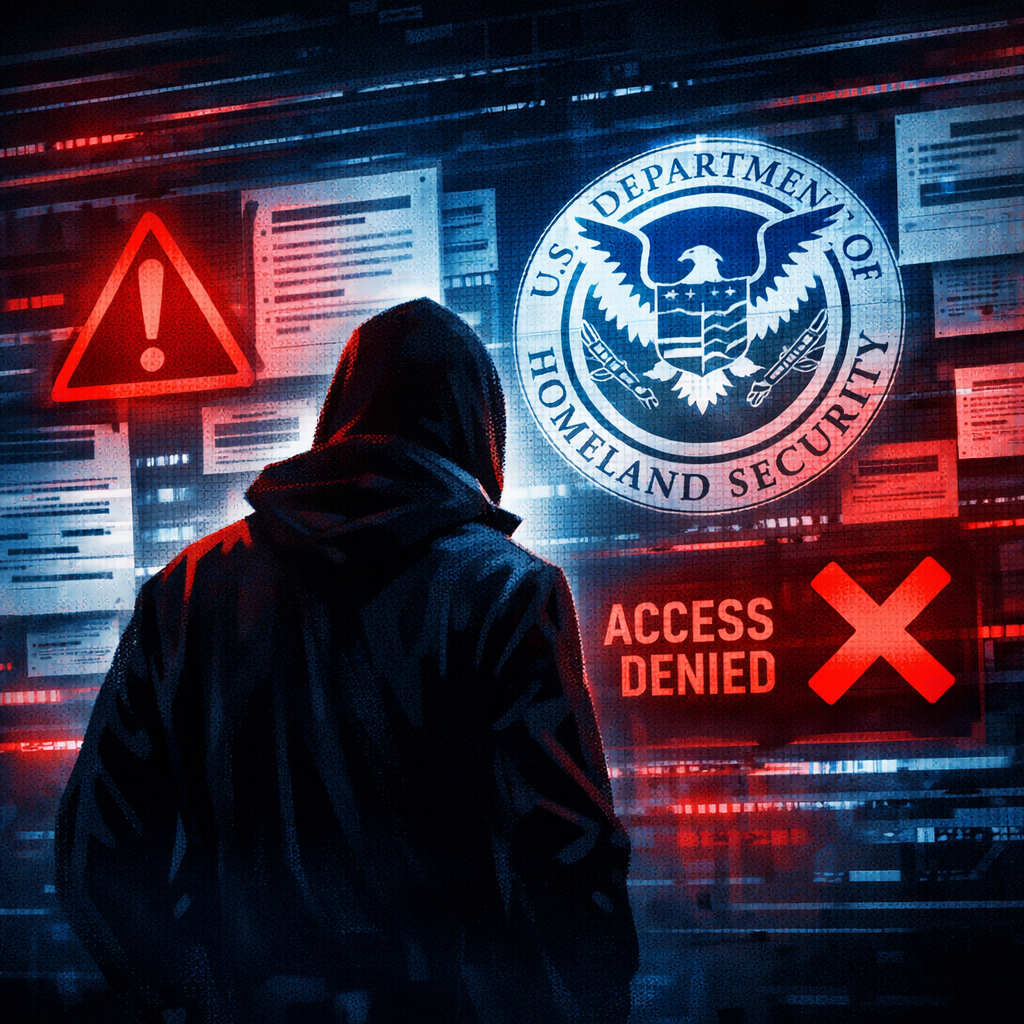
Bluesky has taken steps to block its users from accessing a nonprofit host containing leaked Department of Homeland Security (DHS) employee data, after media reports revealed sensitive information spanning name, business contact details, and emails of over 40,000 personnel across agencies such as Customs and Border Protection (CBP) and Immigration and Customs Enforcement (ICE).
What was exposed and how Bluesky reacted
The leaked dataset included user account records from DHS’s login system, disclosing names and professional contact information including work-issued phone numbers and email addresses — similar to whats seen on business cards. The nonprofit DDoSecrets made the data publicly available. Soon after the breach drew media attention, Bluesky flagged links to DDoSecrets’ site as “malicious.” These actions align with Bluesky’s rules, which forbid sharing personal contact information — though the company opted to block the link rather than removing user posts altogether.
Government takedowns and domain shutdowns
In parallel, Homeland Security has initiated takedown processes against websites hosting searchable versions of the leaked data. One such site was shut down after its domain registrar placed it on serverHold. The department has enlisted ZeroFox, a security vendor empowered until 2028, to send formal notices to registrars to remove or disable access to personal contact and location data for individuals who didn’t consent to its release. One affected domain reportedly hosted by CentralNic has not yet issued a public response to the request.
Journalist Maia “arson” Crimew had created a search interface for the dataset via a site called icepi.cx, which is now offline. But the content remains available in other forms — including locally hosted copies — which users can download and view independently.
Issues raised by privacy vs. transparency
DDoSecrets’ cofounder contends the leaked information does not breach home addresses nor private contact data, but notes that professional contact information for government employees is increasingly important for public accountability. Because agencies often require this information to process Freedom of Information Act (FOIA) requests, nonprofits and researchers argue that it plays a vital role in enabling transparency of government operations.
Meanwhile, DHS has confirmed that it is investigating the breach and working to address vulnerabilities. The extent to which the information could be used maliciously — such as for phishing or targeted attacks — remains a concern given the sheer volume and sensitivity of the data.
Bluesky did not immediately respond to requests for comment, but referred to its community guidelines when explaining why it blocked links to the nonprofit hosting the data.
Why this matters
The incident underscores the delicate balance between openness and security in the digital age. On one hand, public access to certain government employee information can be essential for transparency and democratic oversight; on the other, such data exposure risks privacy and safety if misused.
As platforms like Bluesky navigate their content policies, these events highlight how social networks are becoming frontline responders in information governance — forced to make decisions about what should be shared or suppressed based on legal, ethical, and security considerations.
Moving forward, key questions include: what safeguards DHS had in place, how quickly registrars will comply with takedown notices, and whether local or decentralized copies of the leaked data can be effectively contained. The precedent set here threatens to blur lines around online leaks, government transparency, and platform responsibility.