The rise of AI startups comes with a unique set of bets: huge opportunities, yes—but also huge funding challenges. At Disrupt 2026, Jas Khaira of Blackstone N1 outlined how emerging AI companies can move beyond early hype toward lasting relevance. His advice: it’s not just about raising money—it’s how and when you use it.
Why scaling AI demands something deeper than fast growth
Founders today are under pressure to grow—quickly. But Khaira emphasized that true scale in AI means balancing ambitions with infrastructure, talent, and capital planning. The compute resources, data infrastructure, and large-scale operations typical of AI models require much bigger investment up front than many non-AI startups face. That means founders don’t just need seed or Series A funds—they need to think strategically about long-term capital needs early.
To illustrate, Khaira pointed to Blackstone’s investment in Neysa, an AI infrastructure company in India. The deal comprised $600 million in equity and plans for another $600 million in debt financing. And in July, Anthropic launched a joint venture called Ode—backed by Blackstone, Goldman Sachs, and others—with $1.5 billion in capital infusion. These moves show Blackstone is investing big—not just in products, but in the backbone that powers them.
From momentum to staying power
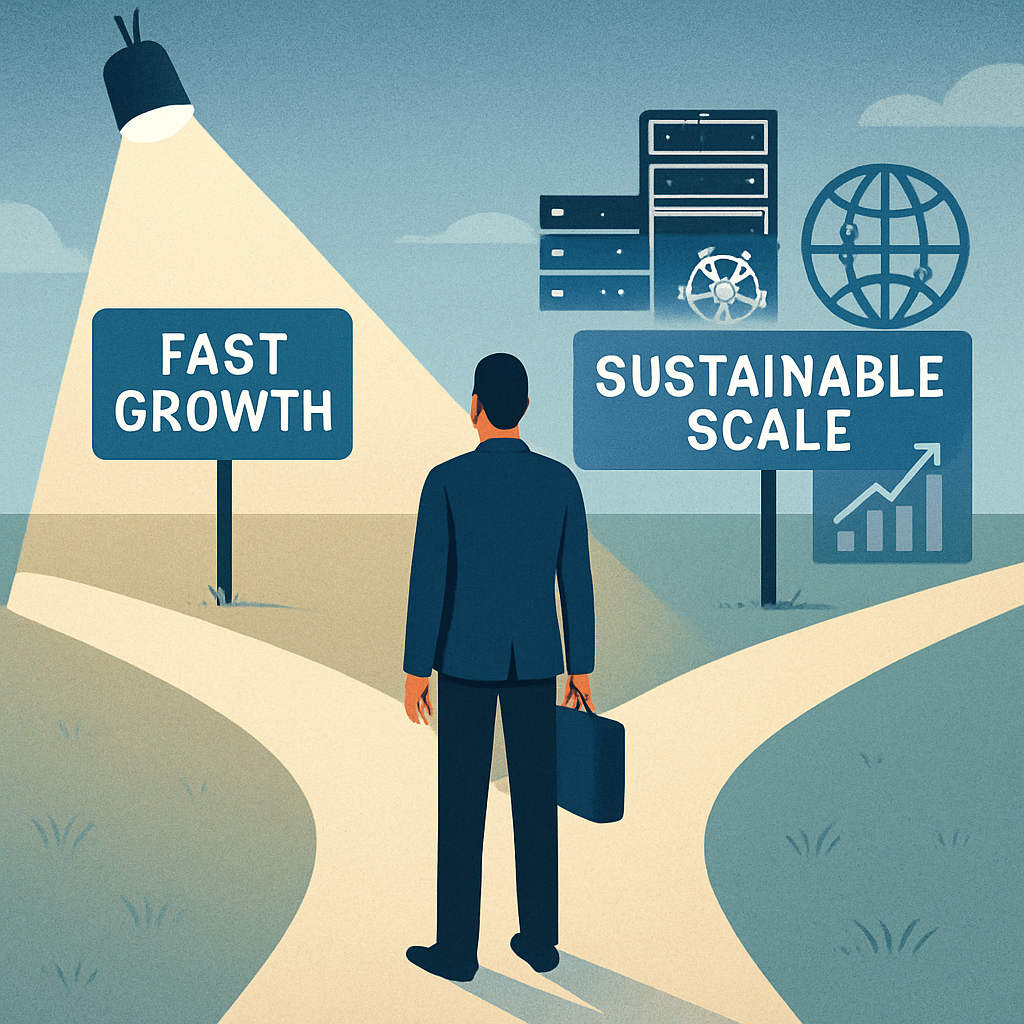
Khaira drew a line between startups that simply grow fast and those poised to become category-defining. Early momentum—acquiring customers, number growth, and user buzz—isn’t enough. Founders must build defensible advantages, robust operating models, and thoughtful financing strategies. The companies that endure are those who survive the transitions: from product-market fit to scale, from managing risk to reinvesting in resilience.
At Disrupt (October 13–15 in San Francisco), Khaira will lead a session called “Building the Next Generation of AI Giants,” diving into how Blackstone evaluates startups—not just by traction, but by CEO vision, team strength, infrastructure readiness, and capital efficiency alongside growth. With over 200 sessions, 250 speakers, and 300+ exhibiting startups, Khaira’s talk is designed to help founders facing those pivotal scaling decisions.
Khaira himself joined Blackstone in 2004. He now heads Blackstone N1 and Blackstone Growth, and leads tactical opportunities for the Americas. The platforms he oversees aim to back the kinds of high-growth AI businesses that can scale across infrastructure, AI product innovation, hybrid or perpetual private equity—hunting for long-term potential rather than short‐term wins.
For founders in the scaling phase, securing capital may appear like the main milestone. But Khaira argues that how you use that capital—to build core systems, hire enduring talent, and invest in competitive moats—is what separates temporary success from the next generation of AI giants.
As Khaira prepares for his session at Disrupt, the message is clear: in AI, fast growth gets attention—but staying power gets valuation.
Why this matters now
We’re seeing a pivot in AI funding norms. Seed rounds and early bets are giving way to massive growth rounds that include infrastructure-heavy plays. With cloud costs rising, energy demands soaring, and regulatory scrutiny mounting, AI companies that lack efficient models and defenses may burn cash without gaining lasting ground.
Khaira’s approach represents how institutional investors are adapting: backing scale, durability, and resilience. Expect more VCs and private equity firms to demand the architecture behind the AI—data pipelines, model reliability, team discipline—before opening up big cheques.
Watch for Disrupt 2026 as a marker moment: the startups cited, the investors on stage, and the frameworks shared will likely shape how AI giants are built—or broken—for years to come. It’s not just about tomorrow’s headline; it’s about who makes it through the next downturn with their vision intact.