A newly identified Windows backdoor, dubbed BINDCLOAK, has been uncovered in a cyberespionage campaign targeting Middle Eastern government entities, particularly within the energy sector. This sophisticated malware enables attackers to escalate privileges by exploiting Windows user and process tokens, thereby executing malicious code with enhanced access rights.
The attack sequence initiates with the delivery of an ISO file containing legitimate-looking Windows components. Upon execution, this leads to the deployment of multiple stages, including TELESHIM, MIXEDKEY, and ultimately, BINDCLOAK. Notably, TELESHIM utilizes Telegram’s Bot API for command and control, allowing malicious communications to blend seamlessly with regular traffic.
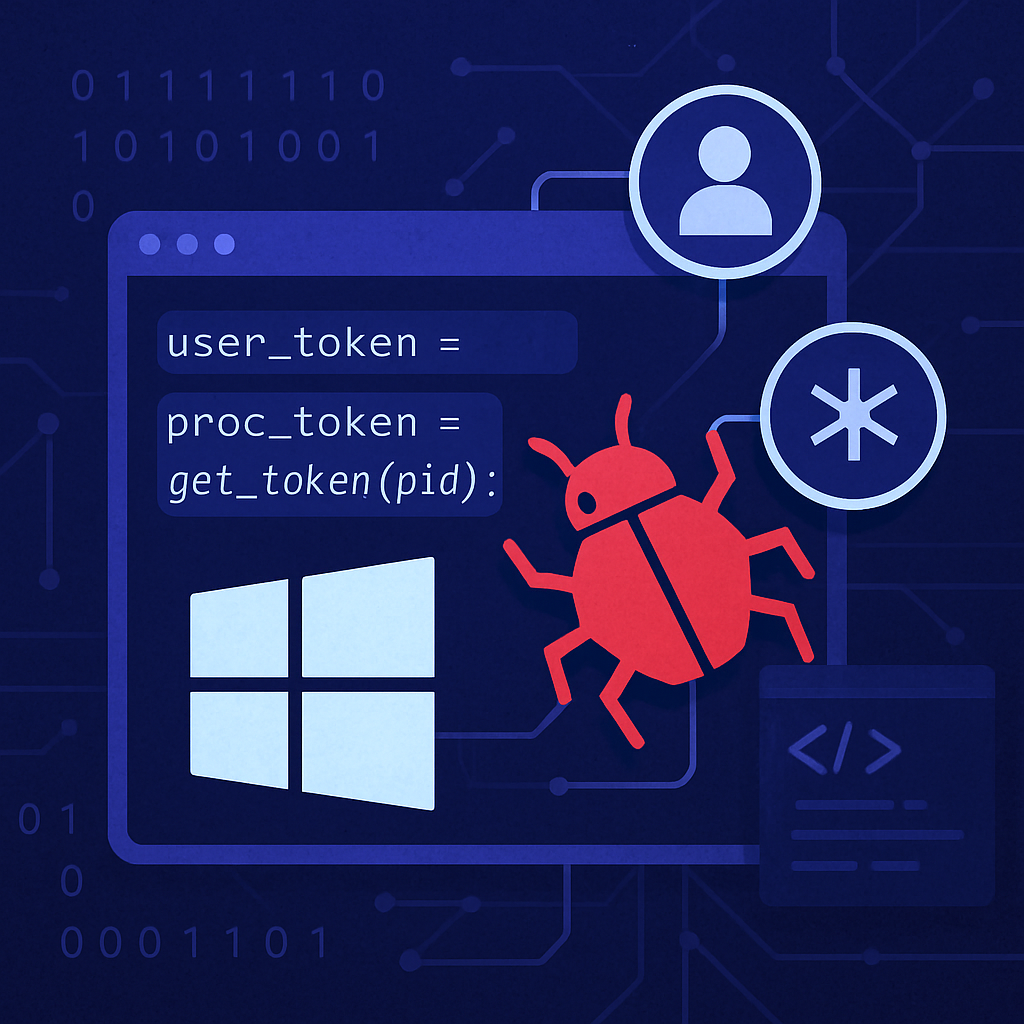
BINDCLOAK is a 64-bit Windows backdoor written in C. It is decrypted and loaded into memory by the preceding MIXEDKEY component during the post-compromise phase. This modular implant is designed to collect and manipulate Windows access tokens, enabling it to launch its modules under the security context of more privileged accounts. By impersonating higher-privileged users or processes, BINDCLOAK can execute commands and deploy additional payloads with elevated permissions, effectively bypassing standard security measures.
The malware’s command set includes functionalities to enumerate user tokens, inspect running processes, and identify tokens suitable for duplication or assignment to new processes. It can also attempt to authenticate using provided credentials, retain successful user tokens, and utilize them to initiate selected modules. This token manipulation technique allows BINDCLOAK to operate under the guise of legitimate processes, making detection and mitigation more challenging.
Communication between BINDCLOAK and its command-and-control server is secured through TLS over TCP, employing a custom message-routing system. Messages are compressed, encrypted with rolling XOR keys, padded with random data, and then dispatched to the appropriate internal module. Upon initial contact, the malware transmits comprehensive host information, including operating system version, computer name, username, hostname, local IP address, and local time, providing attackers with a detailed overview of the compromised system.
To evade detection, BINDCLOAK employs advanced techniques such as loading additional DLL modules directly into memory with read, write, and execute permissions. It utilizes the `RtlQueueWorkItem` function to invoke `LoadLibraryW`, a method designed to obscure suspicious loading behaviors from endpoint security tools. This approach aligns with tactics observed in other malware that exploit legitimate processes for malicious DLL payload injection, effectively concealing their activities behind trusted Windows operations.
Analysts have identified BINDCLOAK as a variant of the OctLurk backdoor, citing code similarities and overlapping command-and-control infrastructure. The expansion of this threat actor’s operations from Central Asia into the Middle East underscores the evolving nature of cyber threats and the necessity for vigilant security practices.
Organizations are advised to monitor for indicators of compromise, including unknown ISO files, unusual scheduled tasks, DLLs placed alongside trusted executables, and processes operating under unexpected user contexts. Additionally, scrutinizing anomalous process-token access and reviewing suspicious outbound TLS connections can aid in the early detection and mitigation of such sophisticated threats.
The emergence of BINDCLOAK highlights the increasing sophistication of cyberespionage tools and the critical importance of robust security measures. By exploiting legitimate Windows features, attackers can achieve elevated privileges and maintain persistent access within targeted networks. This development serves as a stark reminder for organizations to implement comprehensive monitoring and response strategies to detect and counteract such advanced threats effectively.