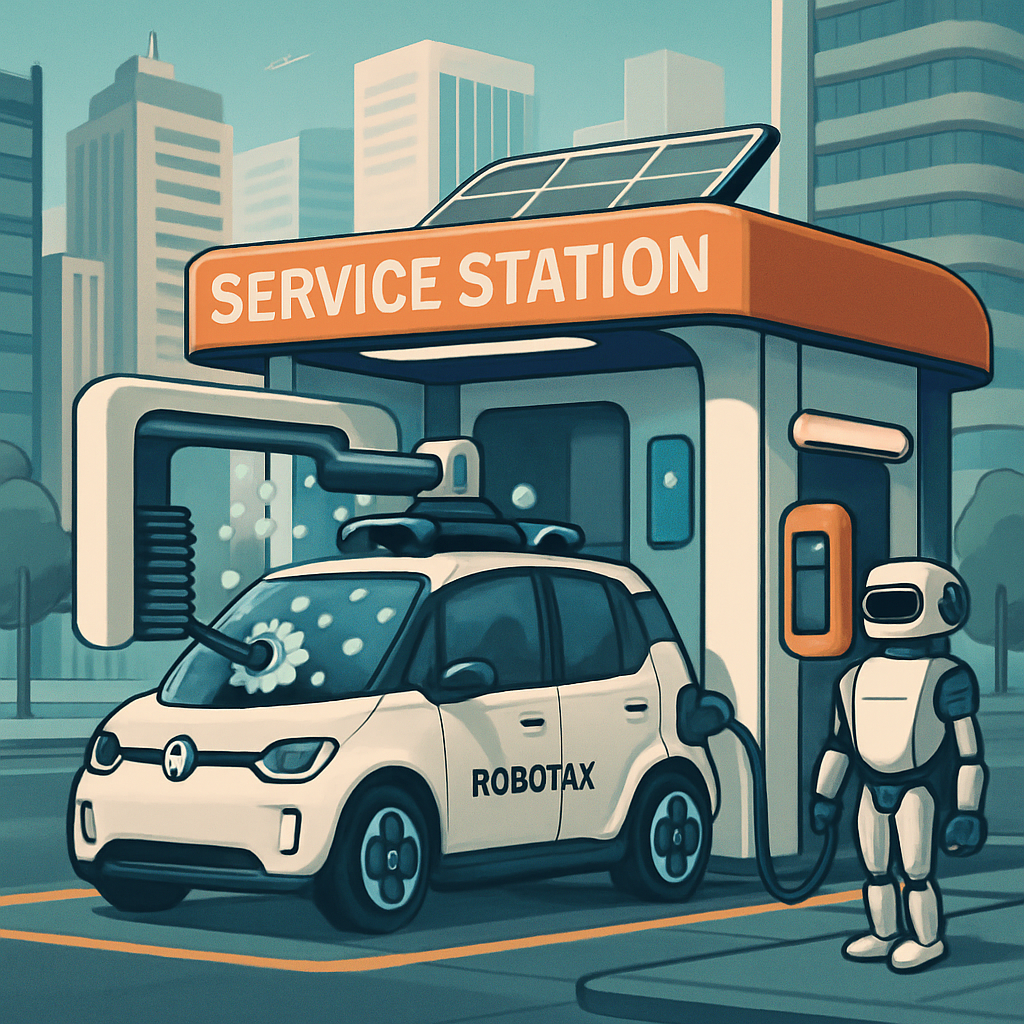
In urban centers like San Francisco, autonomous vehicles frequently traverse city streets without passengers, either awaiting ride requests or traveling to distant facilities for maintenance and charging. These non-revenue-generating trips, known as deadhead miles, pose a significant challenge to the profitability of robotaxi services.
Addressing this issue, Redwood City-based startup Aseon Labs proposes a network of compact, automated service stations designed to inspect, clean, and charge autonomous vehicles. These stations, envisioned as robotic pit stops, aim to be strategically placed throughout urban areas to minimize deadhead miles and enhance operational efficiency.
Aseon Labs has recently secured $10 million in seed funding, led by Crane Venture Partners. Additional participants include Y Combinator, Expa (the venture firm founded by Uber co-founder Garrett Camp), Robin Hood Ventures, and Founders Capital. Notable angel investors such as Adrian Aoun (former Google executive), Immad Akhund (Mercury founder and CEO), Rajat Suri (Zimride co-founder), and key figures from companies like Anthropic, Nuro, Turo, and Revolut also contributed to the round.
The startup plans to utilize the funding to develop five prototypes of its service stations, expand its engineering team from six to approximately twelve members, and secure urban real estate for deploying its network. Co-founder and CEO George Kalligeros emphasized the importance of increasing vehicle utilization to achieve economic parity with traditional ride-hailing services, stating that continuous operation throughout the day is essential for the viability of autonomous ride services.
Kalligeros and co-founder Dan Keene bring relevant experience from their previous venture, Pushme, which developed battery-swapping infrastructure for micromobility fleets. Pushme’s rapid deployment of battery swap stations across European cities, prior to its acquisition by Tier Mobility in 2020, demonstrated their capability in scaling hardware and real estate solutions efficiently.
By implementing a distributed network of automated service stations, Aseon Labs aims to significantly reduce deadhead miles, thereby improving the profitability and sustainability of robotaxi operations. This approach not only addresses logistical challenges but also contributes to the broader adoption and acceptance of autonomous vehicle services in urban environments.