Apple’s Towson Store Closure Sparks Union Protests and Allegations of Discrimination
In April 2026, Apple announced the impending closure of three retail stores in the United States: Apple Towson Town Center in Towson, Maryland; Apple North County in Escondido, California; and Apple Trumbull in Trumbull, Connecticut. The company cited the departure of several retailers and declining conditions in these malls as the primary reasons for the closures. However, the decision to close the Towson store has ignited significant controversy due to its status as the first unionized Apple retail location in the U.S.
Union’s Response and Allegations
The International Association of Machinists and Aerospace Workers (IAM) Union, representing the Towson store employees, has vehemently opposed Apple’s decision. The union alleges that Apple is engaging in discriminatory practices by treating the Towson employees differently from those at the other two closing locations. Specifically, while employees at the Escondido and Trumbull stores have been offered transfer opportunities to nearby Apple stores, the Towson employees have been instructed to reapply for positions as external candidates. As of late April, none of the approximately 90 Towson employees had secured positions at other Apple stores.
In response to these actions, the IAM Union filed an Unfair Labor Practice charge with the National Labor Relations Board (NLRB), accusing Apple of retaliating against the Towson employees for their unionization efforts. The union contends that Apple’s actions violate federal labor laws designed to protect workers’ rights to organize without fear of discrimination or retaliation.
Public Rally and Community Support
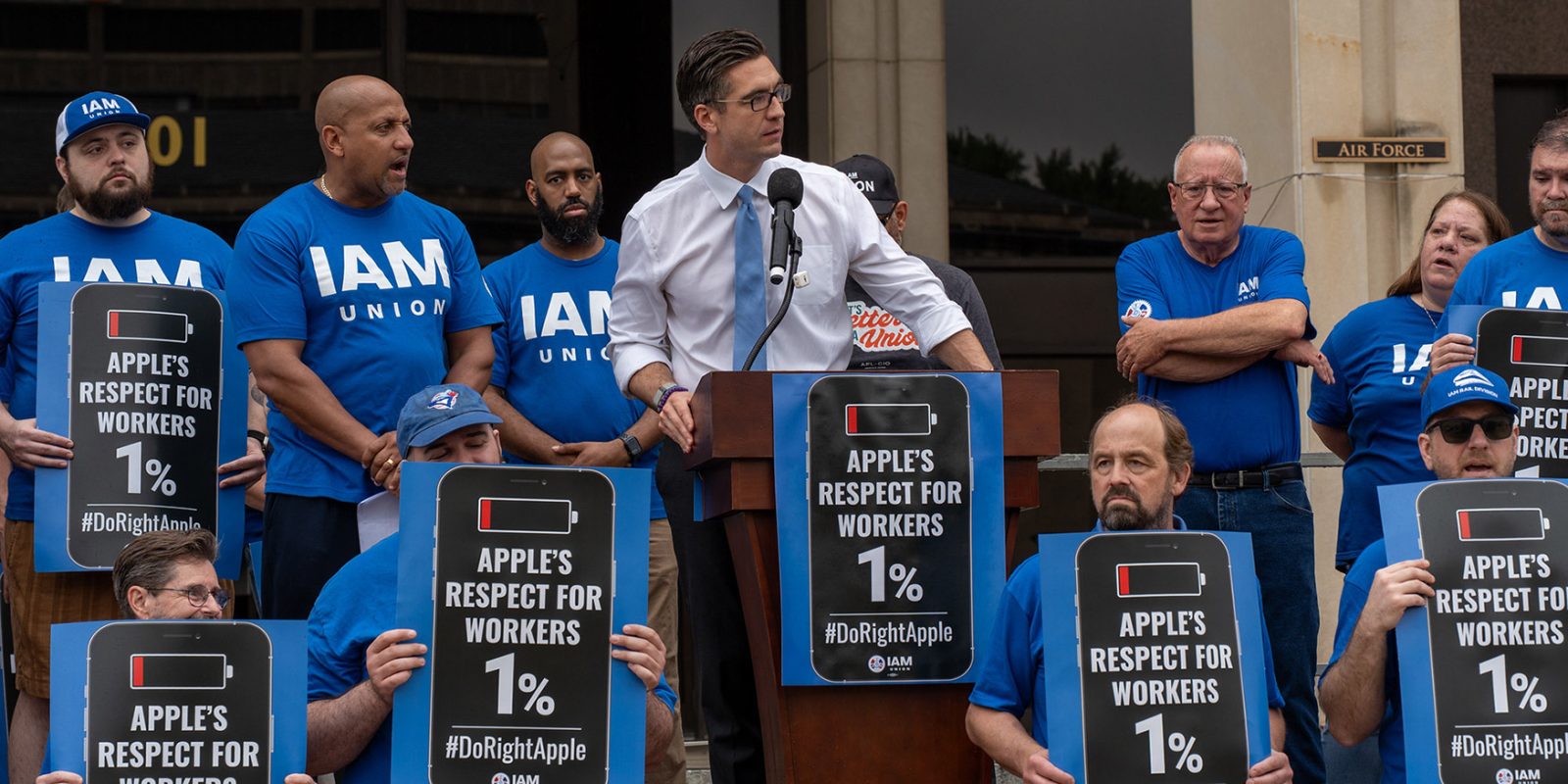
On May 27, 2026, the IAM Union organized a public rally outside the Baltimore County Courthouse to protest the store’s closure and the alleged discriminatory treatment of the Towson employees. The rally saw participation from union members, local elected officials, labor allies, and community leaders, all united in demanding accountability from Apple and support for the affected workers.
During the rally, IAM Eastern Territory General Vice President David Sullivan addressed the crowd, stating, We know what it looks like when a corporation tries to make an example out of workers who dared to ask for a seat at the table. We have seen that playbook. We have faced it down before. And we have beaten it before. Sullivan emphasized the union’s commitment to fighting for the rights of the Towson employees and holding Apple accountable for its actions.
Political and Community Backing
The Towson store’s closure has also drawn attention from political figures and community organizations. The Maryland congressional delegation, led by U.S. Representative Johnny Olszewski and joined by U.S. Senators Chris Van Hollen and Angela Alsobrooks, as well as U.S. Representatives Steny Hoyer, Jamie Raskin, Glenn Ivey, Kweisi Mfume, Sarah Elfreth, and April McClain Delaney, penned a letter to Apple demanding accountability for the decision to close the unionized store.
Community leaders, including Baltimore Metro AFL-CIO President Courtney Jenkins, Maryland State and DC AFL-CIO Federation Secretary-Treasurer Samuel Epps, and Baltimore County NAACP President Roland Patterson, have also voiced their support for the Towson employees. They argue that the store’s closure not only affects the workers but also the community that relies on the store for essential services and its unique access to public transit.
Apple’s Position and Response
Apple has maintained that the closures are due to declining mall conditions and that the company is adhering to the collective bargaining agreement negotiated with the union. According to Apple, the agreement stipulates that in the event of a store closure, employees are guaranteed a transfer or rehire only if a new location opens within a 50-mile radius of the Towson store. Outside of that scenario, the union negotiated for severance packages rather than automatic transfers to existing stores.
An Apple spokesperson stated, We strongly disagree with the claims made, and we will continue to abide by the agreement that was negotiated and agreed with the union. We look forward to presenting all of the facts to the NLRB.
Broader Implications and Ongoing Developments
The situation at the Towson store has broader implications for labor relations within Apple and the tech industry at large. The closure of the first unionized Apple retail store and the subsequent allegations of anti-union discrimination have sparked discussions about corporate accountability, workers’ rights, and the challenges of unionization in the tech sector.
As the NLRB investigates the Unfair Labor Practice charge filed by the IAM Union, the outcome could set a precedent for how companies handle unionized employees during store closures and other significant operational changes. The case also highlights the importance of clear communication and fair treatment of employees, especially in situations involving unionized workforces.
The Towson employees, supported by the IAM Union and various community and political leaders, continue to advocate for their rights and seek a resolution that acknowledges their contributions and respects their decision to unionize. The coming weeks will be crucial in determining the outcome of this dispute and its impact on labor relations within Apple and beyond.