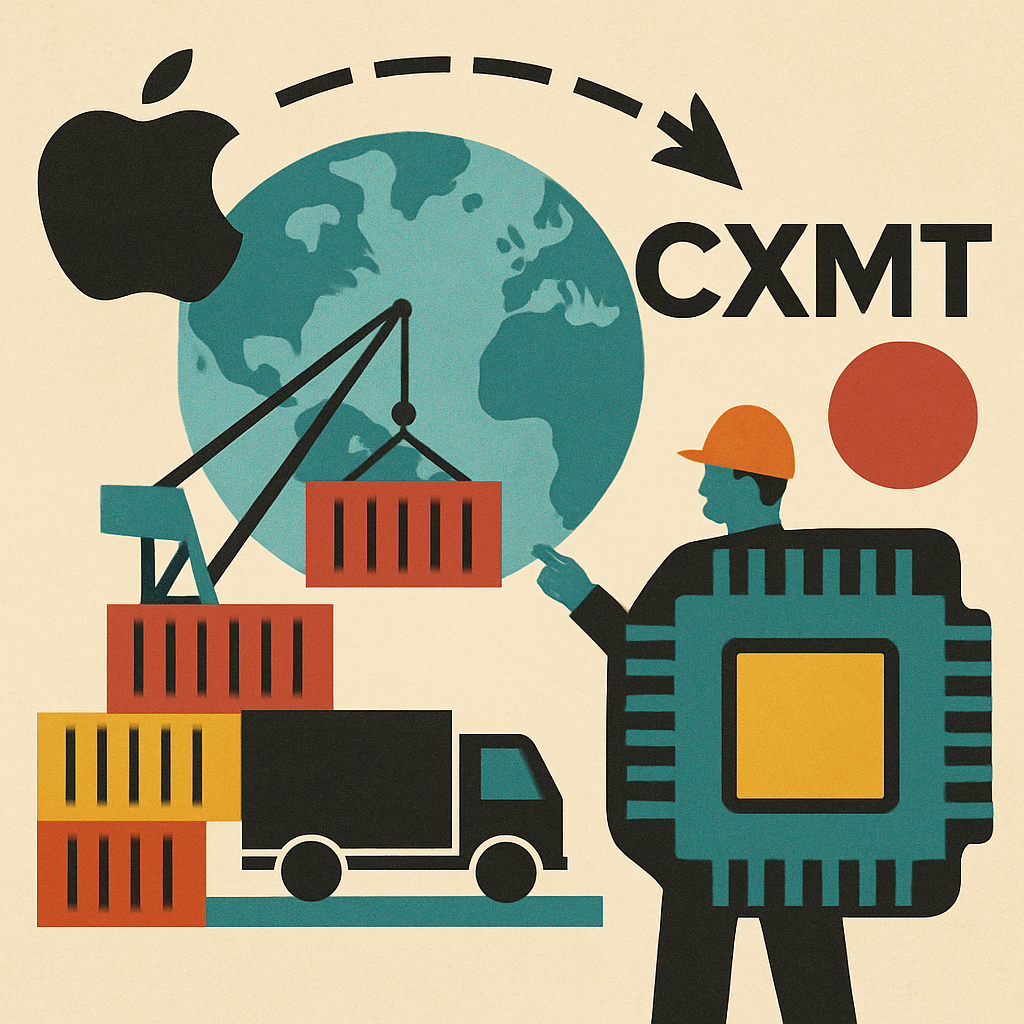
Apple’s recent efforts to incorporate Chinese memory manufacturer ChangXin Memory Technologies (CXMT) into its supply chain have not yielded the intended results. The company aimed to use CXMT as a bargaining tool to negotiate better pricing with established suppliers Samsung Electronics and SK Hynix. However, this strategy has inadvertently strengthened the pricing power of the Korean chipmakers.
In response to escalating memory shortages that have driven up the costs of its devices, Apple began evaluating CXMT and another Chinese firm, Yangtze Memory Technologies (YMTC), as potential DRAM suppliers. The goal was to introduce competition that would compel Samsung and SK Hynix to lower their prices, a tactic Apple has previously employed with OLED suppliers and contract manufacturers.
However, CXMT faces significant production challenges. Due to U.S. export controls, the company is restricted from accessing advanced extreme ultraviolet (EUV) lithography tools and must rely on older deep ultraviolet (DUV) equipment. This limitation results in approximately 30% more wafer starts to achieve the same output, leading to higher production costs. Consequently, CXMT’s pricing is on par with, or even exceeds, that of Samsung and SK Hynix. When Apple sought lower quotes for LPDDR5X memory, CXMT declined, maintaining prices at or above those of its Korean counterparts.
Compounding the issue, Chinese tech giants Huawei and Xiaomi have secured the majority of CXMT’s production capacity through long-term, high-priced contracts. This leaves CXMT with little incentive to negotiate with Apple, further diminishing Apple’s leverage in price negotiations with Samsung and SK Hynix.
As a result, instead of achieving more favorable pricing, Apple now faces a market where Samsung and SK Hynix have less pressure to reduce prices. Both companies are also shifting their focus toward high-bandwidth memory for AI servers, tightening the overall DRAM supply. This development follows political scrutiny, with lawmakers urging Apple to reconsider its engagement with Chinese memory chipmakers.
This situation underscores the complexities of global supply chain dynamics and the challenges companies face when attempting to diversify suppliers. Apple’s experience highlights the importance of thoroughly assessing potential partners’ capabilities and market positions. Moving forward, Apple may need to explore alternative strategies to manage component costs and ensure a stable supply chain.