At Apple’s upcoming event on October 13, the company is rumored to lay the foundation for a full-scale smart home ecosystem. Major updates expected: a dedicated smart home hub, a revamped HomePod mini (version 2), and a fresh Apple TV 4K. All three are expected to lean heavily into Siri AI, finally pushing voice and intelligence to the forefront of Apple’s home strategy.
What the New Devices Might Bring
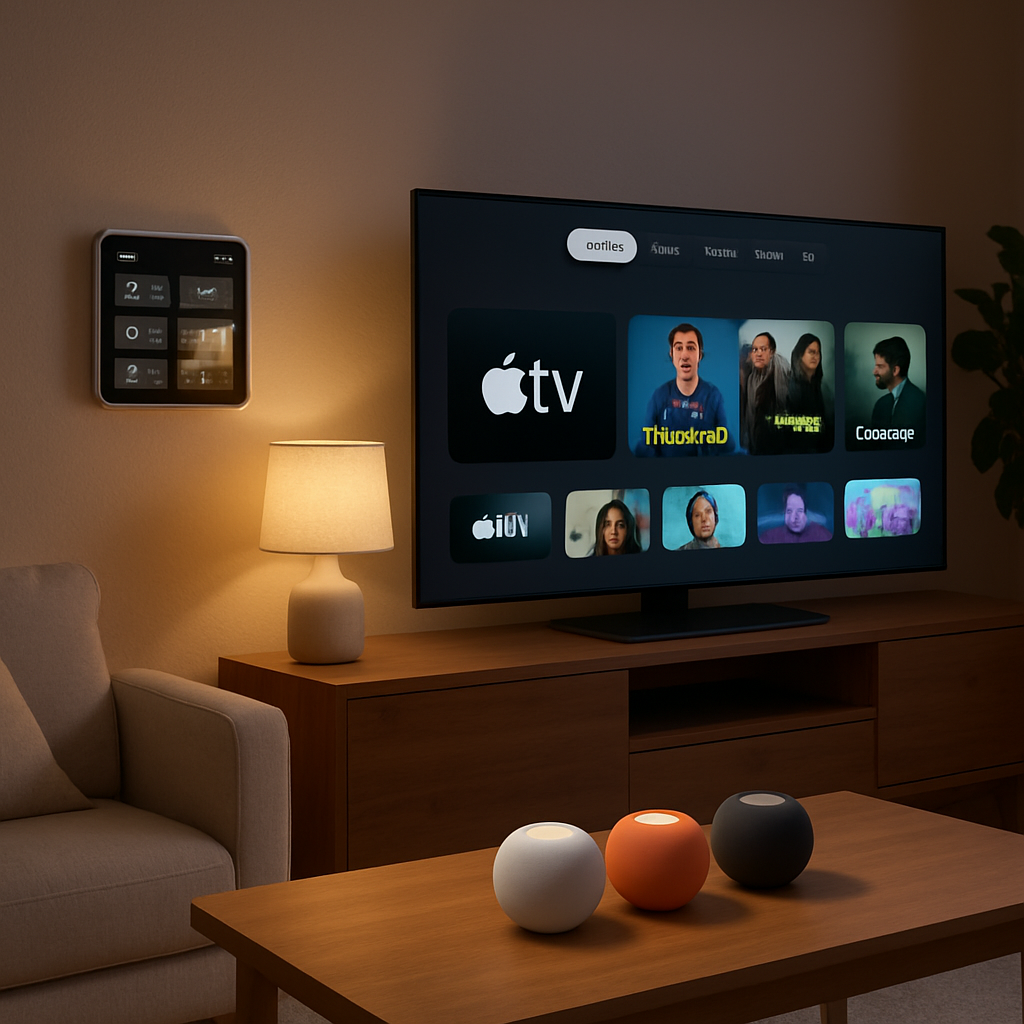
The rumored smart home hub could be Apple’s first major foray into owning the physical interface of the connected home. Leaks suggest a square 6-inch display that comes in both tabletop and wall-mounted forms, with one design echoing the iconic iMac G4. The software side may deliver a hybrid of clock and photo displays, Apple Watch-style app icons, and layouts reminiscent of iPad apps. Profiles tied to facial or voice recognition could personalize the hub per user, while guest mode may limit exposure of personal content. Pricing is projected at around $350.
The Apple TV 4K update under discussion looks to be more than a spec bump. It is expected to include either the A19 or A19 Pro chip, upgraded memory, and Apple’s N1 networking chip. The new model promises performance improvements, especially for gaming, plus deeper integration of Apple Intelligence and Siri AI. Design changes seem limited.
Meanwhile, the HomePod mini 2 appears poised to retain its familiar form factor. New color options in green, pink, and lighter blue shades are in the mix, adding to the existing white and black versions. Internally, a faster S-series chip should help power enhanced Siri AI features. A full-size HomePod is also in the works for a later date. Software tweaks could unlock a four-HomePod surround sound mode.
Expanding the Ecosystem: Accessories & Long-Term Strategy
Apple is reportedly teaming up with LG to build out accessories around the home hub. The plan includes LG-branded hardware such as video doorbells, deadbolt locks, thermostats, and temperature sensors, accompanied by indoor, outdoor, and floodlight cameras—all under Apple’s development oversight.
On the privacy front, Apple’s rumored to be exploring a camera or sensor that can analyze activity in the home without recording video—likely to reassure users concerned about constant surveillance. Also in the works is a high-end hub variant with a 9-inch display mounted on a robotic arm.
The upcoming product rollout aligns with Apple’s stated shift under CEO John Ternus toward more frequent hardware updates, especially in categories that have seen minimal change in recent years.
The October 13 event theme, teased with “Welcome Home,” begins at 9:00 a.m. Eastern Time in New York. Media invites mark this shift toward transforming Apple’s smart home offerings from ecosystem features into standalone products.
Analysis: Should these rumors prove accurate, this marks Apple’s most serious entry into the smart home experience in years—powered by AI and anchored by dedicated hardware. The big questions: whether the hub can match rivals in room-scale integration, whether Siri AI finally delivers latency and smarts comparable to others, and whether these devices earn their price tags. It’s not just about new hardware—it’s about Apple defining what “smart home” means for its users in 2026 and beyond.