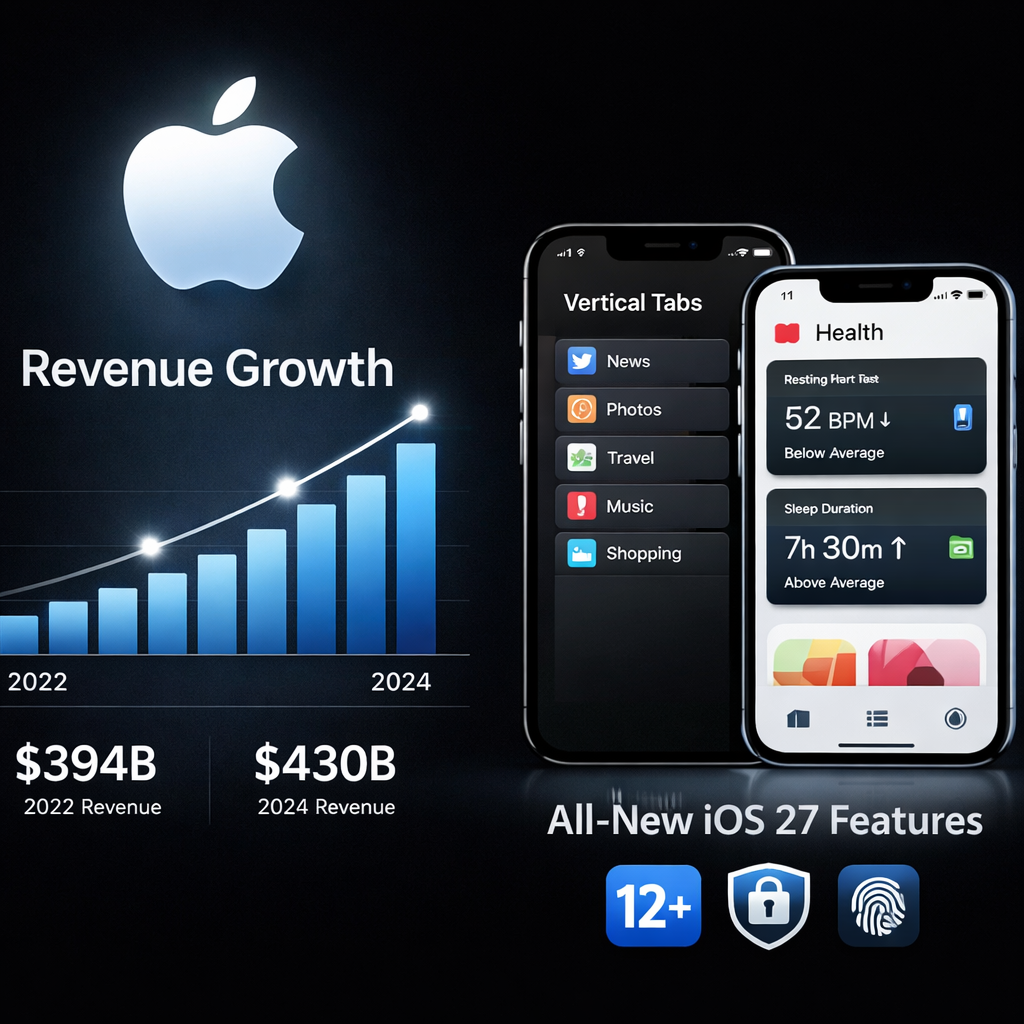
Apple delivered an astonishing fiscal Q4 performance that eclipses even its 2020 holiday numbers, riding high on strength in iPhone and Mac sales. On top of that, the company is gearing up to release iOS 27.3 with several new features—many unannounced at WWDC. Meanwhile, global regulations are pushing Apple to enforce stricter age ratings and self-reporting among apps that share location data or enable dating and relationship features.
Record Earnings and Margin Challenges
Apple closed fiscal Q4 with revenue of about $114.5 billion, up roughly 11-12% year over year, with earnings per share reaching $2.10—beating Wall Street expectations. iPhone revenue surged ~17%, hitting a September-quarter high, while Macs also saw a strong performance. Meanwhile, Services grew by about 10%. These results mark Apple’s most impressive quarter yet, even surpassing its performance during the peak of the pandemic in late 2020. However, rising memory component costs are expected to eat into margins in the upcoming holiday quarter. Gross margin for Q4 stood at nearly 48%, but forecasted holiday margins may drop toward 45–46% due to higher expenses.
iOS 27.3 Beta: What’s New
The first public beta of iOS 27.3 brings user improvements across many fronts. Safari gains a new vertical tab layout and adaptive dark mode for sites without built-in support. Siri AI gets expanded capabilities: users can now ask it to unsubscribe from mailing lists, clear browsing history, manage tabs, and do more within apps like Weather, Files, Mail, and others.
Health sees a redesign, with added “Insights” and “Longevity” tabs. A “Health Age” feature estimates how your metrics—such as resting heart rate, VO₂ max, and sleep patterns—stack up. For iPhone Duo users, reachability becomes available: swiping from the edges of the outer display brings content lower, making one-handed use easier. Keyboard layouts are tweaked too, with letter size reduced, and certain keys relocated. StandBy mode becomes customizable across all iPhones that run iOS 27. Extras include a livestreaming karaoke-style mode in Apple Music called “Selfie Sing,” earthquake alerts for China, and Freeform app enhancements for shape tools and color options—some gated to Creator Studio subscribers.
New Rules for Dating, Location, Age Ratings
To comply with tightening international regulations around minors, privacy, and content, Apple is introducing two new content descriptors in App Store Connect. Starting November 16, developers must declare whether their apps offer shared location features or support dating or romantic interactions—involving real people or AI companions. These declarations must be reflected in age ratings, with all apps required to comply by January 12, 2027.
Apps with dating or romantic content will carry a minimum 18+ rating. Location-sharing descriptors may not always alter age ratings, depending on local laws. For example, in Brazil, shared location features trigger an A16 rating and dating apps receive A18 ratings. Developers can petition local authorities (e.g., Brazil’s Ministry of Justice and Public Security) for a lower rating if their app’s feature is narrowly scoped (e.g., parental or children-based location sharing).
On the regulatory front, these changes also reinforce rules around location sharing and dating features. Apple’s earnings call—its first with John Ternus as CEO—highlighted increasing pressure on developer policies. The company signaled that apps must clearly disclose their use of location data, and romantic or AI dating content, so users (or guardians) can make informed decisions.
What this Means & What to Watch
Apple’s breakout Q4 shows the company still has unmatched strength in hardware and high margins—but rising memory costs pose a threat as holidays approach. iOS 27.3 is shaping up to be a meaningful iteration, filling gaps in Safari, Siri AI, and usability—especially on new devices like iPhone Duo. But perhaps most consequential are the new age and feature disclosures: the changes underscore how regulation is no longer external noise but a core part of how Apple will build and govern its platform.