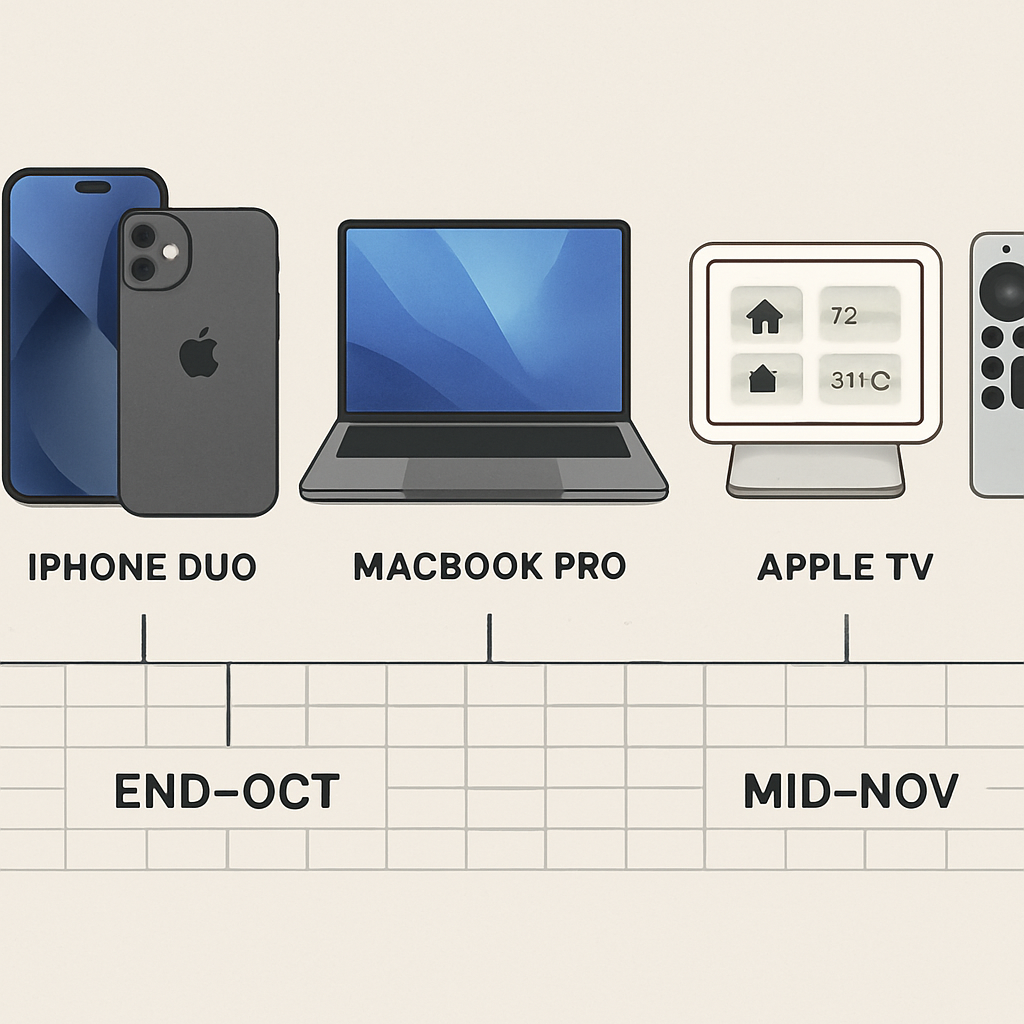
Apple is gearing up for a cascade of product releases across the next four Fridays. The lineup kicks off October 23 with the iPhone Duo, followed by the HomePod mini 2 on October 30. November 6 may bring a trio of power upgrades—OLED MacBook Pros, new 14-inch MacBook Pro and iMac models powered by M6 chips, and possibly the long-rumored iPad mini 8 with an OLED display. The flurry wraps up November 13 with Apple HomeView and a fourth-generation Apple TV 4K.
What We Know So Far
The rumored November 6 products are expected to be revealed during an event around October 27 or 28. Analysts suggest this will be Apple’s opportunity to introduce a sweeping refresh for its MacBook Pro and iMac lines, finally moving into OLED displays and M6 chips. The iPad mini 8—if it arrives—would represent Apple’s most significant update to the mini line in recent years.
The timing creates a steady stream of ideal purchase moments. iPhone Duo makes its debut this Friday, and every subsequent Friday until mid-November brings another device release. That pace contrasts with Apple’s normal cadence, where several months might pass between major product launches.
Why It Matters
For consumers, this coming month offers multiple chances to evaluate whether to wait for newer devices or go ahead with current models. Supply chains could see stress as Apple ramps up for back-to-back reveals. For competitors, it signals Apple’s urgency to dominate various product categories—foldables (via iPhone Duo), smart speakers, Macs, tablets, and home entertainment.
Release schedule at a glance:
- October 23: iPhone Duo
- October 30: HomePod mini 2
- November 6: OLED MacBook Pro models, 14-inch MacBook Pro & iMac with M6 chips, possibly iPad mini 8
- November 13: Apple HomeView and Apple TV 4K (4th generation)
Apple’s announcement window (late October) will be watched closely for design reveals, pricing, and how the company intends to spread attention across so many product categories.
Analysis: This upcoming four-Friday rollout reveals Apple’s shift toward a more constant stream of product launches instead of concentrated events. This could lessen the buildup around mega-events, but also keeps consumers perpetually anticipating the next thing. Watch closely whether product overlap dilutes individual impact—or whether staggering releases keeps Apple always in the headlines.