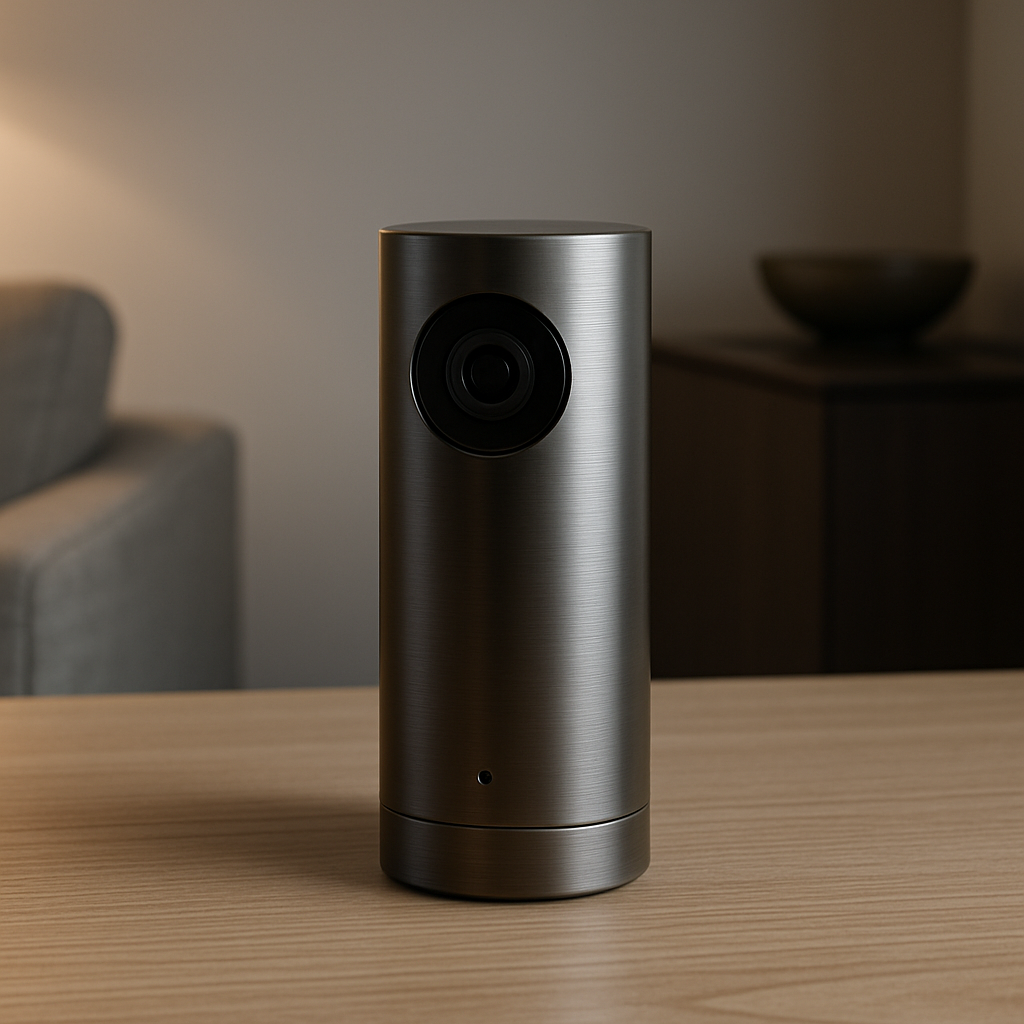
Apple is reportedly developing a new home security camera, known internally as “J450,” that’s designed with privacy as a core feature. Unlike traditional security cameras that enable live video feeds, this device is said to interpret and describe what it sees—such as alerting users when people or pets enter or leave a room—without allowing anyone to view the actual footage. No video playback, just summaries.
The device appears meant to complement Apple’s upcoming HomeHub, with both allegedly unveiled around October 13. The contrast between the two is notable: while HomeHub is expected to act as a central hub for the connected home, J450 seems tasked with environmental awareness. Reports say it will intake visuals at a low frame rate, using onboard AI to recognize familiar faces or pets—but without storing continuous or viewable video feeds accessible to users or remotely.
How It Works
Its design is described as a metal cylinder—long, sleek, and cylindrical—“chapstick”-like in shape. The camera is rumored to use facial recognition to distinguish who enters or exits a room. It may also identify pets. But the big difference: instead of streaming or allowing video access, it sends textual updates summarizing what’s going on.
This approach is clearly pitched as a strong privacy-based alternative to most home security cameras, which generally let you see and store footage. What’s still unclear is whether the image processing happens locally on the device or relies on cloud-based systems. That distinction matters for where sensitive data might be exposed.
Why It Matters
The privacy angle here isn’t just marketing. With growing concern over smart home devices and data breaches, tools that reduce access to visual feeds could reduce risk. In the past, reports have shown that “security cameras” are often susceptible to hacking, misuse, or unwanted surveillance—even when no malintent is intended.
Apple seems to be betting that many users care less about seeing every moment and more about being informed when something matters. For people who want awareness without visibility, a device that sends summaries—“person detected,” “pet in room,” “door opened”—may hit a useful balance.
The expected launch timing puts this tech on the table when debates over privacy and AI are heating up. HomeHub will likely be a centerpiece in Apple’s push to redefine how we interact with our homes. If J450 works as rumored, it could shift norms in home monitoring by giving users insights without image-based exposure.
Foregoing viewable video in favor of AI-driven text updates could set a new standard. But adoption will hinge on trust—where data is processed, how accurate detections are, and whether users feel the reports are meaningful rather than vague. What to watch for: privacy guarantees, processing architecture, pricing, and whether this stands alone or needs HomeHub to function.