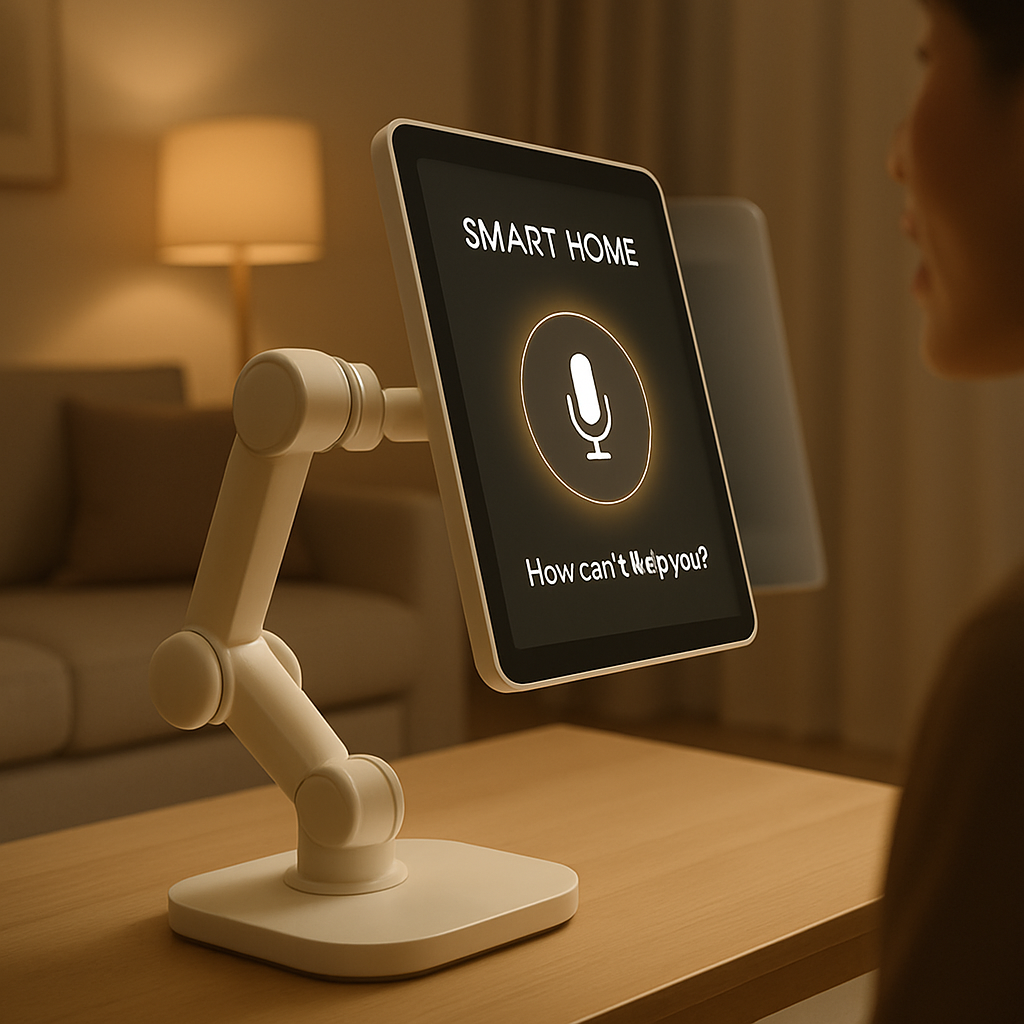
Apple is reportedly developing a new version of its HomeView smart display—code-named J595—that could arrive in 2027 with upgrades including a robotic arm and a larger screen. The current HomeView, priced at $299, features a 7-inch screen and must be manually repositioned when multiple people are nearby. The updated model aims to solve that limitation.
What’s New in HomeView J595
The J595 model is expected to retain the design of the current HomeView but with several notable advancements. First, the screen size will increase to around 9 inches. Second, the standout feature: a motorized robotic arm that allows the display to swivel fully 360 degrees, not just tilt. It will use voice recognition to detect who is speaking and automatically turn toward that person—think of it as an enhanced version of the Center Stage feature on Apple devices.
This upgrade won’t replace the existing HomeView at $299; instead, J595 is being positioned as a premium option and will presumably come with a higher price tag. Apple plans for this model to hit the market sometime in 2027 or 2028.
Why It Matters
The current HomeView has received praise for its integration with Apple’s smart home ecosystem, but its fixed screen and manual repositioning have been seen as drawbacks in conversational settings. A swivel mechanism and speaker-aware movement could significantly enhance its usefulness during group interactions—whether in kitchens, living rooms, or conference setups.
As Apple continues pushing into smart home hardware, distinguishing product tiers becomes more important. A premium HomeView model with automated motion and a larger display helps Apple better compete with other smart‐display makers offering more interactive and spatially aware devices. Additionally, the investment in voice recognition and mechanical components signals Apple’s ambition to integrate more robotics into its product lines.
Industry-wide, smart displays are converging with voice assistants and camera tech to create more personalized user experiences. Features like automatic tracking and adaptable positioning are no longer niche but expected. Apple’s plans reveal how the company is working to stay ahead of consumer expectations in human-computer interaction.
Looking ahead: key things to watch include how much Apple will charge for the upgraded HomeView, how responsive and accurate the voice recognition system will be in real world use, and whether the build reliability holds up under mechanical stress. If Apple can pull it off, we might soon see a smart display that truly moves with the room, not audiences adapting to the screen.