Apple is preparing to roll out a new HomeKit feature that’s exclusive to its upcoming “second-party” smart accessories. These are co-developed with LG and will include devices like thermostats, security cameras, doorbells, flood lights, and smart locks.
Proximity Control via Dynamic Island
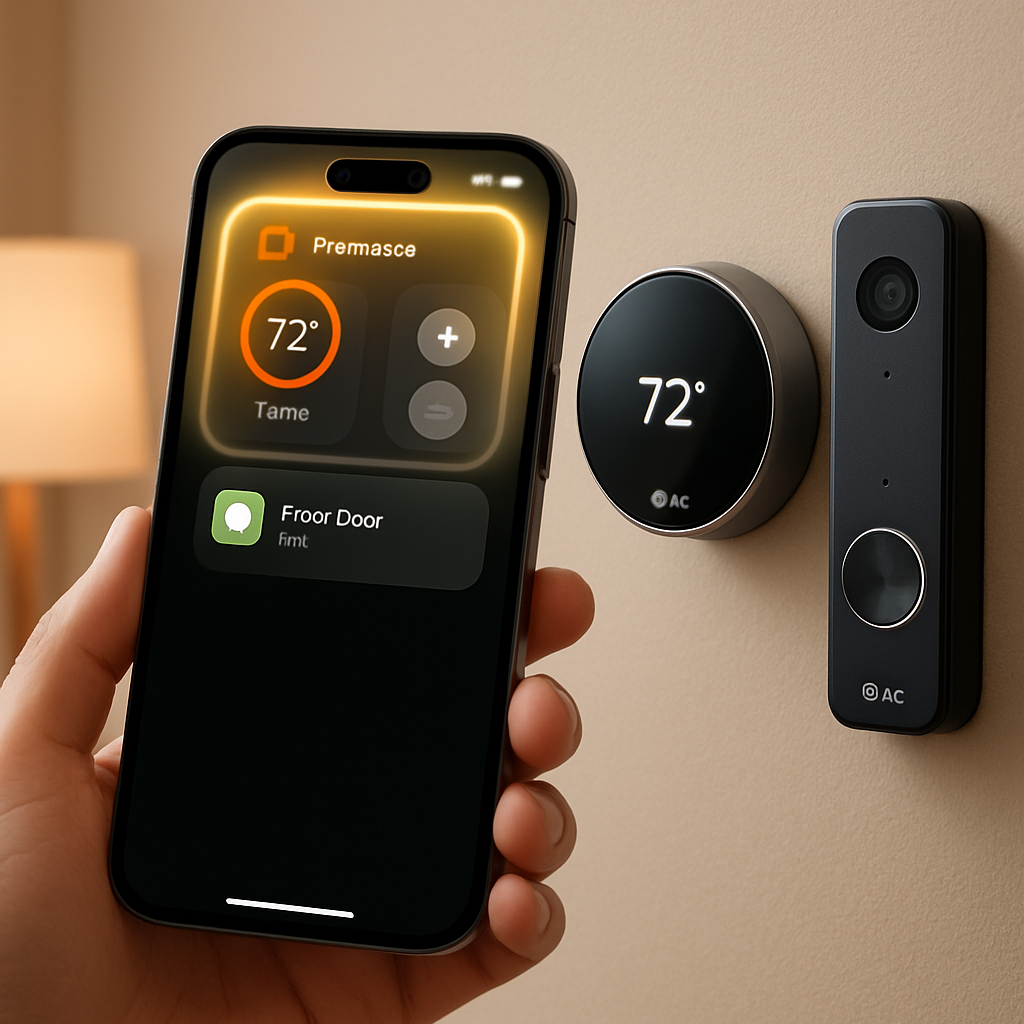
The highlight of this innovation is a feature tentatively called “Proximity Control.” When an iPhone is tapped against or brought near one of these LG accessories, a prompt will appear in the Dynamic Island UI with an “Open Controls” option—ideal for adjusting a thermostat. For items like cameras and doorbells, the prompt will instead show a “camera viewer.”
During the initial setup phase, users will also get feedback via Dynamic Island when pairing the accessory. The mechanism enabling this involves the accessory embedding an “apple-deviceid” tag in a Matter payload that sits on its NFC tag, while also broadcasting a Bluetooth Low Energy advertisement that supports Proximity Control. Users will be able to disable this feature through the Home app.
Second-Party Accessories: What to Know
“Second-party” refers to hardware built by a partner (in this case, LG), but with tighter collaboration and integration than typical third-party devices. These accessories are expected to ship several months from now. Apple may showcase them publicly at its “Welcome Home” event set for October 13, though general availability could arrive even later.
Reported devices in the lineup include not just indoor and outdoor cameras, a doorbell, and a thermostat, but also a deadbolt lock and a flood-light camera. These are all part of Apple’s broader push into refining its smart home strategy, especially via tight integrations made possible by Matter—the interoperability standard for smart home tech.
It’s worth noting that as with any feature found in early leaks or code references, this could change before official release. Implementation details—how the Dynamic Island animations behave, what controls are exposed—may be tweaked, delayed, or omitted entirely.
What this means: Apple is moving past just supporting smart home protocols; it’s layering in user experiences that reward device proximity, quick tap interactions, and tighter hardware partnerships. Proximity Control may be small in scope, but it points to a future where smart home gadgets are far more intuitive out of the box. Investors, tech developers, and smart home enthusiasts should watch to see how this shapes not just accessories, but how all devices in the Apple ecosystem might leverage proximity, BLE, NFC, and UI affordances in coordinated ways.