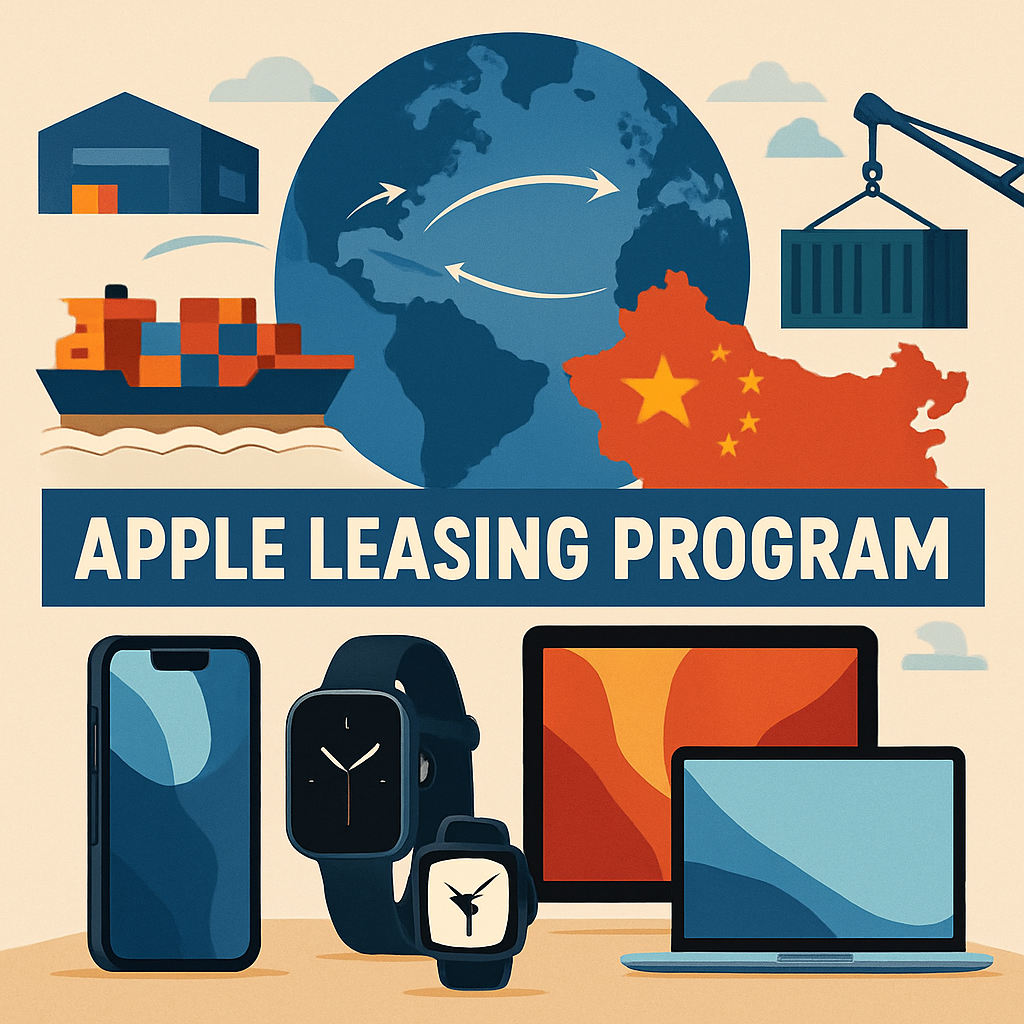
Apple has recently introduced the Apple Upgrade program, a leasing initiative that allows customers to lease devices such as iPhones, iPads, Macs, and Apple Watches. This program offers flexible terms, enabling users to upgrade their devices periodically without the need for outright purchases. The leasing model is designed to make Apple’s premium products more accessible to a broader audience by reducing the upfront financial burden.
Under the Apple Upgrade program, customers can choose lease terms of 12 or 24 months for iPhones and Apple Watches, and 24 or 36 months for Macs and iPads. Monthly payments start at $17.99 for iPhones, $11.99 for Apple Watches and iPads, and $24.99 for Macs. At the end of the lease term, customers have the option to return the device, purchase it outright, or upgrade to a newer model. Notably, AppleCare is not included in the lease and must be purchased separately if desired.
While the program offers flexibility, it has received mixed reactions. Some consumers appreciate the ability to access the latest technology without significant upfront costs, while others express concerns about the lack of ownership and the potential for continuous financial commitments. Additionally, certain entry-level models are excluded from the program, which may limit its appeal to some customers.
In parallel with the launch of the leasing program, Apple is navigating complex challenges in China. The company is considering sourcing components from Chinese suppliers to address the ongoing global chip shortage. This move aims to stabilize the supply chain and meet the high demand for Apple products in the Chinese market. However, this strategy has raised concerns from the U.S. government, which is wary of potential dependencies on Chinese manufacturing and the broader implications for national security and trade relations.
Apple’s relationship with China has been multifaceted. In 2014, Apple entered into a multi-year agreement with China Mobile to bring the iPhone to the world’s largest mobile network, marking a significant expansion into the Chinese market. Over the years, Apple has also offered financing options to Chinese consumers to boost sales, reflecting the importance of China as a key market for the company’s growth.
As Apple continues to expand its product offerings and explore new business models like leasing, it must carefully balance innovation with geopolitical considerations. The success of the Apple Upgrade program will depend on consumer acceptance of the leasing model and the company’s ability to address concerns related to ownership and financial commitments. Simultaneously, Apple’s strategic decisions in China will require careful navigation to maintain positive relations with both Chinese partners and U.S. regulators.
In conclusion, Apple’s introduction of the leasing program represents a significant shift in how consumers access technology, potentially setting a precedent for the industry. However, the company must address consumer concerns about ownership and financial commitments to ensure the program’s success. Additionally, Apple’s strategic decisions in China will require careful navigation to maintain positive relations with both Chinese partners and U.S. regulators. The coming months will be crucial in determining how these initiatives impact Apple’s market position and consumer relationships.