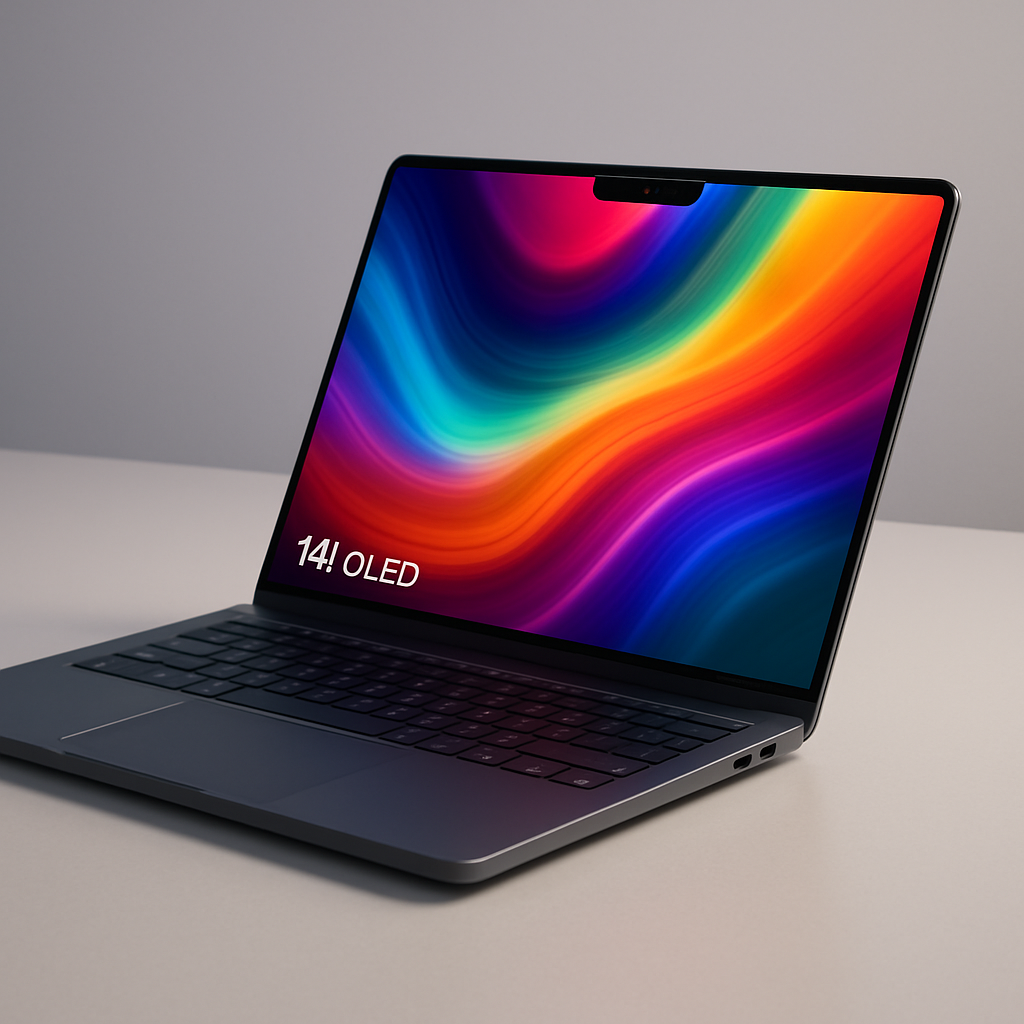
Apple appears poised to introduce a brand-new top-tier laptop model—dubbed the MacBook Ultra—that will set itself apart from the existing MacBook Pro line. Sources suggest this device won’t replace the current 14- and 16-inch MacBook Pros powered by M5 Pro and M5 Max chips; instead, it will sit at the premium end of the range, with those models continuing to be sold. Rumors place the Ultra’s launch potentially between October and December 2026, though production delays—particularly from shortages of global memory chips—could push back timelines. Apple is also preparing for a possible MacBook Ultra generation next year built on the M7 chip architecture.
Five Key Upgrades Expected
OLED Display:The MacBook Ultra is anticipated to feature OLED panels, moving beyond the mini-LED screens used in current high-end MacBooks. Samsung Display—already heavily investing in its 8.6-generation OLED production line in South Korea—will be the exclusive supplier. OLED tech promises better contrast, true blacks, improved color, and potentially greater HDR performance, though peak brightness may differ from mini-LEDs.
Touchscreen Capability:Perhaps the most significant shift: for the first time ever, a Mac will reportedly support touch input directly on its display. Apple is said to be integrating touch support into macOS to allow users to move between touch interaction and more traditional methods like trackpad or mouse use, without aiming for a full tablet experience. Golden Gate, Apple’s upcoming macOS version, already includes pull-to-refresh across key apps and touch support when using Sidecar.
Reinforced Hinge:To handle the new touch input cleanly, Apple is developing sturdier hinge mechanisms and screen hardware to prevent wobbling or bouncing—common issues with touch-enabled laptops. These changes are intended to maintain a solid feel even under tactile use.
Thinner Design:Coupled with OLED’s slimmer profile, the MacBook Ultra is expected to mark a return to leaner form factors. Though recent MacBook Pros got bulkier—partly due to the return of ports that had been removed earlier—the Ultra aims to blend durability with a slim, lightweight build similar to Apple’s thinnest iPads. Exactly how Apple keeps all current functionality while slimming the chassis remains unclear.
Dynamic Island Instead of Notch:The Ultra may drop the long-criticized notch in favor of a cutout more like the iPhone’s Dynamic Island. This version is believed to be interactive, expanding contextually based on app or system use. The change could reduce complaints that the notch intrudes too much into the macOS menu bar.
Pricing and Positioning
As a super-premium laptop, the MacBook Ultra is expected to be significantly more expensive than the current MacBook Pro models. Apple increased all Mac prices in June 2026, with the 14-inch MacBook Pro with M5 Pro now starting at US$2,499, and the 16-inch version starting at US$2,999. Whatever the final number, the Ultra will likely exceed those baselines by a meaningful margin.
While the Ultra represents a new, upper-tier model, Apple is also planning more incremental MacBook updates: including a base model with an M6 chip later this year, and next-generation Ultra machines powered by M7 architecture in 2027.
What this reveals is Apple’s intent to push its laptop lineup forward in both performance and design. Introducing an OLED touchscreen MacBook with structural and UI enhancements would be one of the biggest shifts in years. Whether users will embrace the trade-offs—in weight, cost, and potentially battery life—is what to watch. If all goes according to rumor, the MacBook Ultra could redefine what ‘premium laptop’ means for Apple.