Fifteen years ago today, the iPhone 4S hit shelves, marking a turning point in Apple’s smartphone lineage. Building on the iPhone 4’s iconic glass-and-stainless steel exterior, the 4S made its debut on October 14, 2011, introducing several internal upgrades that would reshape expectations for what a phone could do. Its arrival in the United States, Australia, Canada, France, Germany, Japan, and the United Kingdom set the stage for what came next.
From Design to Intelligence
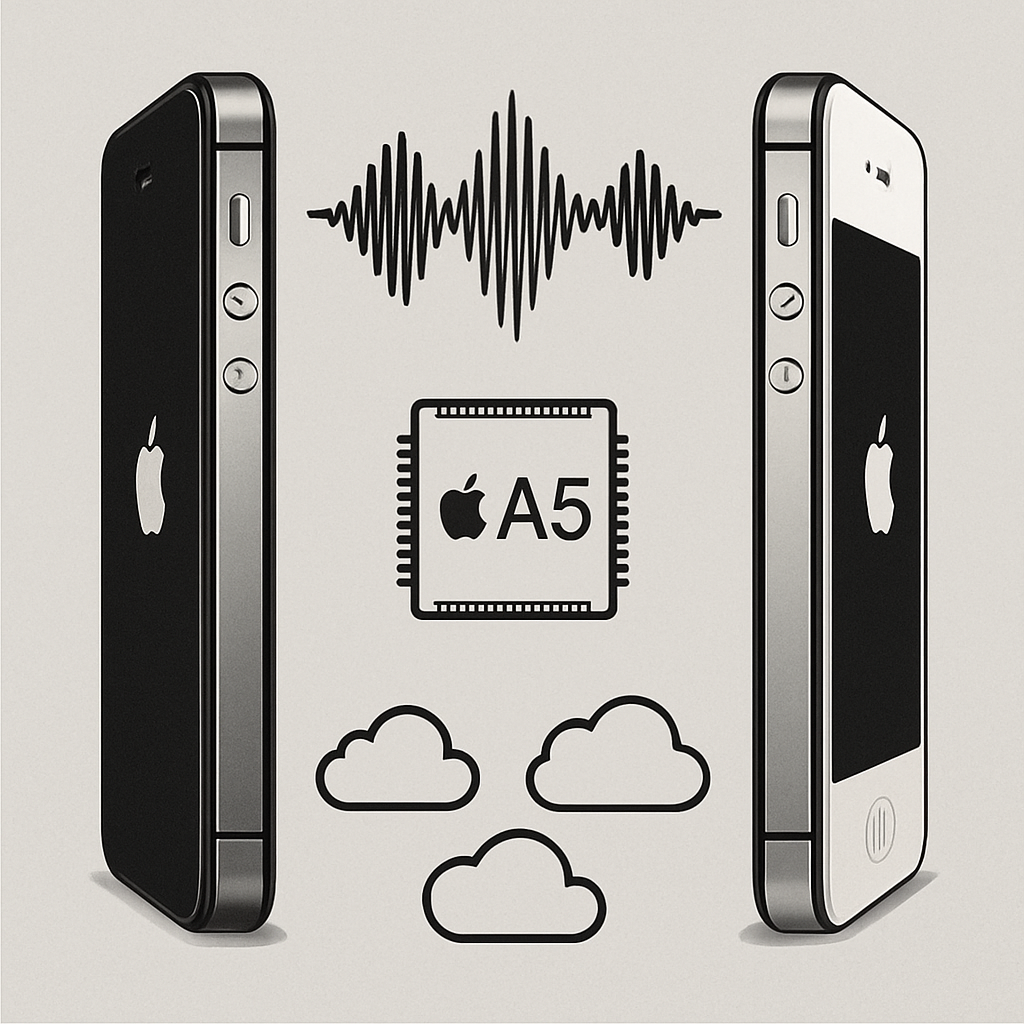
Visually, the 4S looked familiar—it retained most of the external design of its predecessor. Yet inside, everything shifted. Powering the device was Apple’s dual-core A5 chip, which promised twice the general processing speed and seven times the graphics performance compared to the iPhone 4. The rear camera saw a significant boost from five to eight megapixels, featured an f/2.4 lens, and gained full 1080p video capture. Wireless reception improved thanks to a dual-antenna approach for transmitting and receiving, and download speeds over HSDPA were increased to 14.4 Mbps.
Siri’s Debut—and a New Era
What truly set the 4S apart was its built-in voice assistant, Siri. For the first time in an iPhone, users could use natural language to send messages, set appointments, get weather updates, create reminders, or simply ask questions. Siri launched in beta, supporting English (U.S., U.K., Australia), French, and German, and was available only on the 4S—not as a software upgrade for earlier models.
Before Siri was integrated, it existed as an independent app, which Apple acquired in April 2010. After the announcement of the 4S, the standalone app was removed from the App Store, and users of it were informed that its service would end on October 15, 2011.
Introducing iOS 5 and iCloud
Alongside the device came iOS 5, released just two days earlier. This update rolled out key features like iMessage, Notification Center, and Reminders, as well as support for wireless updates and an easier, on-device setup process. iCloud also arrived, offering cloud-based storage and syncing for Apple users for the first time.
Variants, Price, and Early Impact
The iPhone 4S was offered in black or white, with storage options of 16GB, 32GB, and a new 64GB tier. Prices began at $199 for the 16GB model up to $399 for 64GB, all tied to conventional two-year carrier contracts. In its first three days on the market, more than four million units sold—more than double the iPhone 4’s launch period numbers.
Over its decade-and-a-half run, the 4S’ legacy remains significant. It introduced key technologies—multi-core chips, advanced cameras, cloud services, and voice intelligence—that have become standard in smartphones. Its commercial success demonstrated consumer demand not just for sleeker hardware, but smarter, more capable devices.
In today’s world, where virtual assistants, AI-powered cameras, and cloud ecosystems are baseline expectations, looking back at the iPhone 4S reveals how foundational its contributions were. Apple’s challenge now is honoring that legacy by seamlessly integrating intelligence and performance—something the 4S did 15 years ago. What comes next? Expect even more emphasis on AI, on-device processing, and tight hardware-software synergy as Apple strives to make each new iPhone not just an iteration, but a redefinition.