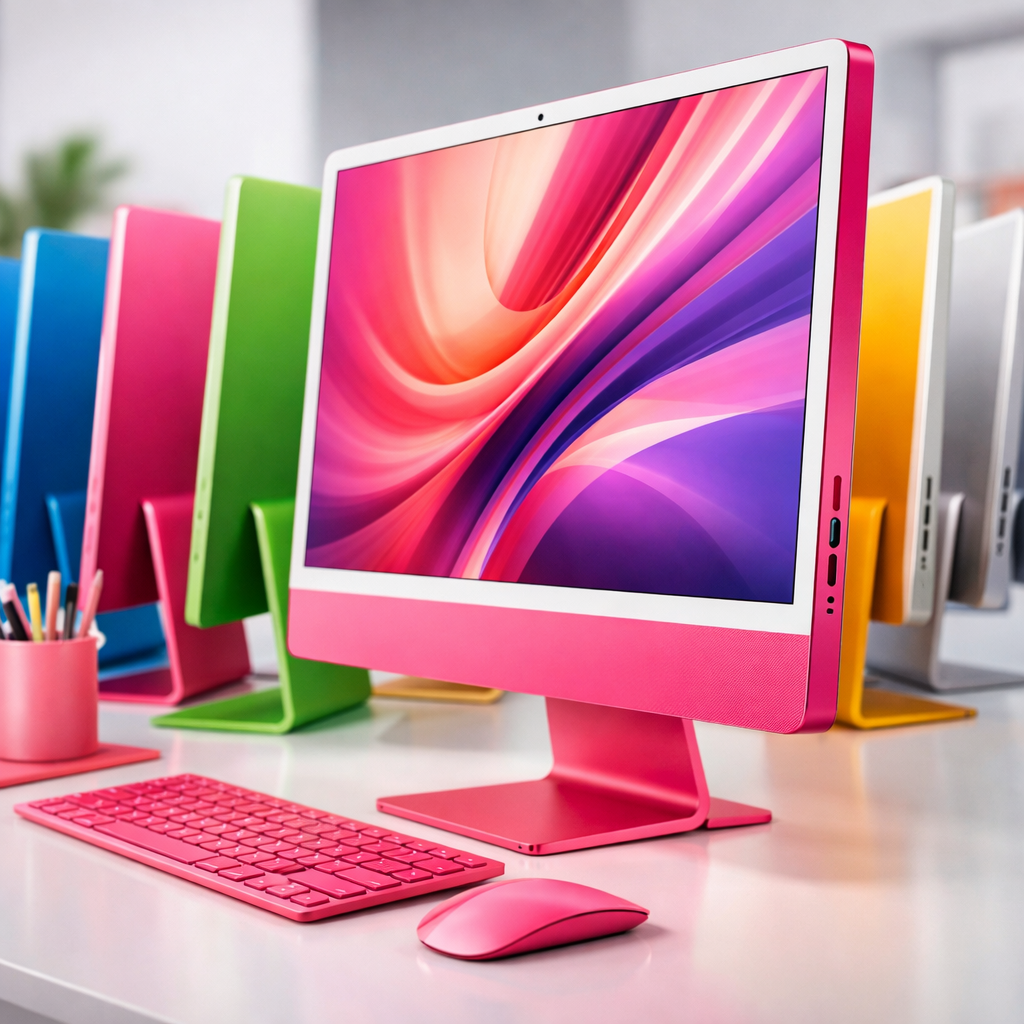
Apple has quietly unveiled an updated version of its 24-inch iMac, ditching the M4 chip in favor of the newer M6, while retaining the familiar chassis and vibrant color lineup. The redesign is minimal—but the internal upgrades are significant, especially for users still running Intel or early Apple Silicon machines.
What’s New Under the Hood
The key upgrade in the latest iMac is the move from the M4 to the M6 chip. This latest silicon brings several improvements: significantly faster AI workloads thanks to a dual 16-core Neural Engine, increased memory bandwidth (up to 170 GB/s), and general performance gains for tasks like photo editing.
Connectivity has been upgraded too. The new model adds support for Wi-Fi 7 and Bluetooth 6, and Apple claims storage speeds that can be up to twice that of the previous generation. The display, dimensions, and external design all remain as they were, meaning accessories and existing stands will still match.
Configs, Colors & Prices
The refreshed iMac comes in two main configurations:
• A base model with a 10-core CPU, 10-core GPU, the dual 16-core Neural Engine, and two Thunderbolt ports, priced at $1,499.
• A higher-spec variant featuring a 12-core CPU, 12-core GPU, the same Neural Engine, and four Thunderbolt ports, which costs $1,699.
The color options carry over from the previous generation: blue, green, pink, yellow, purple, orange, and silver. Pre-orders open on October 28, 2026, with shipments beginning November 6.
How It Compares & Who Will Benefit Most
For owners of the M4 iMac, the leap to M6 may offer noticeable gains in speed—especially for tasks leveraging machine learning or creative workflows—but the visual and design changes will be minimal. Users still on Intel Macs or the original M1 will see bigger improvements across the board.
The update arrives in a busy season for Apple Silicon. Having introduced the same M6 chip in the Mac mini just weeks earlier, this iMac refresh continues the trend of bringing modern connectivity and AI features to more Macs, even as expectations build toward Apple’s eventual M7 generation.
Analysis. This refresh tells us that Apple is playing an evolutionary rather than revolutionary hand with its iMac lineup—no new display tech, no radical chassis changes—but it’s what many users have asked for: more power, better wireless, and improved performance without needing to change desktop setups. What to watch next: whether Apple will finally roll out an OLED iMac or larger screen size in future years, and how macOS 27 will lean into those AI boosts with tools that take full advantage of the M6’s capabilities.