Apple is poised to expand its smart home ecosystem during its “Welcome Home” event on October 13, which will see the introduction of a new device often referred to as the “HomePad.” Alongside this hub, Apple is building out a “second-party” accessory lineup with partners like LG and Schneider Electric, offering deeply integrated features beyond standard Matter-compatible devices. The latest leaks from iOS 27.2 beta give a clearer picture of what to expect.
What is the HomePad?
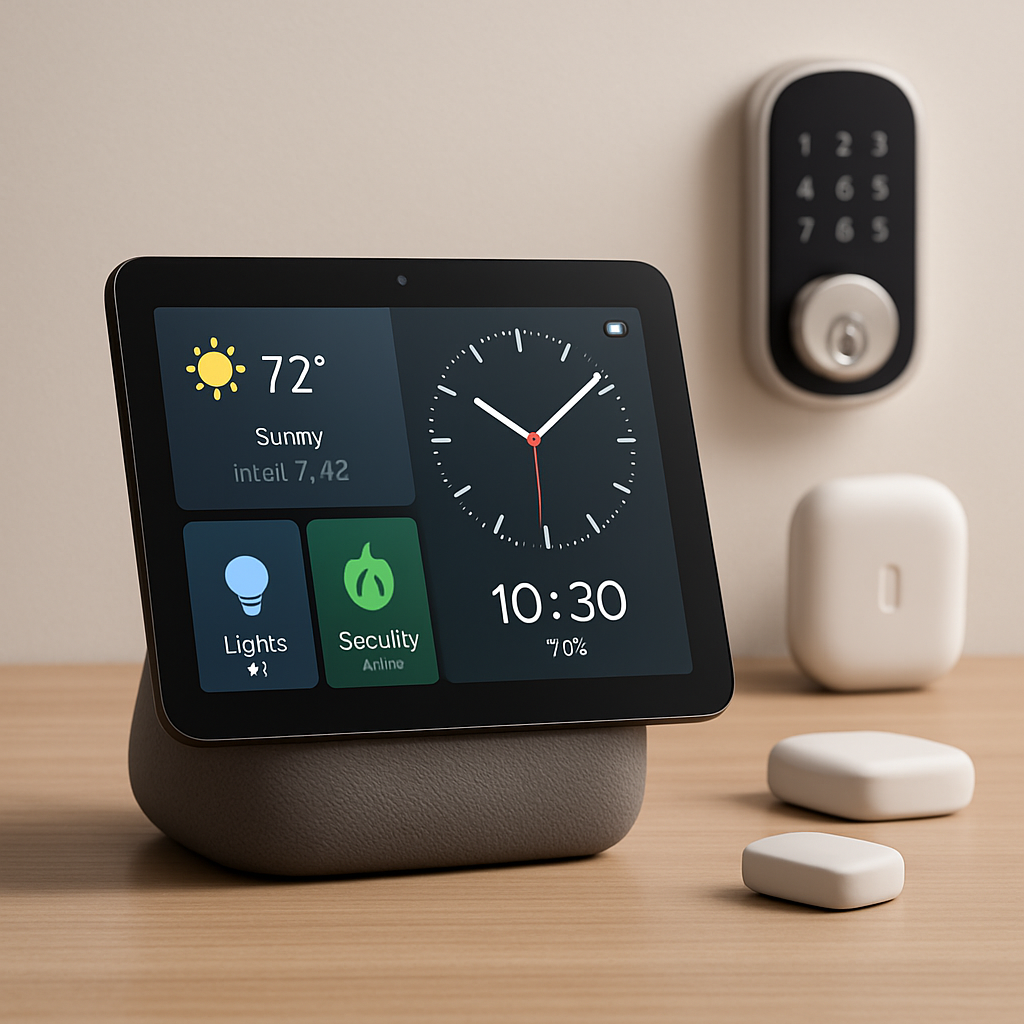
The rumored HomePad is Apple’s next-generation smart home hub, described as a display-equipped device with capabilities similar to both a HomePod and an iPad. Leaks suggest it will feature a roughly 6-inch square touchscreen, an A18 chip or newer to power Apple Intelligence, and advanced Siri features. Users should see a home screen with widgets, clock faces, and the ability to handle media, video calls, security monitoring, and calendar tasks. Design-wise, two variations are expected: one with a base and speaker (for tabletop use), and another meant to be wall-mounted. It’s similar in spirit to devices like the Amazon Echo Show, but smaller and deeply integrated into Apple’s hardware and software stack.
Partners, Accessories, and Second-Party Strategy
iOS 27.2 beta reveals Apple is cementing a “second-party” smart home accessories lineup. LG is leading this effort, working directly with Apple to produce a series of accessories that will carry the LG brand—products like a smart lock (with keypad, automatic unlocking, audio alerts, etc.), thermostat, temperature and humidity sensors, video doorbells, indoor and outdoor cameras, and floodlight cameras. These accessories include advanced setup assets, such as options for display brightness, language settings, humidity display, and more.
Schneider Electric has also shown up in iOS 27.2’s HomeKit code. Two accessories—the Schneider Home Smart Thermostat and a temperature/humidity sensor—are tagged as “second-party” like the LG devices. While the thermostat appears to have placeholder setup assets (including “Proximity Settings”), the sensor is further behind in development and lacks those details.
New Features from the iOS 27.2 Leaks
Recent findings suggest the LG second-party accessories will support “Proximity Control”—bringing up accessory-specific controls when an iPhone is tapped near them or brought close. For example, a shortcut could appear via Dynamic Island for thermostats showing controls, or for cameras and doorbells showing video views. For devices without a Dynamic Island, similar functionality may appear via a persistent notification.
Another interesting development: a “tap-to-set-up-without-power” feature. These LG accessories apparently allow the pairing process to begin even when powered off. During this phase, NFC transfers the iPhone’s pairing identity and network credentials into the accessory’s secure element. Once the accessory is powered on—via Wi-Fi or Thread—the hub completes Matter setup seamlessly. This implementation appears to be exclusive to HomeKit, using HomeKit-specific NFC provisioning rather than the standard Matter NFC method.
When and What to Expect on October 13
Apple has officially scheduled its “Welcome Home” event for October 13 at 9 a.m. Eastern Time in New York. Rumors point to three major product announcements: the HomePad hub, a new HomePod mini with updated sound, colors, and Siri AI, and a revamped Apple TV 4K with an A20 Pro chip and Wi-Fi 7 support.
While the HomePad (or whatever official name it lands on) is expected to take center stage, the LG and Schneider accessories appear not to be shipping immediately. LG accessories are still several months away even though images and prototypes have surfaced. Schneider’s gear is visible only in code at this point.
What this means:Apple is not just releasing another smart home hub—it’s creating a deeper layer of smart home integration. By adopting a second-party accessory strategy, Apple aims to forge more control and consistency in the smart home experience, bridging the gap between first-party devices and entirely third-party ones. For users, that could translate to smoother setup, tighter privacy, and more seamless automation across accessories. Watch for how Apple defines “second-party” officially, what features are locked to it, and how executives frame Apple Intelligence and Siri AI in these new devices. Expect this to be a strong indicator of Apple’s vision for its smart home future.