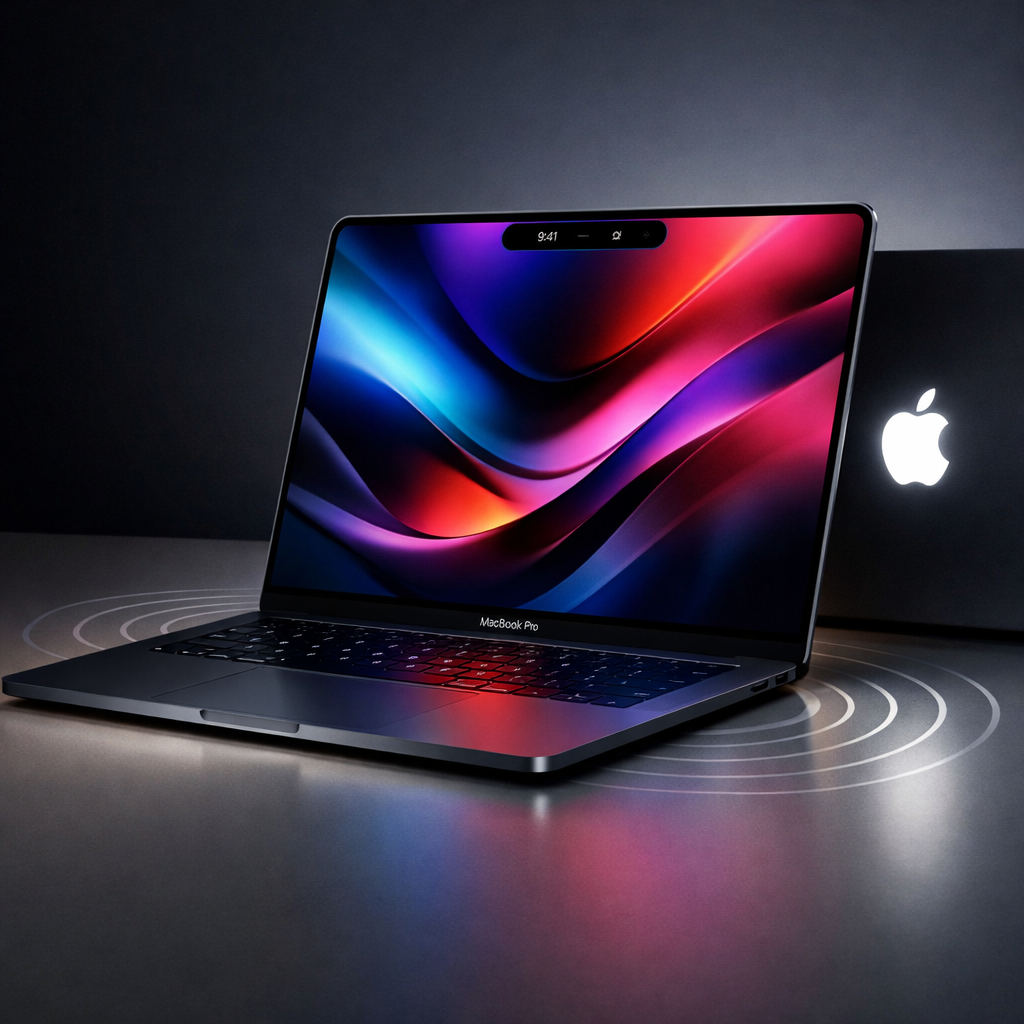
Apple has officially released its long-anticipated OLED MacBook Pro models. Available in 14- and 16-inch sizes, these laptops introduce a touch-enabled tandem PROOLED XDR display—marking the first time Apple has added touch support to a MacBook Pro. A glowing rear Apple logo adds a nostalgic yet modern twist.
Design & Display Upgrades
The new MacBook Pro is slimmer and lighter than its predecessors. It ditches the notch in favor of a smaller Dynamic Island at the top of the screen when the lid is open. Both 14- and 16-inch models feature an OLED panel dubbed PROOLED XDR, which brings richer contrast, deeper blacks, and enhanced color fidelity. Users can now tap and interact directly with the display as part of Apple’s updated macOS Golden Gate software.
Performance, Memory & Audio
Powering the new line are Apple’s existing M5 Pro and M5 Max chips, previously introduced in March. Configuration options now go up to 128GB of unified memory. Audio systems have been revamped too—a six-speaker setup delivers around 50% deeper bass, raising the overall sound fidelity for media creation and consumption.
Pricing, Availability & Lineup Strategy
The 14-inch OLED MacBook Pro starts at $2,899, while the 16-inch begins at $3,399. These models sit above the current mini-LED versions in Apple’s lineup. Alongside them is a refreshed non-touch 14-inch model equipped with the new M6 chip. Pre-orders are open now, with shipping beginning November 6.
Other Notable Changes
In addition to visibility of touch gestures, macOS Golden Gate adapts to the input method—menus and controls shift depending on whether you’re using touch or the keyboard/trackpad. The hinge has been reinforced to minimize wobble, especially when pressing the display. While the dimensions roughly match older Pro models, the overall weight has dropped to about three pounds.
These OLED/touch models join the more budget-friendly mini-LED MacBook Pros and represent Apple’s most premium laptop offering moving forward.
What this means and where this leads
Apple’s embrace of an OLED screen and touchscreen input for the MacBook Pro represents a major shift—one long speculated but rarely believed. It brings Macs closer in usability to the iPad lineage while still preserving core Pro design principles. But this isn’t a full redesign: the processors remain from the current generation, and pricing climbs steeply. Users invested in the mini-LED lineup will want to weigh whether the display and new touch features are worth the upgrade. Going forward, the true differentiator may be Apple’s upcoming chips and how the touch Pro models fit within the longer-term Pro vs. Ultra strategy.