Apple’s First Unionized Store Closure Sparks Outcry and Legal Action
In a move that has ignited significant controversy, Apple has announced the impending closure of its Towson Town Center store in Maryland, the first of its retail locations in the United States to unionize. This decision has prompted a wave of protests from union workers, lawmakers, labor leaders, and community groups, all rallying against what they perceive as discriminatory treatment of unionized employees.
Background of the Closure
In April 2026, Apple revealed plans to shut down three of its retail stores located in Maryland, California, and Connecticut. The company cited declining mall conditions and the exodus of other retailers as primary reasons for these closures. While Apple has offered transfer opportunities to employees at the California and Connecticut locations, the situation at the unionized Towson store has become a focal point of contention.
Union’s Allegations of Discrimination
The International Association of Machinists and Aerospace Workers (IAM) asserts that Apple is treating the Towson employees differently due to their union status. Union leaders claim that these workers are not being provided the same relocation opportunities as their counterparts in the non-union stores slated for closure. This perceived disparity has led the union to file an Unfair Labor Practice charge with the National Labor Relations Board (NLRB), alleging discriminatory treatment of unionized workers.
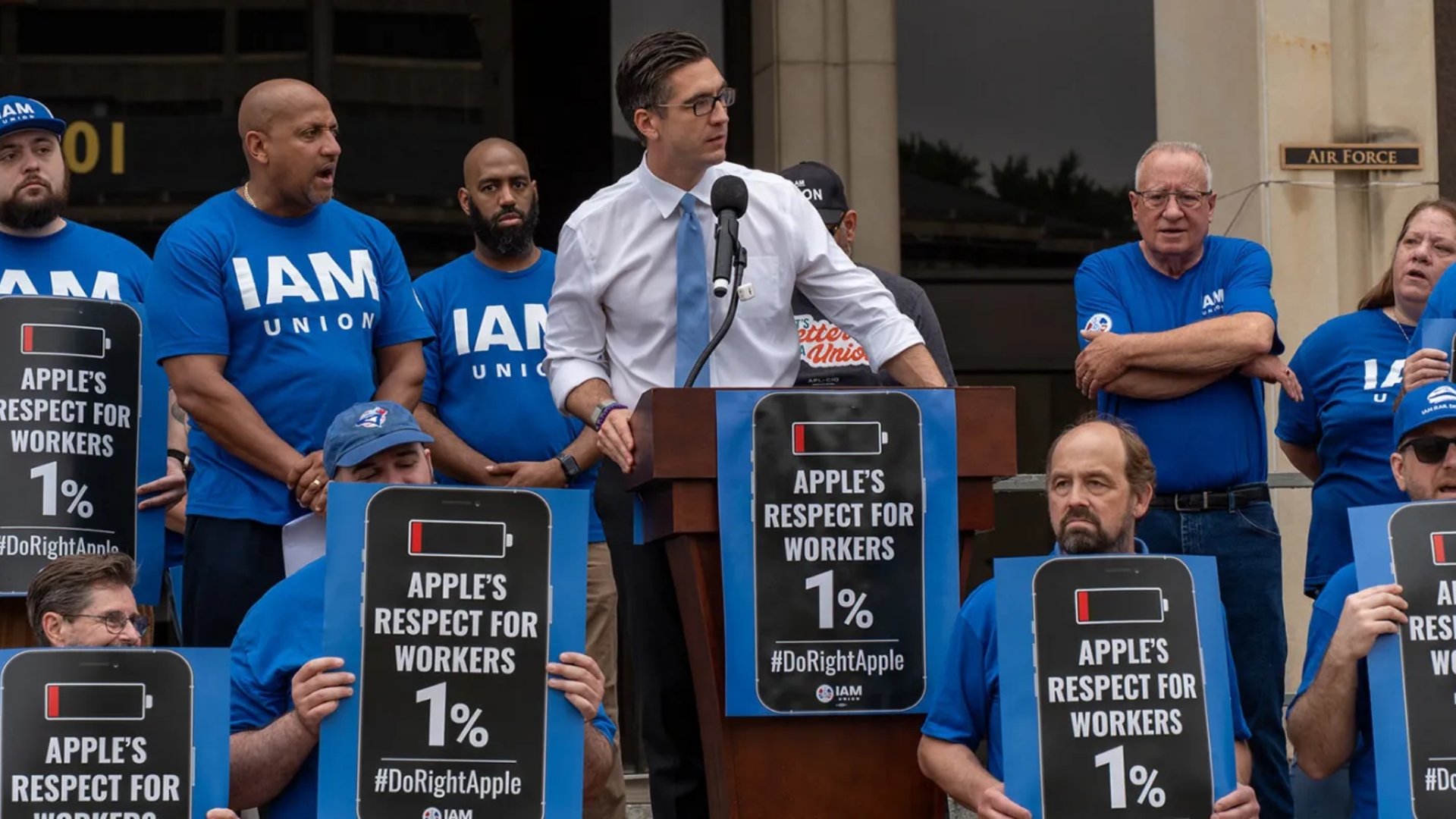
During a recent protest outside the Towson store, employees and supporters carried signs demanding equal treatment. Eric Brown, a Sales Lead at the Towson location and member of IAM Local 4538, voiced the concerns of many:
> My oldest daughter starts college in the fall. My youngest daughter turns 3 this year. And my newborn son is sleeping at home right now while I’m trying to figure out what comes next. My coworkers are in similar positions, carrying families, mortgages, medical bills, and the quiet fear of watching a stable job disappear. We’re not asking for charity. We’re asking Apple to do right by us and offer us the same transfer opportunities it extended to workers at its other closing stores.
Support from Lawmakers and Labor Leaders
The protest has garnered support from various quarters, including Maryland lawmakers, labor organizations, and civil rights groups. Several members of Maryland’s congressional delegation have sent a letter to Apple seeking clarification on the closure and its impact on the workers.
David Sullivan, IAM Eastern Territory General Vice President, delivered a powerful message at the rally:
> We know what it looks like when a corporation tries to make an example out of workers who dared to ask for a seat at the table. We have seen that playbook. We have faced it down before. And we have beaten it before. Apple is not the first powerful employer to try to break the spirit of organized workers. They will not be the last. But they will hear from us. They will hear from us today. They will hear from us at the National Labor Relations Board. And they will keep hearing from us every single day until justice is done for the workers of this store.
Apple’s Position and Response
As of now, Apple has not publicly commented on the protests or the allegations of discriminatory treatment. The company maintains that the store closures are due to external factors affecting mall viability and that it is offering support to affected employees. However, the specifics of the support offered to the Towson employees remain a point of contention.
Historical Context and Broader Implications
The Towson store’s unionization in June 2022 marked a significant milestone in Apple’s retail history. Employees at this location voted to form the Apple Coalition of Organized Retail Employees as part of the IAM. This move was part of a broader trend of unionization efforts within the company, driven by concerns over wages, working conditions, and benefits.
In the years following the Towson unionization, Apple has faced multiple labor-related challenges. For instance, in December 2022, U.S. labor board prosecutors found that Apple violated federal law by interrogating and coercing workers in Atlanta during unionization efforts. Additionally, in October 2022, it was reported that Apple would not extend new benefits to workers in unionized stores until they were negotiated as part of the union agreement.
These incidents highlight a growing tension between Apple and its retail workforce, particularly in unionized locations. The closure of the Towson store and the subsequent allegations of discriminatory treatment may further strain this relationship and could have broader implications for labor relations within the company.
Looking Ahead
The closure of the Towson store is scheduled for June 2026. As the date approaches, the dispute over transfer opportunities and worker treatment remains unresolved. The outcome of the Unfair Labor Practice charge filed with the NLRB could set a precedent for how similar situations are handled in the future.
For the employees at the Towson store, the uncertainty continues. As Eric Brown and his colleagues navigate the challenges posed by the impending closure, they remain steadfast in their demand for equal treatment and fair opportunities.