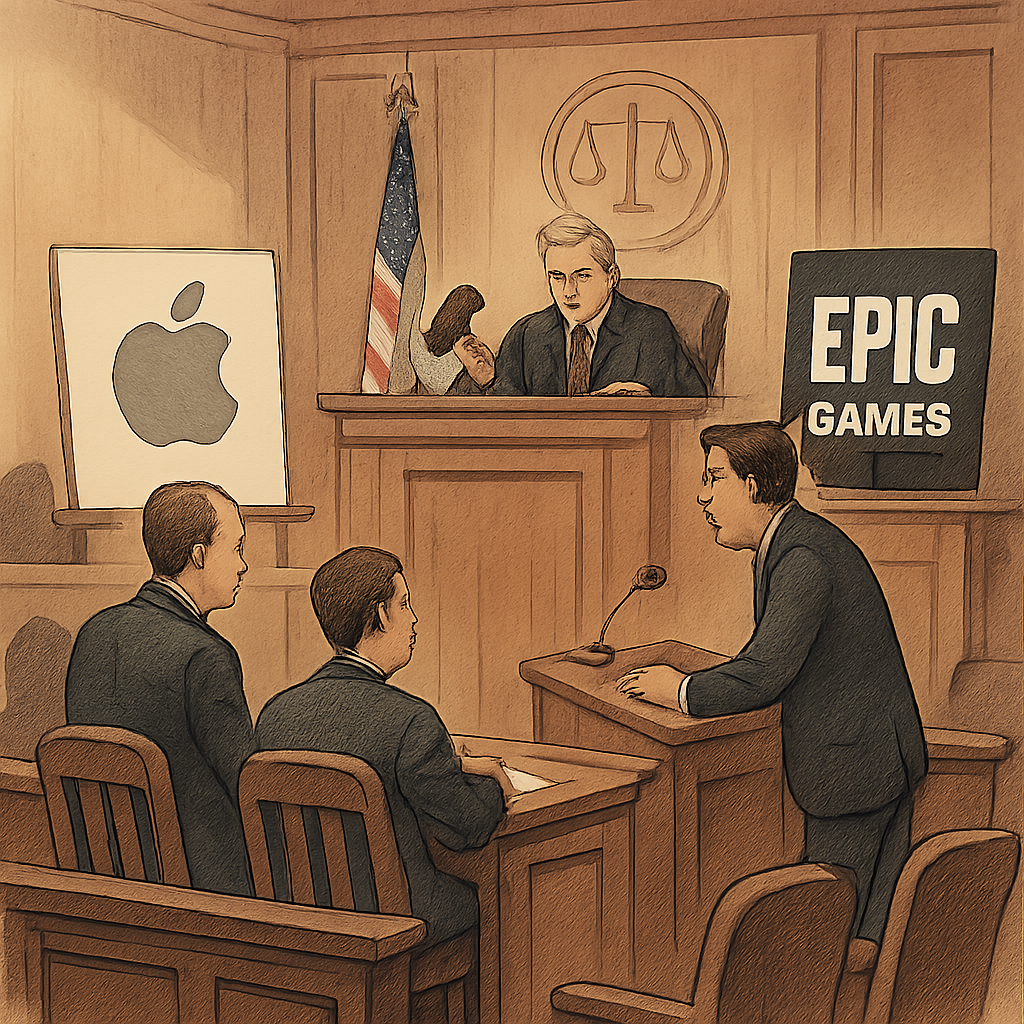
Apple’s ongoing legal dispute with Epic Games over App Store fees has taken another turn. The U.S. District Court for the Northern District of California has denied Apple’s request to pause proceedings while awaiting a Supreme Court hearing scheduled for October. This decision compels Apple to propose a new fee structure for developers utilizing alternative payment methods within 24 hours.
The conflict began in 2020 when Epic Games challenged Apple’s App Store policies, particularly the 30% commission on in-app purchases. Epic introduced a direct payment option in its popular game, Fortnite, leading to its removal from the App Store and subsequent legal action. In 2021, the court ruled largely in favor of Apple but mandated changes to its anti-steering policies, allowing developers to link to external purchasing options.
Apple’s initial response included implementing fees ranging from 12% to 27% on transactions made through these external links. Epic Games contested this move, arguing it violated the court’s directive. In April 2025, Judge Yvonne Gonzalez Rogers found Apple in contempt for willfully breaching the order and prohibited the company from collecting any fees on external links within the U.S. App Store.
Apple appealed the contempt ruling, but the appeals court upheld the decision, affirming that while Apple could charge reasonable fees for its intellectual property, the previously imposed fees were deemed excessive. The case was remanded to the district court to establish what constitutes a reasonable fee. Since April 2025, Apple has been unable to collect fees on external links, and currently, no such fees are in place.
Despite Apple’s appeal to the Supreme Court, seeking to overturn the contempt ruling, both the appeals court and the Supreme Court have denied requests to pause the fee determination process. Consequently, the district court will now proceed to set a reasonable fee, necessitating Apple to revise its App Store policies accordingly.
This legal battle’s outcome is poised to have significant implications beyond the United States. Apple has indicated to the Supreme Court that global regulators are closely monitoring the case, suggesting that the forthcoming decisions could influence App Store policies worldwide.
The progression of this case underscores the ongoing tension between platform operators and developers over revenue sharing and control. As the court moves to establish a fair fee structure, the tech industry awaits a resolution that could redefine app marketplace dynamics and set precedents for future disputes.