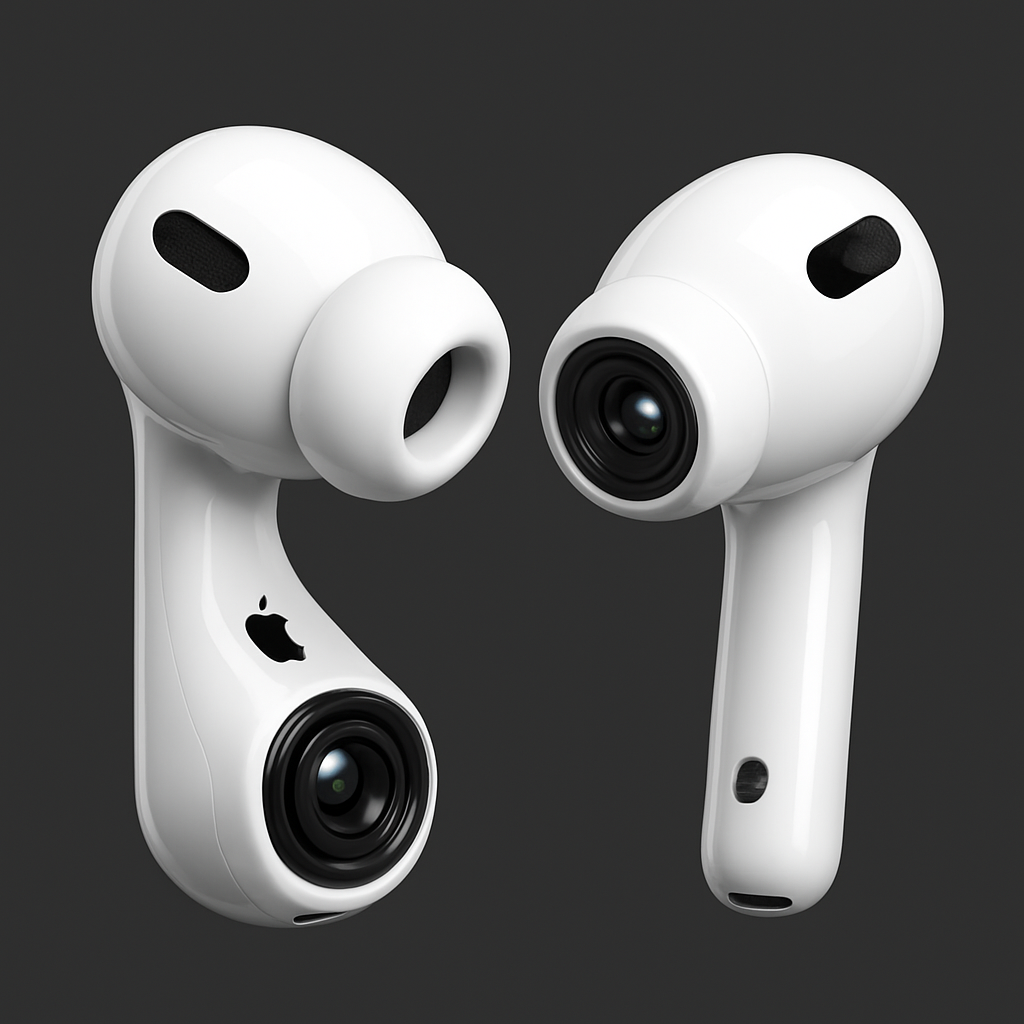
Apple is reportedly preparing to launch a new addition to its AirPods lineup, tentatively named ‘AirPods Ultra,’ as early as next month. These advanced earbuds are expected to feature integrated cameras, marking a significant evolution in Apple’s wearable technology.
The ‘AirPods Ultra’ are anticipated to resemble the current AirPods Pro 3 in design but will incorporate tiny infrared cameras in both the left and right earbuds. These cameras are intended to enhance Siri’s capabilities by providing visual context, allowing users to interact with their environment more intuitively. For instance, users could ask Siri for information about objects they are viewing, such as identifying landmarks or suggesting recipes based on visible ingredients.
To ensure user privacy, a small LED light on the earbuds will indicate when the cameras are active. This feature aligns with Apple’s commitment to transparency and user control over personal data.
References to a product codenamed B790 have been discovered in the second iOS 27 developer beta code, suggesting the ability to relay images from cameras positioned on either side of the user’s head. This aligns with previous reports about the development of camera-equipped AirPods under the code name B798, initially slated for a 2026 release but potentially expedited to this year.
Visual Intelligence, a feature already available on the iPhone 15 Pro and newer models, is expected to be enhanced by the ‘AirPods Ultra.’ On iOS 27, this feature can be accessed through the Camera app via a new ‘Siri’ mode, providing a more hands-free experience when combined with the camera-equipped earbuds.
While the exact pricing remains unconfirmed, the ‘AirPods Ultra’ are likely to be positioned at a higher price point than the current AirPods Pro 3, which are priced at $249 in the U.S. This premium pricing reflects the advanced technology and added functionalities of the new model.
Apple’s introduction of the ‘AirPods Ultra’ signifies a strategic move to integrate augmented reality features into everyday devices, potentially transforming how users interact with their surroundings. This development could set a new standard for wearable technology, emphasizing the importance of seamless integration between hardware and software to enhance user experiences.