A new 70-minute documentary on Apple TV, titled All of Us, showcases how Ruby Bridges Elementary has reimagined education by fully integrating students with diverse learning needs into the same classroom. Instead of separating those with disabilities or communication challenges, the school empowers every child—from toddlers to advanced learners—by teaching them together in a unified environment. Decades of conventional practices often relegated special-needs students to different settings; at Ruby Bridges, that separation has been replaced with collaboration. The result: both academic and social benefits for all involved. In fact, the school’s principal and kindergarten teacher were honored as Principal and Teacher of the Year in 2025 for their leadership in this approach.
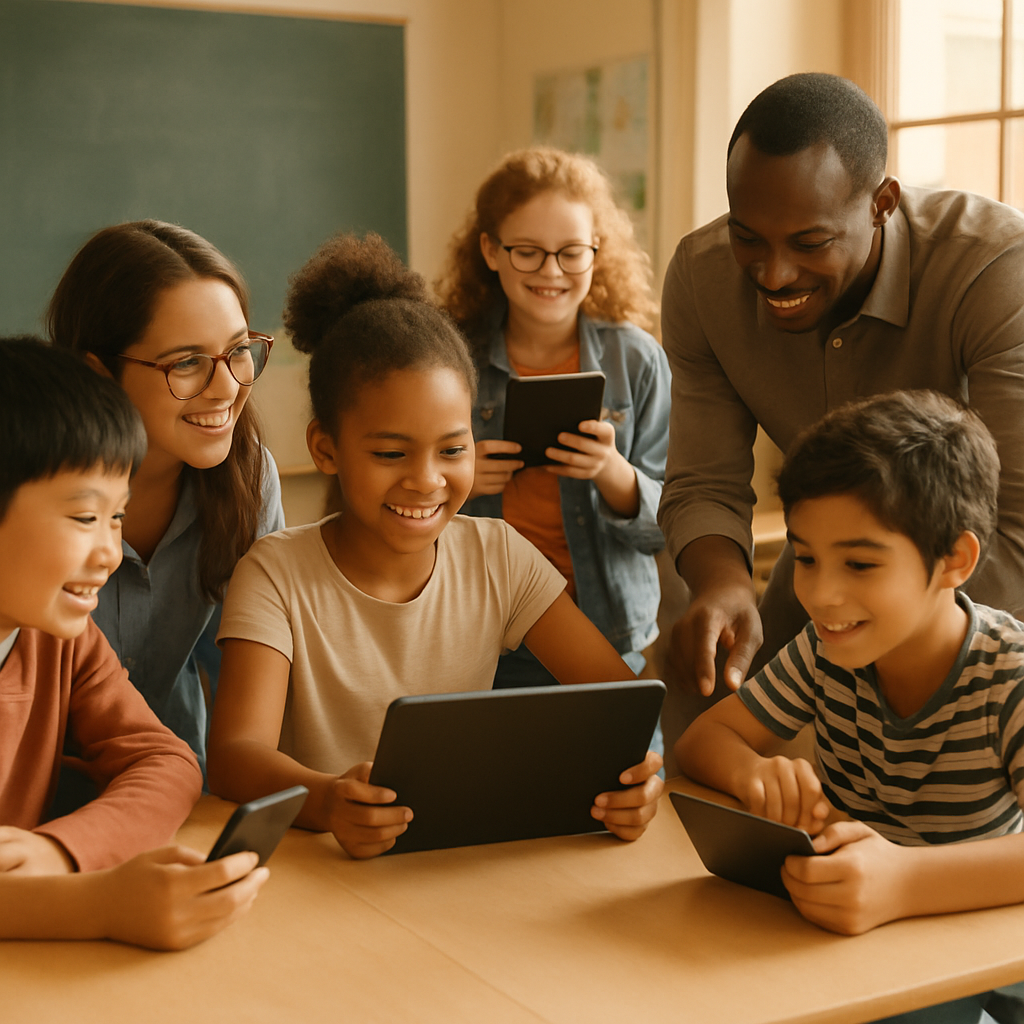
Behind this success are iPads and iPhones—specifically, augmented and alternative communication (AAC) apps run on those devices. For students who struggle with verbal or text-based communication, these tools are completely game-changing. But far from being just assistive, AAC technology is used by all students, regardless of ability, to express ideas, manage anxiety about speaking, and overcome physical or motor limitations. The classroom thus becomes a space where communication barriers dissolve, enabling more active participation from everyone.
Ruby Bridges Elementary is a public school with no extra funding or staff beyond its regular complement. What’s striking is that the inclusive model shown in the film isn’t based on privilege or niche resources—it’s simply built on a collective decision to stop segregating learners. Teachers and specialists don’t work behind the scenes; they share the classroom floor. Students solve math problems, engage in reading, participate in music, all together. The school’s journey is documented not only through the film but with additional video resources for other institutions curious to replicate the model. These support materials show real examples of how inclusive design can be anchored in communication tools, teaching methods, and daily interactions.
For all its successes, challenges remain—adapting classroom practice, managing diverse needs, and training existing staff to meet new demands. But the documentary doesn’t lean on inspiration alone. It presents evidence: higher engagement, improved confidence in students, and a more cohesive learning community. It poses a compelling question: should separation really ever be the default?
What this reveals is more than a school story. It’s a case study in universal design—one where technology like AAC isn’t an accommodation but a core part of teaching. In an era where edtech tools are often seen as add-ons, Ruby Bridges demonstrates the opposite: inclusive learning powered by iPads and AAC can serve every student in meaningful ways—once educators decide to trust in collective potential and refuse to build classrooms of “us” vs. “them.”