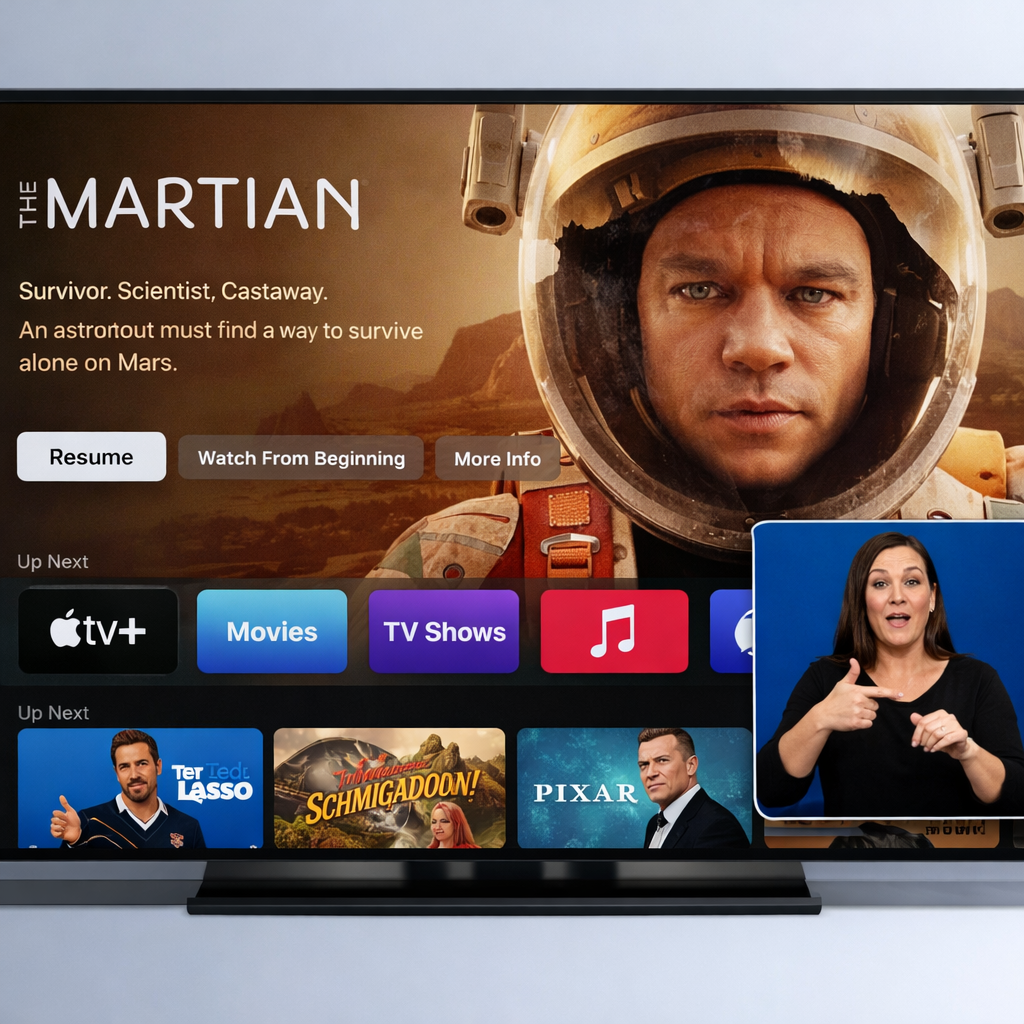
Apple TV is rolling out a new accessibility feature that adds sign language interpretation options to select original films. Users will soon be able to choose between American Sign Language (ASL) or British Sign Language (BSL) for certain titles, with the interpreter appearing in a small corner of the screen synced alongside the video.
Where and how it works
The feature launches this Friday with the premieres of two new Apple TV+ originals: Being Heumann and F1: The Movie. Later this year, titles including Greyhound and Way of the Warrior Kid will also support sign language options. More compatible films are expected to be added over time.
To use the feature, viewers need iPhone, iPad, or Mac devices running version 27.2 or later of Apple’s software. The functionality will also be available in some versions of the Apple TV app on other platforms. By default, the sign language feature is turned off in settings. To enable it, users must navigate to Settings > TV app and activate the Sign Language display option.
Using and discovering interpretable content
Once enabled, a “Sign Language” button will show up in the player controls on eligible titles. From there, you can toggle the feature on and choose either ASL or BSL. When browsing the catalog, information about sign language support appears next to subtitle and audio options. Users can also search for content using filters like “with ASL” or “with BSL” to find titles that include this accessibility feature.
This adds to Apple TV’s existing suite of accessibility tools—such as subtitles, audio descriptions, and closed captions—providing a more inclusive viewing experience for those who rely on sign language. It also reflects a broader trend of streaming platforms expanding support for diverse accessibility resources.
This rollout marks a meaningful step for digital inclusion on Apple’s streaming platform. The implementation is straightforward and well-integrated into existing features, though its reach depends on how many titles receive support in the coming months. What to watch for: whether more content (especially older or non-original films) will be adapted, how well the feature performs across devices, and whether additional sign languages beyond ASL and BSL will be added.