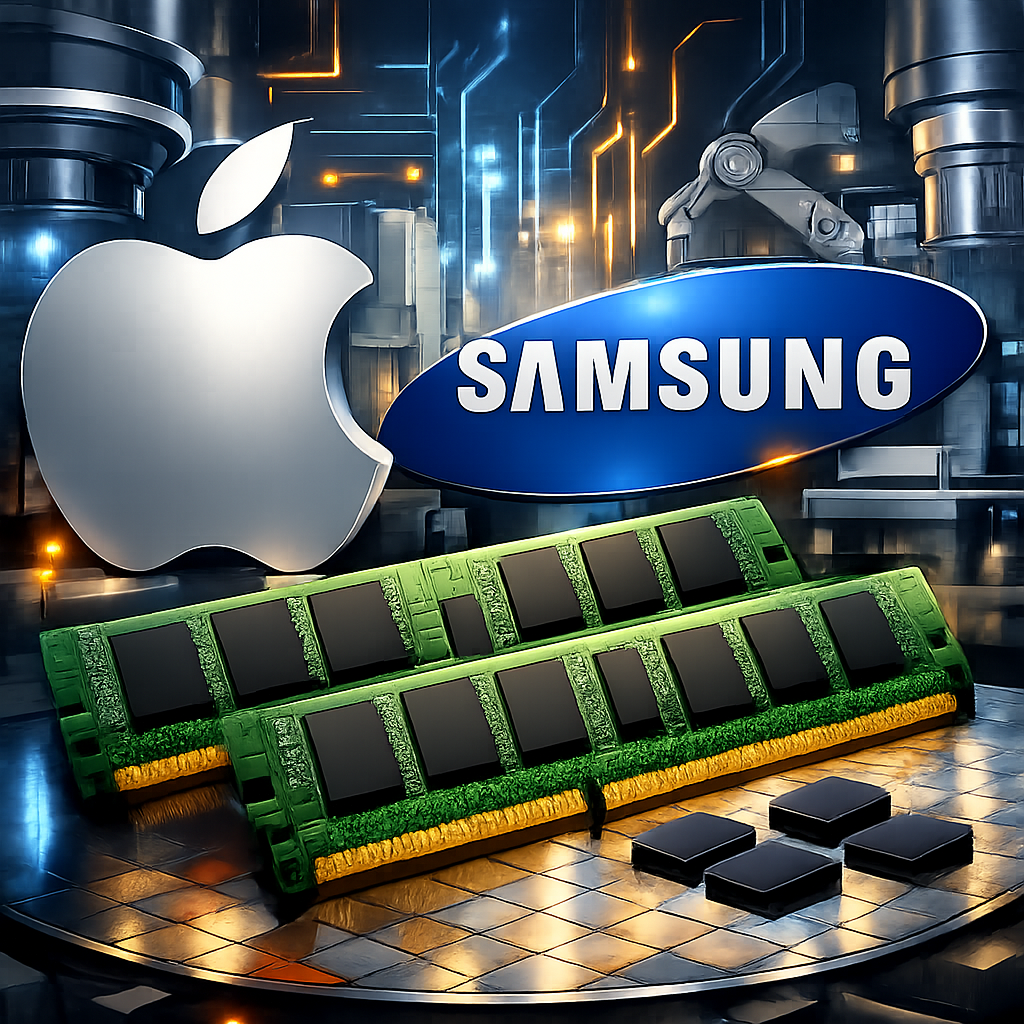
Apple is nearing a long-term supply agreement (LTA) with Samsung Electronics for DRAM chips. The contract, expected to begin in the first half of 2027, would run for four to five years. Though pricing details haven’t been finalized, the deal will include a minimum volume requirement for Samsung’s DRAM output.
This marks a substantial shift in Apple’s procurement strategy. Traditionally, Apple relies on shorter-term deals and negotiates aggressively for minimal prices. The rarity of committing to a multi-year deal of this length—especially one where the buyer commits to minimum supply but accepts pricing tied to market conditions—has caught industry attention.
What’s Driving the Shift?
The global memory chip market is under heavy strain. A DRAM supply-shortage driven by surging demand—particularly from AI-centered data center build-outs—has pushed up component prices significantly. For device makers like Apple, securing long-term supply has become a strategic priority. Apple has already made a similar long-term agreement with SK hynix under supplier-friendly terms, illustrating how industry pressures are reshaping traditional sourcing practices.
Samsung, SK hynix, and Micron have also been increasingly entering into LTAs with major customers. These deals help chip makers stabilize revenue, reduce uncertainty over production allocation, and put a floor under pricing—all while supply constraints deepen across mobile DRAM segments, as supply is diverted toward server and AI-oriented products like high-bandwidth memory.
Implications for Devices, Pricing & Supply Chains
For Apple products such as iPhones and MacBooks, a more secure DRAM supply reduces risks of shortages and inventory delays. Minimum volume clauses give Apple assurance of supply even during tight phases of the cycle. Pricing tied to “future market conditions” means Apple accepts exposure to cost fluctuations—but likely negotiated with buffers.
On the supply side, Samsung stands to benefit from locked-in demand, helping it stabilize its DRAM business revenue and reduce exposure to spot-market volatility. Despite the premium Apple may pay, the deal is seen as necessary. Analysts warn that electronic devices may experience “chipflation”—steady price pressure stemming from higher DRAM costs. This could feed through into product prices, though Apple’s large scale and supply chain efficiencies may help cushion the impact.
Importantly, this agreement may extend Apple’s lead in supply chain resilience. As AI demand drives up competition for DRAM, fewer manufacturers will take on the risk of committing to long-term supplier contracts—companies that do will gain strategic advantage. Apple joining that group could also influence how competitors plan procurement strategies going forward.
There are still gaps in what’s known. The exact DRAM types covered (mobile DRAM vs. server vs. HBM), the supply floor volume, and the contract’s pricing mechanism remain confidential. How Apple balances guaranteed volumes with pricing tied to market trends will be closely watched.
Why this matters: Apple’s move toward a long-term DRAM deal signifies a major adaptation to a market shaped by AI, constrained capacity, and volatile component prices. As memory becomes a strategic bottleneck in hardware performance and margins, the ability to secure supply reliably may become as important as product design. For consumers, it may mean stable product availability but possibly higher prices. For competitors, it sets a benchmark procurement model—one worth watching as we approach 2027.