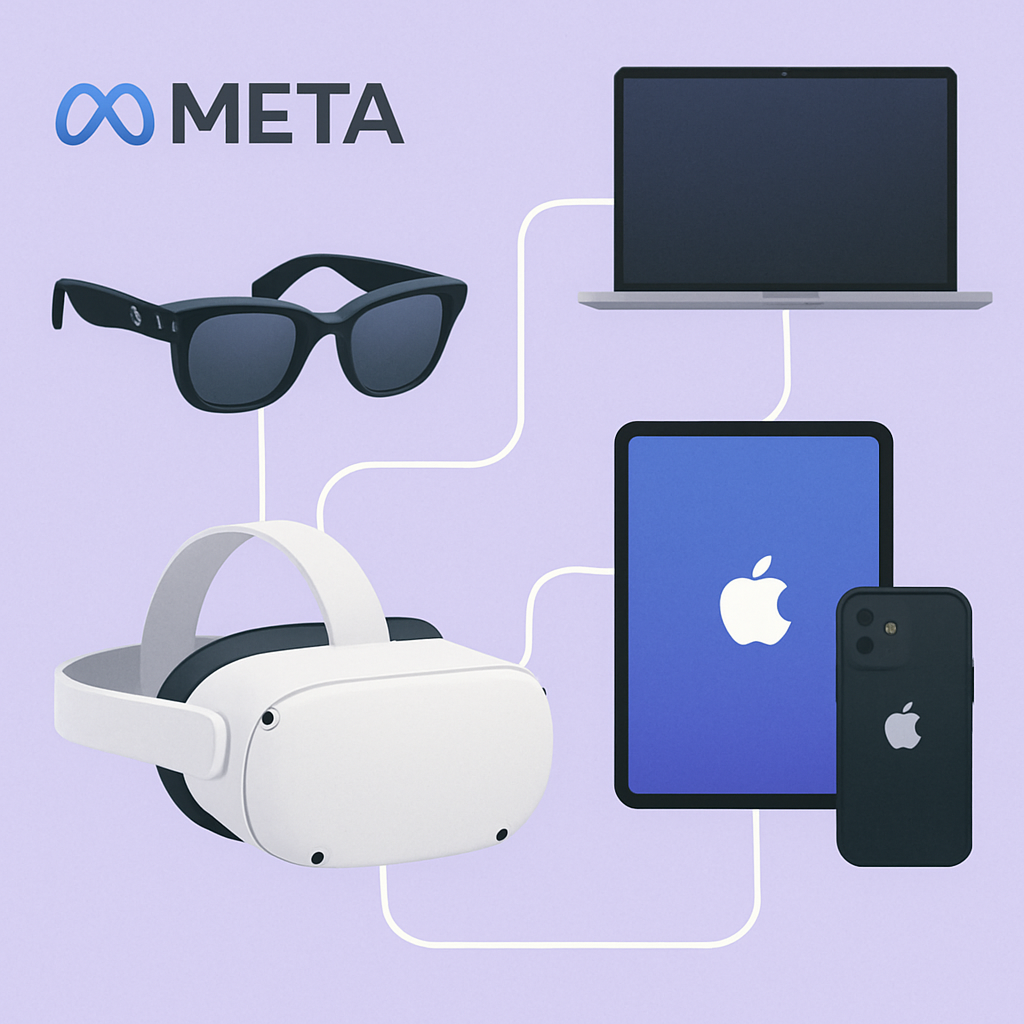
Apple is developing a new API to allow third-party accessories, such as Meta’s Ray-Ban glasses and Quest headsets, to automatically pair across a user’s Apple devices, similar to the current functionality of AirPods and Apple Watch. This initiative is in response to a request from Meta under the European Union’s Digital Markets Act (DMA).
In October 2025, Meta requested that Apple enable a feature where a Meta device, once paired with one iPhone or iPad, would automatically become available on a user’s other Apple devices without additional prompts. Traditionally, third-party accessories have lacked this seamless integration, requiring manual pairing with each device.
Apple informed Meta on February 4 that it plans to grant third-party apps access to cryptographic materials, allowing a pairing completed on one Apple device to be recognized on another. This process will be secured by a session key and will require a one-time, per-accessory user consent. Apple aims to complete development by spring 2027 and expects to release the feature shortly thereafter, potentially in an iOS 27.x update.
The new functionality will utilize AccessorySetupKit and Proximity Pairing, infrastructures Apple developed to comply with a March 2025 European Commission ruling. Currently, these features are operational only within the EU. Meta has expressed concerns that adopting this system would necessitate abandoning Core Bluetooth, which it uses for pairing outside Europe, and has requested Apple to separate the two systems. Apple has declined this request but indicated that support outside the EU is under consideration.
As of the latest update, the request remains in phase three. Meta has not yet initiated the DMA’s formal dispute resolution process, which would prompt a review by Apple’s Interoperability Request Review Board within 30 working days. Until then, Apple’s plan continues with a projected spring 2027 rollout, tied to AccessorySetupKit, exclusively in the EU.
This development signifies a significant shift in Apple’s approach to third-party device integration, potentially setting a precedent for broader interoperability. While the initial rollout is EU-specific, it raises questions about future global implementation and the evolving landscape of device compatibility.