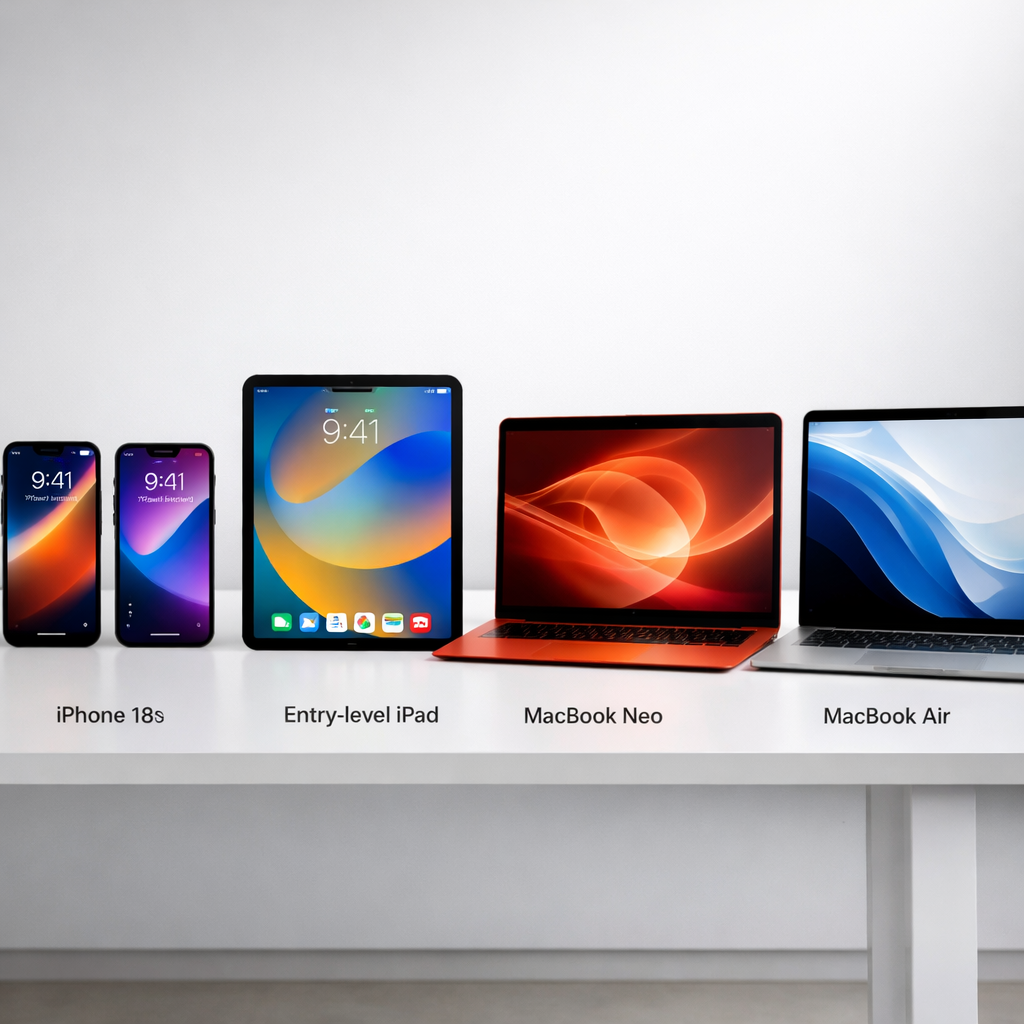
Apple is reportedly gearing up to unveil a fresh batch of hardware in February or March 2027, including the standard iPhone 18, the lower-end iPhone 18e, a refreshed entry-level iPad, and new MacBook Neo and MacBook Air models. These launches are expected to kick off the first big product wave of the year.
In an update this week, tech insider Mark Gurman revealed that Apple’s first-half 2027 roadmap also includes an updated iPad Air and iPad Pro, though those may arrive later in the spring—potentially overlapping with or following the initial February-March event.
This represents a shift in Apple’s timing strategy. Rather than releasing its full iPhone lineup in the fall, the company appears to be splitting it: high-end models like the iPhone 18 Pro and Pro Max (and the upcoming foldable “iPhone Ultra”) already launched in September 2026, while more budget-friendly devices like the standard 18 and 18e are slated for early 2027.
The iPhone 18e is said to bring modest upgrades over the 17e, including more RAM. Meanwhile, the next iPad Air and iPad Pro models are expected to boast enhancements like OLED displays and performance gains. The MacBook Neo, launched in March 2026, marked a major step toward Apple’s entry-level laptop segment, featuring its first A-series chip in a Mac, lower pricing, and vivid colors; its upcoming update may build on those strengths.
What to Expect & Timing
The February-March timeframe is key for several products: • iPhone 18e and iPhone 18 are expected to be unveiled during this window, likely alongside the updated entry-level iPad.
• MacBook Neo and a new MacBook Air model are also expected in early 2027.
• The release of refreshed iPad Air and Pro devices is expected ‘‘a little later,’’ possibly in late March or April.
It’s not yet clear if Apple will hold a separate spring event or bundle all these updates into one. Historically, they’ve unveiled multiple devices together; this change could signal a more segmented release cadence—particularly for their lower-cost and standard-spec models.
This strategy diverges from Apple’s traditional fall-only mass launches, splitting premium and entry-level product launches between fall and spring. It lets Apple better target different market segments at more paced intervals—with Pro models in fall and standard plus lower-cost devices in spring.
As for what to watch closely: the iPhone 18e’s specs (especially RAM and chip details), whether the standard iPhone 18 and iPhone Air 2 really land at the same event, and how Apple prices and positions the updated Macs and iPads against the growing competition.
Analytical Take: Apple’s shift reflects tight control over its product rhythm, ensuring high-end devices get their spotlight while avoiding crowding the market in fall. For consumers, this might mean waiting longer for more affordable models—but also gradually more predictable hardware refreshes. For Apple, it may help smooth production, marketing, and supply constraints while keeping every release meaningful. Spring 2027 may be when Apple underscores its affordable hardware appeal—and that could reshape expectations for how often it updates entry-level lineups.