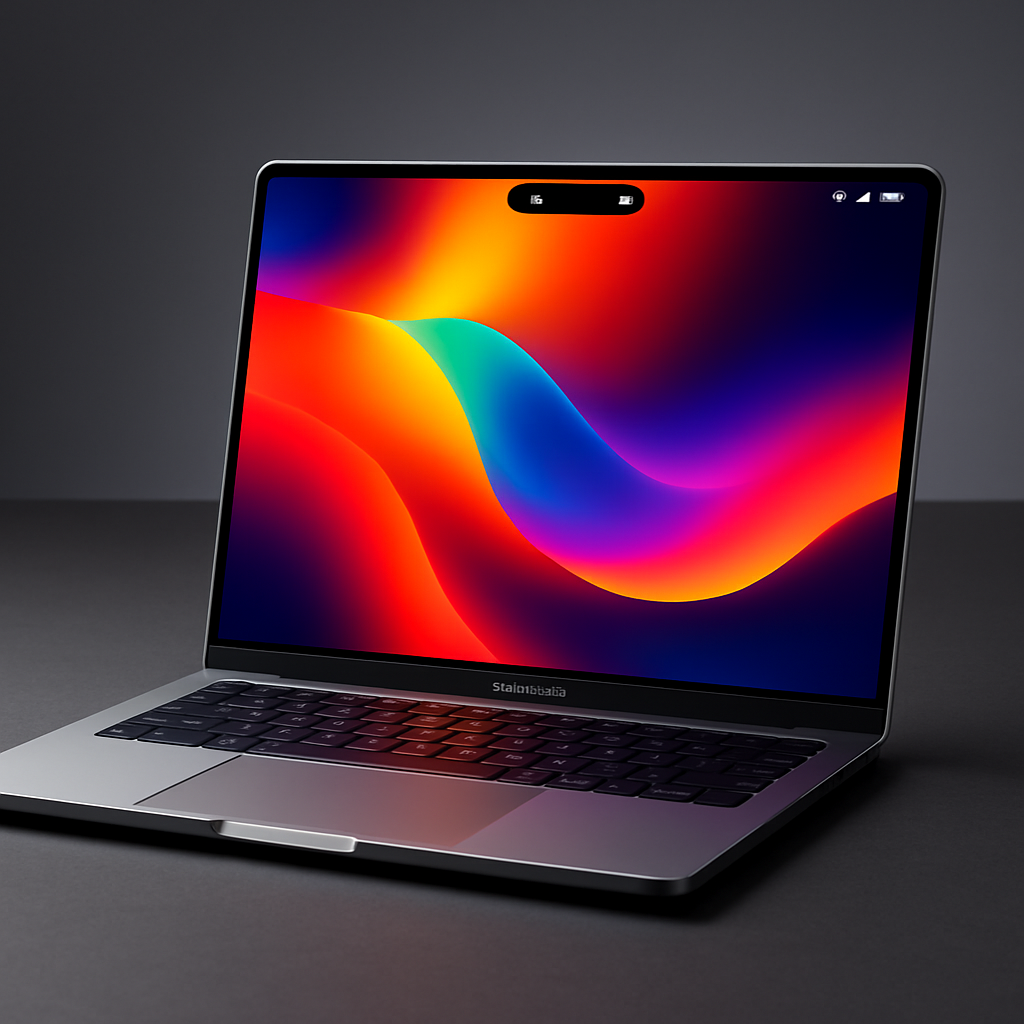
Apple is actively testing new 14-inch and 16-inch MacBook Pro models featuring OLED touch-enabled displays alongside macOS 27.1, which is expected to drop in late October. This news reinforces rising confidence that the high-end machines will arrive before the end of 2026.
What We Know So Far
The OLED MacBook Pro models breaking ground include touch-enabled OLED screens—making them the first of their kind in Apple’s notebook lineup. They’re part of Apple’s broader MacBook Pro family but are positioned above the standard 14-inch and 16-inch Pro models.
Under the hood, these new units are believed to ship with Apple’s upcoming M5 Pro and M5 Max chips. They’ll also feature design updates like a thinner overall profile and the inclusion of Dynamic Island, replacing the notch seen in existing Pro machines.
Earlier reporting suggested these models might be branded as “MacBook Ultra.” Regardless of the name, they’re expected to be premium, higher-cost devices. Meanwhile, the current MacBook Pro line is forecasted to gain upgraded processors—likely moving to M7 Pro and M7 Max—at some point in 2027 for non-OLED variants.
Timing and Software Updates
The testing aligns with macOS 27.1, which is in development and should receive its first developer beta in the coming days. The full release is tentatively scheduled for late October.
Earlier, these OLED MacBook Pro machines were expected “late 2026 or early 2027,” but new information strongly points to a release window firmly in the final months of 2026.
Pricing isn’t confirmed yet, but sources indicate these models will be priced above the standard MacBook Pros—not justifiable mid-range alternatives but premium options for those seeking cutting-edge displays and performance.
Expected upgrades for the rest of the MacBook Pro line next year include chip upgrades (M7 Pro / Max) for the non-OLED versions. These would keep the base Pro models fresh while reserving the OLED and design innovations for the premium tier.
What Users Should Be Looking For
Key features to watch include:
- How Apple implements and calibrates the touch-enabled OLED display—for color accuracy, brightness, and durability.
- The performance and power efficiency of the M5 Pro and M5 Max chips under the new display and chassis designs.
- How Dynamic Island features evolve on Mac laptops, compared to the implementation in iPhones.
- How Apple differentiates price and value between the OLED MacBook Pro (or Ultra) models and the refreshed standard Pro line coming in 2027.
Software plays a role too: macOS 27.1 will need support for these hardware changes, especially features unique to OLED and touch displays. Expect a developer preview soon; certain features will only be fully supported once final hardware ships.
This isn’t just about new machines—it marks Apple’s likely shift toward OLED in laptops, echoing broader display trends in phones and monitors. It signals what pro users and creatives have been waiting for: laptop displays that combine deep blacks, better power efficiency, and richer contrast. If Apple gets the execution right, this could raise the bar for MacBook display technology across the board. The coming months will be crucial as more leaks surface and macOS 27.1 takes shape.