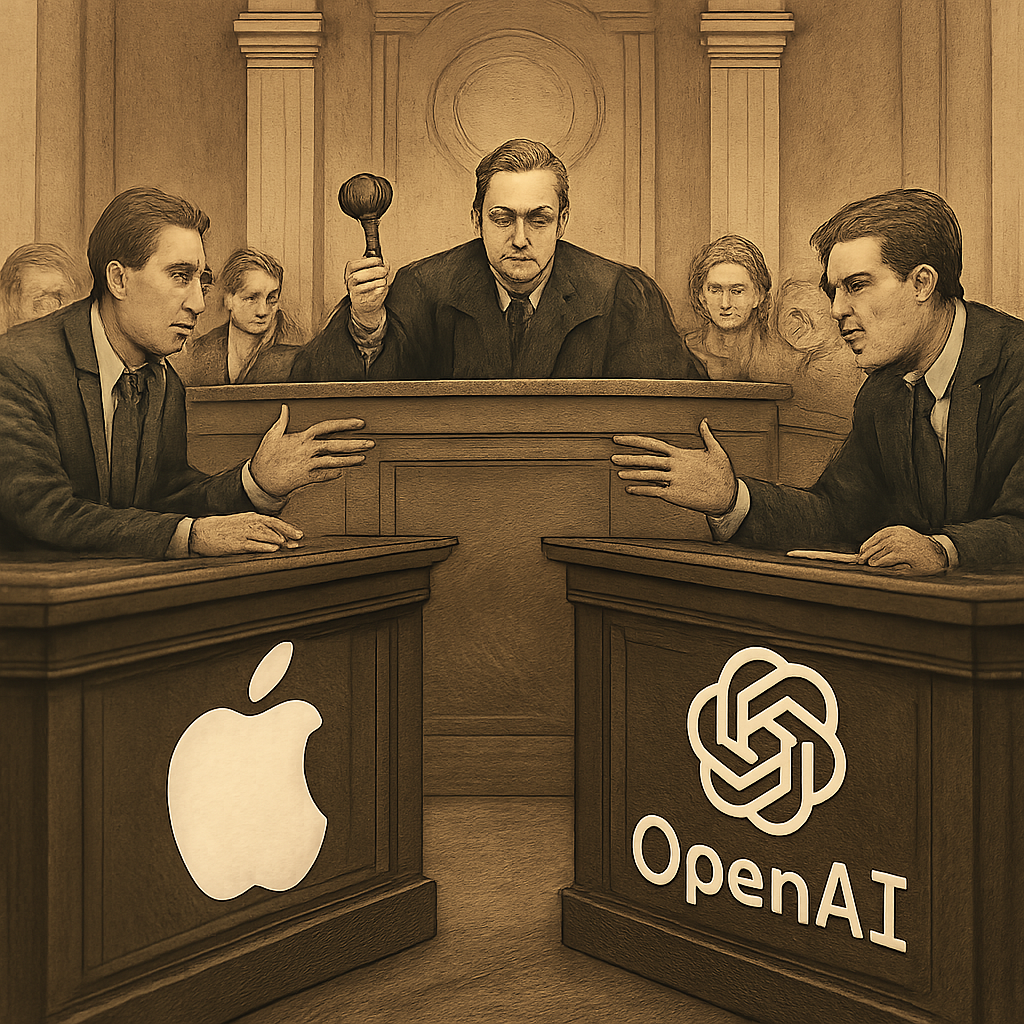
Apple has initiated legal proceedings against OpenAI, alleging that the artificial intelligence company misappropriated its trade secrets to advance OpenAI’s hardware development efforts. The lawsuit, filed in the Northern District of California, centers on claims that OpenAI solicited confidential information from current and former Apple employees, thereby gaining unauthorized access to proprietary technologies and processes.
Central to the allegations is Tang Tan, a former Apple executive who now serves as OpenAI’s Chief Hardware Officer. Apple contends that Tan utilized his insider knowledge of Apple’s employee exit procedures to assist departing staff in covertly transferring sensitive information to OpenAI. This purportedly included details about unreleased products, manufacturing processes, and supplier relationships. Additionally, Apple accuses Tan of retaining an internal document outlining Apple’s security protocols for employee departures, which he allegedly shared with new OpenAI recruits to help them evade detection.
Another individual implicated is Chang Liu, a former Apple electrical engineer. The lawsuit asserts that Liu exploited a security vulnerability in his Apple-issued laptop to access the company’s cloud storage after his departure, enabling him to download confidential hardware design files. Apple claims that such actions facilitated OpenAI’s development of competing hardware products by leveraging Apple’s proprietary information.
The legal action also highlights that approximately 400 former Apple employees are currently employed at OpenAI. Apple alleges that OpenAI encouraged these individuals to disclose confidential data, thereby accelerating OpenAI’s hardware initiatives. Furthermore, Apple asserts that OpenAI attempted to use this confidential information in dealings with Apple’s business partners to further its own hardware development.
Despite the escalating legal tensions, Apple and OpenAI maintain an ongoing partnership that integrates OpenAI’s ChatGPT into Apple’s products. However, this collaboration has reportedly become strained, with OpenAI expressing dissatisfaction over the depth of integration and promotional efforts by Apple. OpenAI had anticipated significant subscription revenue from the partnership, expectations that have not been met.
Apple is seeking a court injunction to prevent OpenAI from further utilizing its trade secrets, the return of all proprietary materials, and compensation for damages incurred due to the alleged breaches.
This lawsuit underscores the intensifying competition in the artificial intelligence and hardware sectors, where companies are increasingly protective of their intellectual property. The outcome of this case could have significant implications for corporate partnerships and the handling of confidential information in the tech industry.