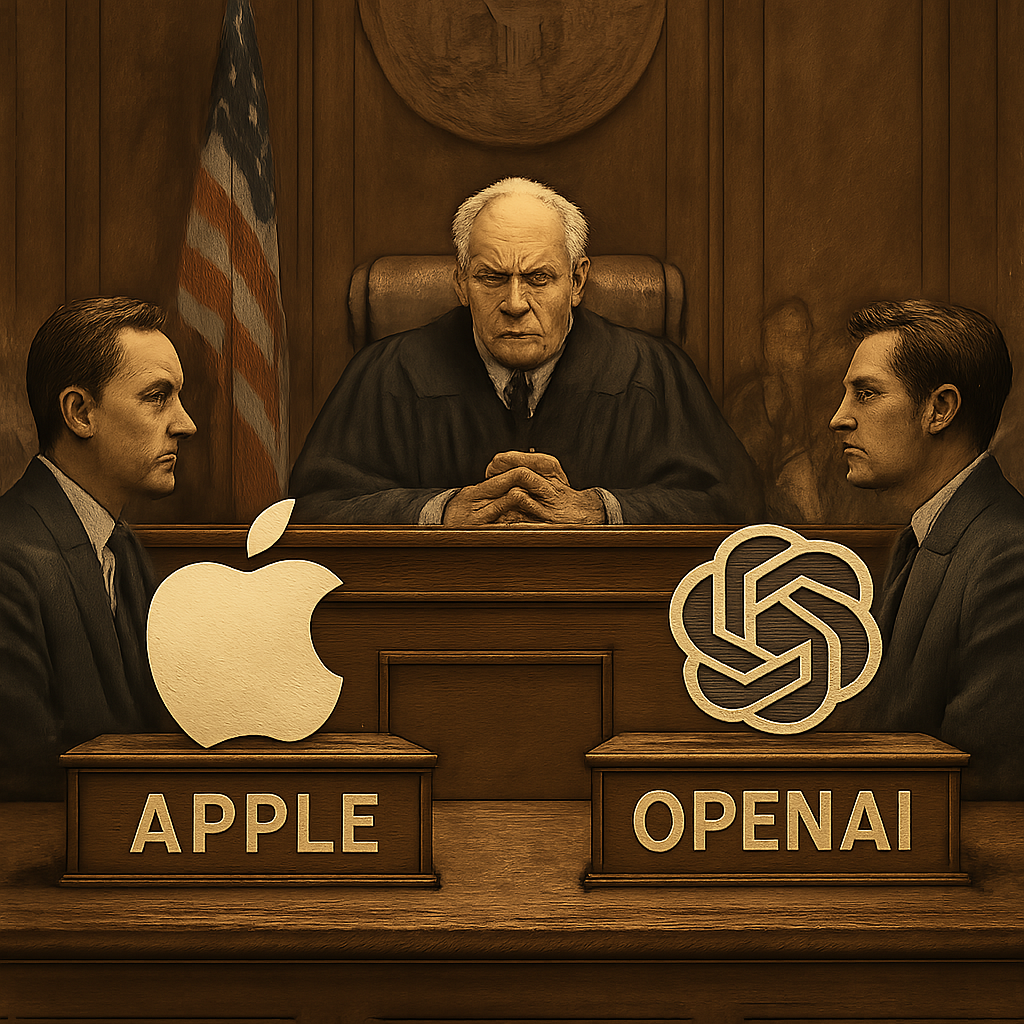
Apple has initiated legal action against OpenAI, alleging that the artificial intelligence company engaged in a systematic scheme to misappropriate its trade secrets and confidential information. The lawsuit, filed in the U.S. District Court for the Northern District of California, accuses OpenAI of targeting current and former Apple employees to gain unauthorized access to proprietary technologies, processes, and product plans.
A central figure in the allegations is Chang Liu, a former Apple engineer who, after joining OpenAI, purportedly retained an Apple-issued laptop and exploited a security vulnerability to access Apple’s cloud storage. This access allegedly allowed Liu to download numerous confidential documents, which he then shared with OpenAI colleagues. Additionally, Liu is accused of maintaining contact with a current Apple employee to obtain ongoing updates on Apple’s projects and engineering details.
The lawsuit also names Tang Tan, OpenAI’s Chief Hardware Officer and a former Apple executive. Tan is alleged to have used his insider knowledge of Apple’s security protocols to coach departing employees on evading detection while transferring confidential information to OpenAI. Furthermore, Tan reportedly instructed job candidates to bring proprietary Apple hardware components to interviews, seeking insights into unreleased devices and manufacturing processes.
Apple contends that OpenAI’s recruitment strategy involved soliciting sensitive information from Apple employees during the hiring process. This included inquiries about unannounced products, component selections, and vendor relationships. The company asserts that such practices have enabled OpenAI to build its nascent hardware business on a foundation of misappropriated trade secrets.
In response to these alleged actions, Apple is seeking a court order to prevent OpenAI from using or disclosing its confidential information. The company is also pursuing damages for the purported breaches and is demanding the return of all proprietary materials. Despite reaching out to OpenAI in February to address these concerns, Apple claims it received no response, prompting the current legal proceedings.
This lawsuit underscores the escalating tensions between Apple and OpenAI, particularly as both companies vie for dominance in the rapidly evolving AI hardware market. The outcome of this case could have significant implications for industry practices related to employee recruitment and the protection of intellectual property.
As the legal battle unfolds, it will be crucial to monitor how the court addresses the complex issues surrounding trade secret protection and employee mobility in the tech industry. The case may set important precedents for how companies safeguard their innovations and manage competitive dynamics in the AI sector.