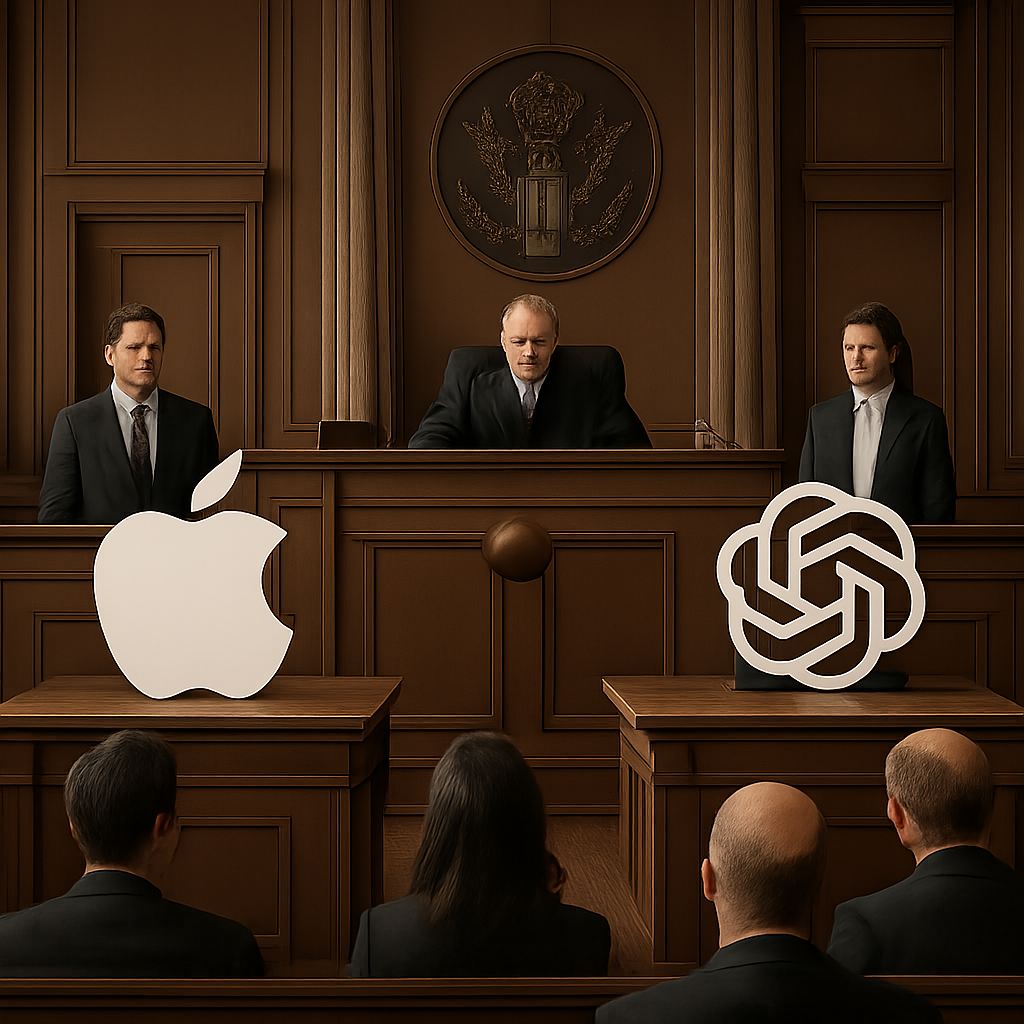
Apple has initiated legal proceedings against OpenAI, alleging that the artificial intelligence company engaged in a systematic effort to misappropriate its trade secrets. The lawsuit, filed in the U.S. District Court for the Northern District of California, names OpenAI, its hardware subsidiary io Products, Chief Hardware Officer Tang Yew Tan, and former Apple engineer Chang Liu as defendants.
According to the complaint, OpenAI recruited over 400 former Apple employees, leveraging their insider knowledge to gain access to confidential information. The suit highlights several key allegations:
Unauthorized Retention and Exploitation of Company Property
Chang Liu, who departed Apple for OpenAI in January 2026, allegedly retained an Apple-issued laptop post-employment. Exploiting a security vulnerability, Liu continued to access Apple’s network storage, downloading numerous confidential documents, including detailed engineering work and manufacturing procedures. Rather than reporting the flaw, Liu reportedly joked about it in communications with a former colleague.
Improper Recruitment Practices
The lawsuit accuses Tang Yew Tan of using his position to solicit proprietary information during recruitment. Tan allegedly instructed candidates to bring actual Apple hardware components to interviews and used internal project codenames to extract details about unannounced products. Additionally, he is said to have distributed an internal Apple document outlining security procedures, advising new OpenAI hires on how to evade detection during their transition.
Apple further claims that OpenAI misled a manufacturing partner into performing a proprietary metal-finishing technique without authorization and approached a battery supplier using insider terminology to probe for details on specific Apple components.
This legal action underscores the escalating tensions between Apple and OpenAI, particularly as OpenAI expands into hardware development. The outcome of this case could have significant implications for intellectual property protection and competitive practices within the tech industry.